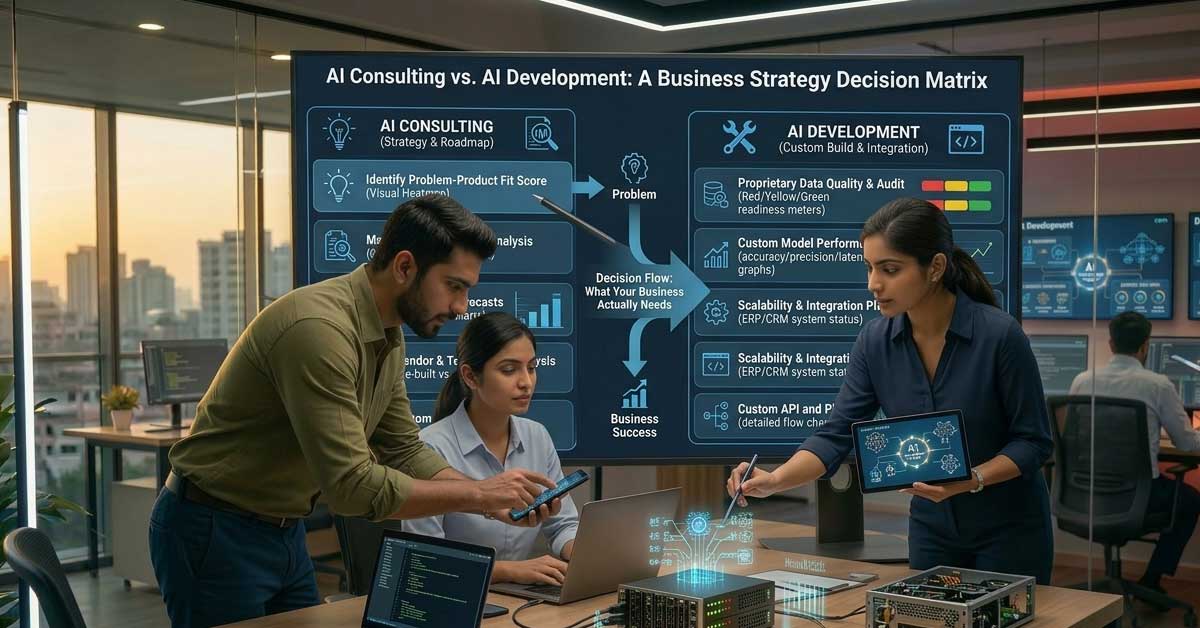



Artificial Intelligence is rapidly reshaping the global business landscape. Organizations across industries are leveraging AI to automate processes, analyze massive datasets, and make smarter strategic decisions.
However, adopting AI tools alone does not guarantee success. True transformation occurs when companies integrate AI into their core business processes, decision-making systems, and organizational culture.
This shift is known as AI transformation—the process of evolving from traditional digital operations to becoming fully AI-driven organizations.
In this article, we explore how companies are undergoing AI transformation and how businesses can successfully transition into AI-powered enterprises.
What Is AI Transformation?
AI transformation refers to the strategic integration of artificial intelligence technologies across an organization’s operations, products, and decision-making processes.
Unlike simple AI adoption, transformation involves fundamental changes in how companies operate.
AI transformation often includes:
- AI-powered automation
- Data-driven decision-making
- Intelligent customer experiences
- AI-enhanced products and services
- Scalable AI infrastructure
Companies that successfully implement AI transformation become AI-driven organizations, where data and intelligent systems guide business decisions.
Why Businesses Are Pursuing AI Transformation
Businesses are adopting AI transformation strategies to remain competitive in an increasingly data-driven economy.
Key motivations include:
| Business Goal | AI Transformation Impact |
|---|---|
| Operational efficiency | Automation reduces manual workloads |
| Better decision-making | AI analytics provide data-driven insights |
| Enhanced customer experience | AI enables personalization |
| Innovation | AI accelerates product development |
| Competitive advantage | AI capabilities differentiate companies |
Organizations that fail to adopt AI risk falling behind competitors that leverage data and automation.
Key Stages of AI Transformation
AI transformation typically occurs in several stages as organizations mature in their AI capabilities.
1. Digital Foundation
Before implementing AI, organizations must establish strong digital infrastructure.
This includes:
- Cloud platforms
- Data storage systems
- Digital business applications
- Data integration pipelines
Without digital infrastructure, AI initiatives cannot scale effectively.
2. Data-Driven Operations
Once digital systems are established, organizations begin using data analytics to guide decision-making.
Companies implement:
- Business intelligence platforms
- Data analytics dashboards
- Data governance frameworks
This stage builds the foundation for AI adoption.
3. AI Adoption
Organizations begin implementing AI solutions for specific use cases such as:
- Customer support chatbots
- Predictive analytics
- Marketing automation
- Fraud detection systems
These projects demonstrate the value of AI.
4. AI Integration Across Departments
As AI projects succeed, companies expand AI adoption across multiple departments including:
- Marketing
- Operations
- Customer service
- Finance
- Supply chain management
AI becomes embedded in everyday business workflows.
5. AI-Driven Organization
In the final stage, AI becomes a core component of the organization’s strategy.
AI-driven organizations use intelligent systems to:
- Automate business processes
- Predict market trends
- Optimize operations
- Personalize customer experiences
At this stage, AI supports nearly every aspect of the business.
Key Technologies Driving AI Transformation
AI transformation relies on several advanced technologies.
| Technology | Role in AI Transformation |
|---|---|
| Machine Learning | Predictive analytics and decision systems |
| Natural Language Processing | Chatbots and language understanding |
| Computer Vision | Image recognition and inspection |
| Generative AI | Content and automation systems |
| Cloud Computing | Scalable AI infrastructure |
These technologies enable organizations to build intelligent systems that improve efficiency and innovation.
Examples of AI Transformation Across Industries
AI transformation is occurring across many sectors.
| Industry | AI Transformation Example |
|---|---|
| Retail | Personalized product recommendations |
| Healthcare | AI-assisted medical diagnostics |
| Finance | Fraud detection and risk analysis |
| Manufacturing | Predictive maintenance |
| Logistics | Supply chain optimization |
These innovations are helping organizations improve efficiency and deliver better customer experiences.

AI Transformation
Challenges in AI Transformation
Despite its benefits, AI transformation presents several challenges.
- Lack of AI expertise
- Poor data quality
- Integration with legacy systems
- High infrastructure costs
- Ethical and regulatory concerns
Organizations must address these challenges through careful planning and strategic AI adoption.
Best Practices for Successful AI Transformation
Businesses can accelerate AI transformation by following several best practices.
- Develop a clear AI strategy
- Invest in strong data governance
- Build scalable AI infrastructure
- Encourage collaboration between technical and business teams
- Continuously monitor and improve AI systems
Organizations that follow these practices are more likely to succeed in their AI initiatives.
The Role of AI Consulting in AI Transformation
AI consulting services help organizations navigate the complexities of AI transformation.
AI consultants assist businesses with:
- AI readiness assessments
- AI strategy development
- Use-case discovery
- Data strategy planning
- AI architecture design
- AI implementation and scaling
With expert guidance, companies can accelerate AI transformation and reduce implementation risks.
The Future of AI-Driven Organizations
AI transformation is still evolving, and future advancements will continue to reshape business operations.
Future trends include:
- Autonomous AI agents
- AI-powered decision intelligence systems
- Industry-specific AI platforms
- Responsible AI governance frameworks
- AI-human collaboration systems
Organizations that invest in AI transformation today will be better positioned for the future.
Final Thoughts
Artificial Intelligence is becoming a central driver of modern business innovation. Companies that embrace AI transformation can unlock new efficiencies, improve customer experiences, and gain powerful competitive advantages.
However, becoming an AI-driven organization requires more than adopting AI tools. It requires strategic planning, strong data infrastructure, and a culture that embraces data-driven decision-making.
Businesses that successfully integrate AI into their operations will lead the next generation of digital transformation
Frequently Asked Questions
AI transformation is the process of integrating artificial intelligence technologies into business operations and decision-making systems.
An AI-driven organization uses artificial intelligence and data analytics to guide operations, strategy, and innovation.
Industries such as healthcare, finance, retail, manufacturing, and logistics benefit greatly from AI transformation.
Technologies include machine learning, natural language processing, computer vision, generative AI, and cloud computing.
Businesses should begin with an AI readiness assessment, develop an AI strategy, and implement high-impact AI use cases.