



Many people use marketing and branding as if they mean the same thing. But they are different. If you want your business to grow, you need to understand how marketing and branding work together—and what makes each one unique.
The world’s most successful companies know the difference. They use both marketing and branding, but for different reasons. If you mix them up, your efforts can become confusing, expensive, and less effective.
This article will help you fully understand the difference between marketing and branding. You’ll learn what each term really means, how they support each other, and why getting them right can transform your business. We’ll also look at real examples, practical tips, and answer common questions at the end.
What Is Branding?
Branding is the process of shaping how people see and feel about your company or product. It’s about your business’s identity—the story you tell, the promises you make, and the emotions you create.
A brand is more than a name, logo, or color scheme. It’s the total experience people have with your company, from the first time they hear your name to every time they use your product or service.
Key Elements Of Branding
- Brand Purpose: Why your company exists beyond making money.
- Brand Values: The core beliefs that guide your decisions and actions.
- Brand Personality: The human traits your brand expresses (fun, reliable, adventurous, etc.)
- Visual Identity: Your logo, colors, fonts, and design style.
- Voice and Tone: The way you speak and write in all communication.
- Brand Story: The narrative you share about your journey and mission.
- Customer Experience: How people feel when they interact with your business.
Branding is long-term. It shapes how people remember you and decide if they trust you. It creates loyal customers who choose your business even when other options are cheaper or closer.
Example: Apple’s Branding
Apple isn’t just about computers or phones. Its brand stands for innovation, simplicity, and premium quality. The design, the packaging, the stores, and even the language all match this image. People who buy Apple products feel they are part of a creative, forward-thinking community.
What Is Marketing?
Marketing is the set of actions you use to promote and sell your products or services. It’s about reaching the right people, at the right time, with the right message to inspire action.
Marketing includes advertising, social media, email campaigns, content creation, search engine optimization, events, and more. It’s how you attract customers and encourage them to make a purchase.
Key Components Of Marketing
- Market Research: Understanding your audience’s needs, problems, and preferences.
- Segmentation: Dividing your market into groups with similar needs.
- Positioning: Deciding how you want your product to be seen compared to competitors.
- Promotion: Communicating your offers through ads, content, events, and more.
- Pricing: Setting a price that matches your value and market demand.
- Distribution: Making sure your product is available where and when people want it.
Marketing is active and ongoing. It’s about delivering your brand’s message in ways that create interest and drive sales.
Example: Nike’s Marketing
Nike uses marketing to share new products, sponsor athletes, run ads, and create social media buzz. Campaigns like “Just Do It” motivate people to take action, but this only works because Nike’s brand is already strong and trusted.
Credit: www.kantar.com
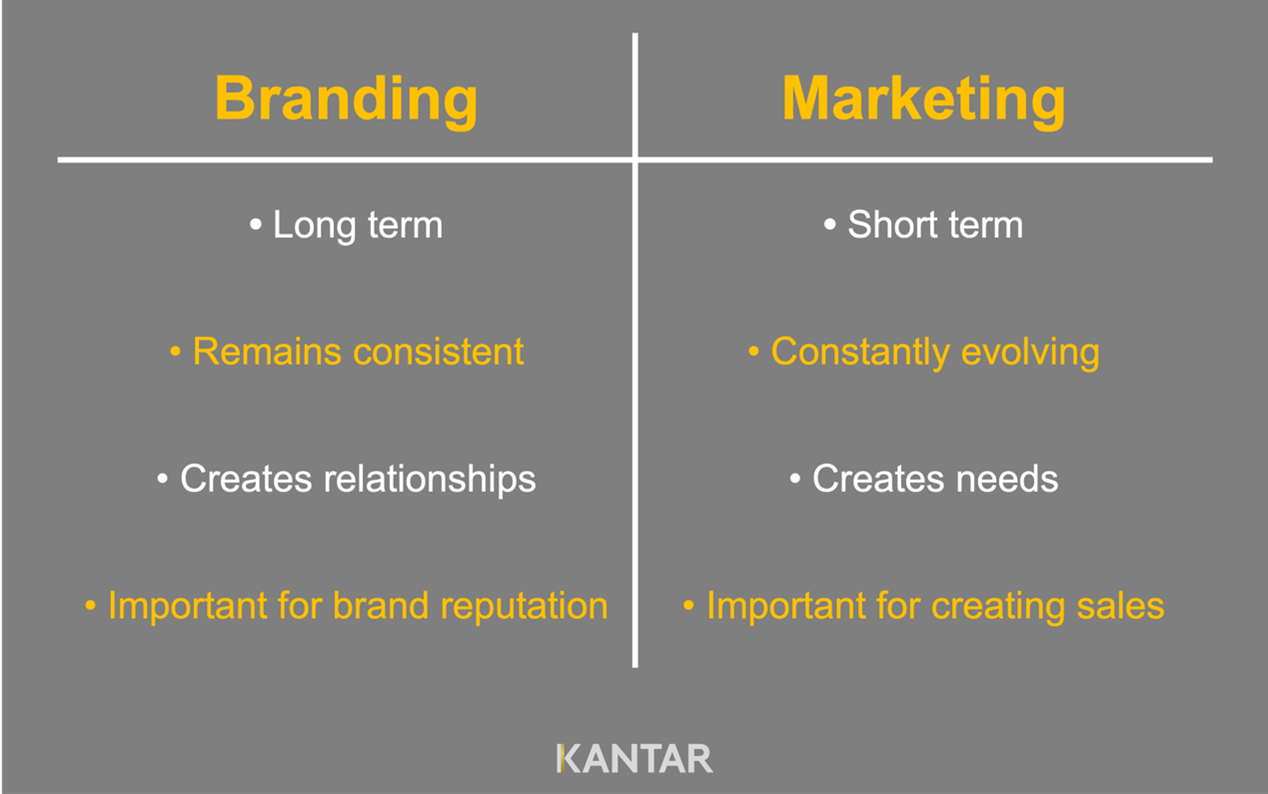
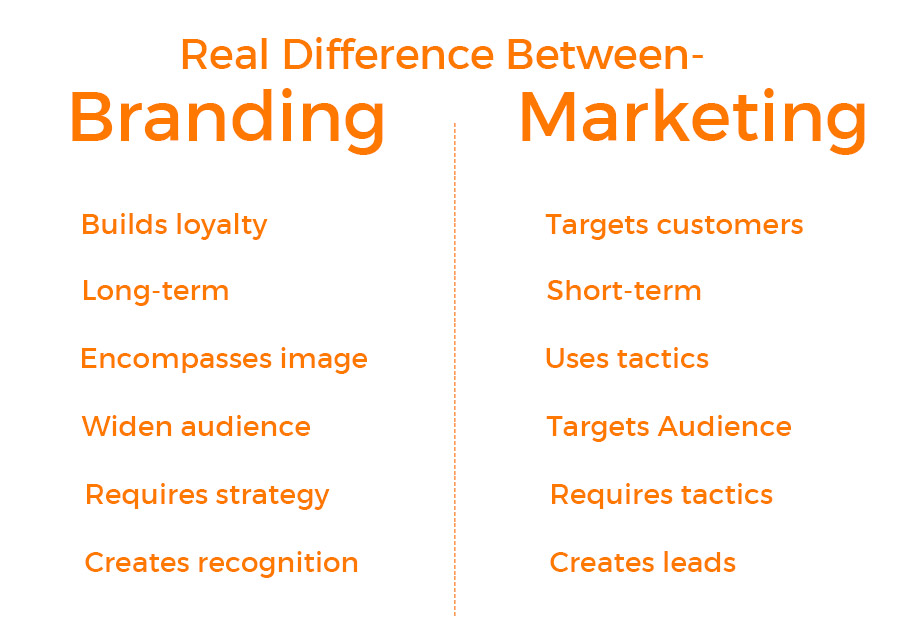
Key Differences Between Marketing And Branding
Many people think marketing and branding are just two names for the same thing. But they are not. Let’s break down the main differences:
| Aspect | Branding | Marketing |
|---|---|---|
| Purpose | Builds identity and trust | Promotes and sells products |
| Focus | Long-term perception | Short-term results |
| Questions Answered | Who are we? Why do we exist? | How do we reach customers? |
| Emotional vs. Tactical | Mainly emotional | Mainly tactical |
| Timing | Starts before marketing | Starts after branding is defined |
| Measurement | Brand loyalty, recognition | Sales, leads, engagement |
Branding Answers “who Are We?”—marketing Answers “how Do We Sell?”
Branding helps you decide what your business stands for and why people should care. Marketing helps you communicate that to the world and get people to buy.
Branding Is Long-term—marketing Is Short-term
Branding lasts as long as your business does. Marketing campaigns come and go. When marketing stops, your brand stays. But if your brand is weak, marketing won’t work as well.
Branding Creates Loyalty—marketing Creates Action
Branding earns trust and builds relationships. People buy from brands they feel connected to, not just because of a clever ad. Marketing grabs attention and gets people to act, but branding is what keeps them coming back.
How Branding And Marketing Work Together
Some business owners ask, “Which should I focus on first—branding or marketing? ” The answer is both, but in the right order.
Branding comes first. You need to know who you are before you tell the world. Once your brand is clear, marketing helps you spread the message.
Why Branding Should Come First
Imagine you start marketing without a clear brand. You might get some sales, but your message will change often, and people won’t remember you. You’ll waste money trying to stand out.
When you start with branding, you create a strong foundation. Marketing then becomes easier, cheaper, and more effective because people understand and trust you.
How They Support Each Other
- Branding makes your marketing more powerful. People remember a strong brand, so your ads and campaigns have a bigger impact.
- Marketing spreads your brand message. Every time you run an ad or post online, you reinforce your brand’s story.
Real-world Example: Starbucks
Starbucks built a brand around being a “third place” (not home, not work) where people can relax. Their marketing—loyalty programs, seasonal drinks, social media—always matches this brand feeling. This mix keeps customers coming back and talking about Starbucks.
Why The Difference Matters For Business Owners
If you mix up marketing and branding, you can waste a lot of time and money. Here’s why knowing the difference is critical:
You Can Build Trust, Not Just Traffic
Marketing can get people to your website. But if your branding isn’t clear, they might leave without buying. Strong branding makes people feel safe and confident in choosing you.
You Avoid Confusion
If your marketing says one thing, but your brand feels different, customers get confused. They may try your product once, but they won’t come back.
You Create Lasting Value
Marketing campaigns end, but a strong brand keeps working for you. Well-known brands can charge higher prices and survive tough times because people believe in them.
You Invest Wisely
You’ll know what to spend on marketing, what to improve in your brand, and where to focus your energy for the best results.
Practical Examples: How Companies Use Branding And Marketing
Let’s look at more well-known brands to see how they separate and connect branding and marketing.
Coca-cola
- Branding: Happiness, sharing, global unity.
- Marketing: TV ads during holidays, social media contests, limited-edition bottles.
Coca-Cola’s brand is about feeling good. Their marketing always shows friends, family, and joyful moments—matching their brand promise.
Tesla
- Branding: Innovation, sustainability, luxury.
- Marketing: Launch events, social media updates, Elon Musk’s public persona.
Tesla spends very little on traditional ads. Their brand is so strong that fans and media do much of the marketing for them.
Dove
- Branding: Real beauty, self-confidence, acceptance.
- Marketing: Campaigns like “Real Beauty Sketches,” YouTube videos, influencer partnerships.
Dove’s marketing always matches its brand message. This makes people feel good about supporting Dove.
Common Mistakes: Mixing Up Marketing And Branding
Many businesses, especially new ones, make mistakes when they don’t understand the difference between marketing and branding. Here are a few to avoid:
- Changing Brand Elements Too Often: If you change your logo, colors, or message every few months, customers won’t remember you. Consistency builds trust.
- Copying Competitors: Using the same marketing tactics or branding style as others makes you blend in, not stand out.
- Focusing Only on Sales: Hard-selling all the time can turn people off. Branding builds loyalty, so you don’t have to discount or push as much.
- Ignoring Customer Experience: Every touchpoint—website, packaging, customer service—should match your brand. Bad experiences hurt your brand more than any ad can fix.
- Thinking Branding Is Only for Big Companies: Every business, even a small shop or freelancer, needs branding. It’s not about size, but about clarity and trust.
When To Invest More In Branding Vs. Marketing
Your stage of business affects where you should focus:
- Startups: Invest more in branding first. Get clear on your identity, then start marketing.
- Growing Businesses: Use both together. Keep your brand strong while running regular marketing.
- Established Brands: Continue building your brand through experiences and storytelling, while using marketing for new products or markets.
Measuring Branding And Marketing Success
It’s easier to measure marketing—like sales, clicks, or leads. But branding is just as important, even if it’s harder to track.
How To Measure Branding
- Brand Awareness: Do people recognize your name or logo?
- Brand Loyalty: Do customers come back and recommend you?
- Brand Perception: Do people feel positive about your business?
- Net Promoter Score (NPS): Do people say they’d recommend you?
How To Measure Marketing
- Sales and Revenue: How much did you earn from a campaign?
- Lead Generation: How many new contacts or sign-ups?
- Conversion Rate: What percent of people bought after seeing your ad?
- Return on Investment (ROI): Did the money spent bring a profit?
Example Metrics
| Branding Metric | How to Measure | Marketing Metric | How to Measure |
|---|---|---|---|
| Brand Awareness | Surveys, social mentions | Click-Through Rate | Ad clicks / impressions |
| Brand Loyalty | Repeat purchase rate | Sales Growth | Sales vs. last period |
| Brand Perception | Online reviews, social sentiment | Lead Generation | Form fills, sign-ups |
The Role Of Digital In Modern Marketing And Branding
In today’s world, both marketing and branding happen online as much as offline.
Digital Branding
- Your website, social media profiles, and email style all reflect your brand.
- Online reviews and customer feedback shape your brand image.
- Consistent visuals and voice across platforms make your brand feel reliable.
Digital Marketing
- Digital ads, SEO, influencer partnerships, and content marketing drive traffic and sales.
- Data tools help you track results and adjust campaigns quickly.
- Social media lets you interact with customers and build relationships.
Example: Airbnb
Airbnb’s website, app, and even emails match their brand promise of “belonging anywhere. ” Their marketing—blog posts, social media, and ads—invites people to try unique travel experiences.
Credit: www.designerpeople.com
The Cost Of Getting It Wrong
If you focus only on marketing and ignore branding, you may get quick sales but no long-term growth. If you focus only on branding and ignore marketing, people may love your story but never hear about you.
Short-term Vs. Long-term Value
Marketing is like inviting people to a party. Branding is why they want to stay, come back, and tell their friends.
Real-world Data
- According to a Nielsen study, 59% of people prefer to buy new products from brands they know.
- Businesses with strong brands can charge up to 20% more than competitors with weaker brands.
- It costs five times more to get a new customer than to keep an existing one. Branding builds loyalty, reducing your marketing costs over time.
How To Build A Strong Brand And Run Effective Marketing
Let’s get practical. Here’s what you can do to get both right:
Building A Strong Brand
- Define Your Purpose: Why did you start your business?
- Know Your Audience: What do your best customers care about?
- Choose Your Voice and Visuals: Pick a style that matches your values.
- Stay Consistent: Use the same message, colors, and tone everywhere.
- Deliver on Promises: Your actions matter as much as your words.
Running Great Marketing
- Set Clear Goals: Are you looking for sales, leads, or awareness?
- Pick the Right Channels: Where do your ideal customers spend time?
- Test and Learn: Try different campaigns, see what works, and improve.
- Match Marketing to Branding: Every ad, email, or post should reinforce your brand.
- Track Results: Use data to measure success and adjust your plans.
Non-obvious Insights Most Beginners Miss
1. Branding Is Not Just for Customers
Many think branding is only about how customers see you. But it also affects how employees, partners, and investors view your business. A strong brand attracts better talent and better deals.
2. Marketing Without Branding Wastes Money
You can spend thousands on ads, but if your brand feels generic or confusing, your conversion rates will be low. Good branding makes every marketing dollar more effective.
3. Brand Is Built in the Smallest Details
Every small interaction—how you answer the phone, reply to an email, or package a product—adds up to your brand. Consistency is more important than being flashy.
4. Marketing Tactics Change, Branding Endures
Social media trends, ad platforms, and marketing tools change often. But strong branding stands the test of time and technology.
5. Your Brand Is What People Say When You’re Not in the Room
You can’t control every conversation, but you can shape the story. Branding is about guiding how people talk about you, even when you’re not there.
How To Align Branding And Marketing For Maximum Impact
Getting the most from your marketing and branding means making sure they always support each other.
- Start every campaign with your brand values in mind.
- Train your team to understand and use your brand voice in every interaction.
- Audit your materials (website, ads, emails) regularly to keep everything consistent.
- Listen to feedback from customers to adjust your brand and marketing if needed.
Sample Step-by-step Process For A New Business
- Research Your Market: Find out what your audience cares about and what competitors offer.
- Create Your Brand Foundation: Define your purpose, values, and style.
- Design Visuals: Get a logo, color palette, and fonts that match your brand personality.
- Build Your Digital Presence: Launch a website and social media profiles that reflect your brand.
- Plan Your Marketing: Choose channels (social media, email, search ads) to reach your audience.
- Launch Campaigns: Promote your products, always tying back to your brand story.
- Track and Adjust: Measure results, ask for feedback, and improve both branding and marketing as you grow.
For deeper research, you can read the branding and marketing overview at Wikipedia.
Frequently Asked Questions
What Comes First—branding Or Marketing?
Branding comes first. You need a clear brand before you start promoting your products or services. Branding gives direction to your marketing, making all your efforts more effective.
Can You Have Marketing Without Branding?
You can run marketing campaigns without branding, but they won’t work as well. People are more likely to buy from companies they know and trust. Branding creates that trust and recognition.
How Do I Know If My Branding Is Strong?
If people remember your business, understand what you stand for, and feel positive about you, your branding is strong. Track repeat business, positive reviews, and how often people refer others to you.
Should Small Businesses Focus On Branding Or Marketing?
Small businesses should start with branding, even if it’s simple. A clear brand helps you stand out, even with a small budget. Then use marketing to reach more people and grow your customer base.
How Often Should I Update My Branding Or Marketing?
Update your marketing often to match trends and customer needs. Only update your branding if your business changes direction, the market shifts, or your current brand no longer connects with your audience.
Understanding the difference between marketing and branding is essential for business growth. When you get both right, you don’t just sell products—you build a business people love and remember.

Credit: brandingcompass.com