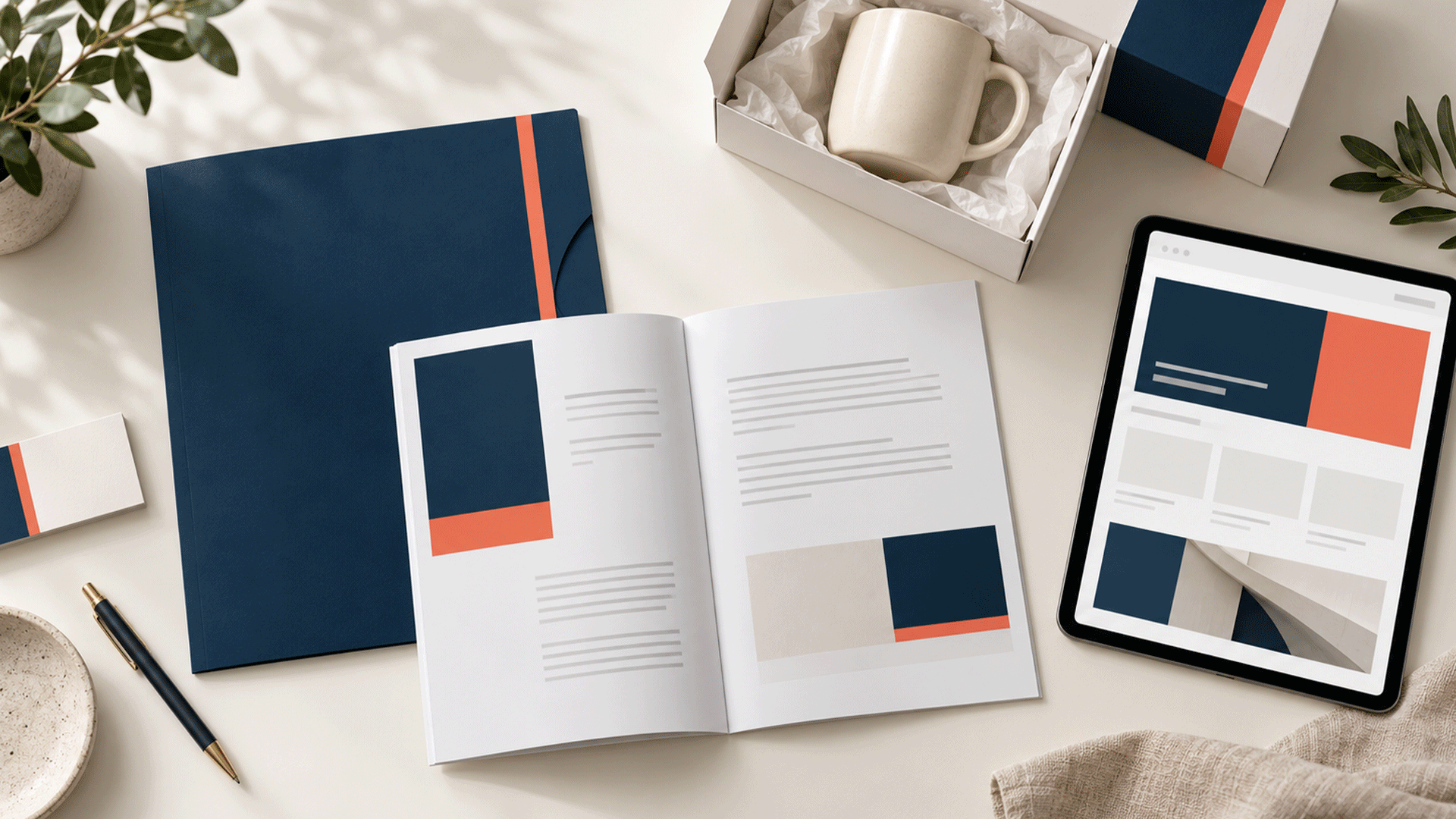

A professional branding package should provide an agreed brand direction, a usable visual identity, relevant business applications, clear guidelines, and an organized handover. The proposal should explain exactly what you receive and how you can use it.
The right package depends on your business. A new consultancy, an online retailer, and an established company with several departments will need different applications.
Here is how to assess the scope before you commit.
Start With the Deliverables, Not the Package Name
“Starter,” “premium,” and “complete” do not explain the work on their own.
A useful proposal names the outputs, their formats, the development process, and the responsibilities on both sides.
For a broader branding engagement, look for the following areas:
| Area | What the scope should identify |
|---|---|
| Discovery and brief | Business goals, audience, existing materials, constraints, and approval criteria |
| Strategy and messaging | Positioning, value proposition, core messages, and tone of voice |
| Logo system | Selected identity, agreed variations, color versions, and practical usage rules |
| Visual system | Color, typography, imagery, layout, and supporting graphic elements |
| Brand guidelines | Instructions and examples for applying the identity |
| Business applications | The specific templates and materials your team needs |
| Project process | Concepts, revisions, approvals, timing, and change requests |
| Final handover | Files, editing access, usage terms, instructions, and agreed support |
A focused identity project can use a strategy you already have. A business still defining its audience may need research and messaging work before design begins.
1. Discovery and a Written Brand Brief
The project should start with an understanding of the business and its customers.
Discovery may involve stakeholder conversations, a questionnaire, a review of existing materials, competitor research, or customer research. The proposal should describe the depth included.
A useful brief records:
- What the business offers and whom it serves.
- The problem the project should address.
- The qualities the identity should communicate.
- Where the brand will appear.
- Existing elements to retain or reconsider.
- Practical constraints, including languages and production needs.
- Who makes decisions and approves each stage.
For example, a consultancy serving Bangladeshi students may need materials that work in both Bangla and English. A retailer may need an identity that remains clear on product listings, packaging labels, and delivery materials.
Those needs should shape the brief.
What to receive: An agreed brief or discovery summary that gives both sides a reference for evaluating the work.

2. Brand Strategy and Messaging
If strategy is included, ask what the final document will contain.
Useful outputs can include:
| Deliverable | What it should help your team do |
|---|---|
| Audience summary | Understand the buyers and needs the brand prioritizes |
| Positioning statement | Explain the business’s place among relevant alternatives |
| Value proposition | Describe the benefit customers can reasonably expect |
| Core messages | Communicate the offer consistently across channels |
| Brand personality and tone | Make practical decisions about language and presentation |
| Short business introduction | Introduce the company clearly in profiles and sales materials |
Examples make these outputs easier to apply. A tone guide could show how the business answers an enquiry, introduces a service, and explains a delay.
Naming, tagline development, interviews, surveys, and full website copy require their own defined scope.
M4YOURS IT’s Brand Strategy & Foundation services cover audience research, positioning, value propositions, and messaging frameworks. M4YOURS IT
What to receive: A strategy and messaging reference with usable wording and clear decisions.
3. A Logo System for Real Applications
A logo needs to work in the places your business actually uses it.
Depending on the design, the agreed system could include:
- A primary logo.
- An alternative arrangement for narrower or wider spaces.
- A compact mark or avatar treatment, where suitable.
- Full-color, single-color, and reversed versions.
- Clear-space and minimum-size guidance.
- Examples for light, dark, and photographic backgrounds.
The variations should solve application needs. Every brand does not require a separate symbol or several unrelated logo arrangements.
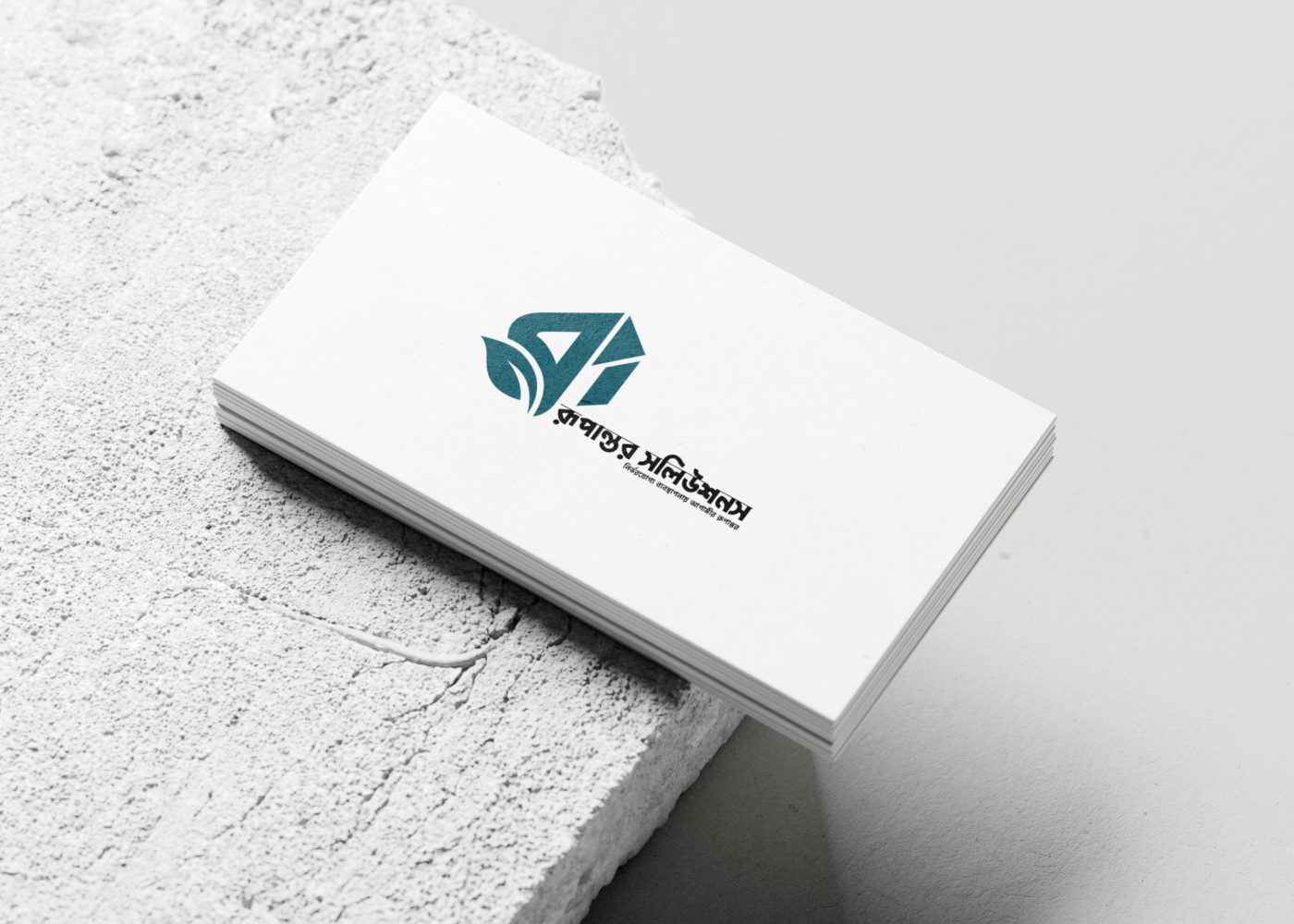
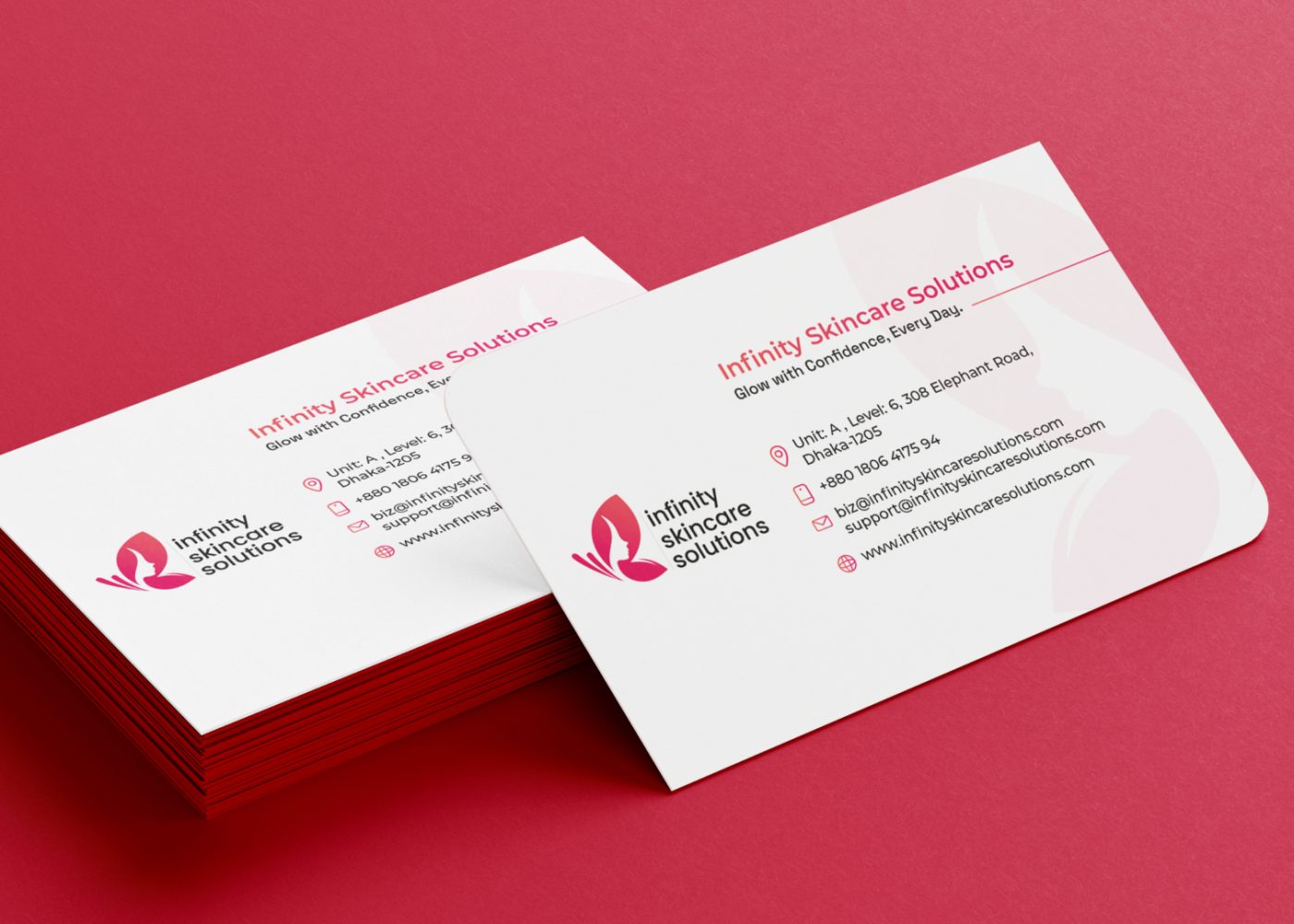
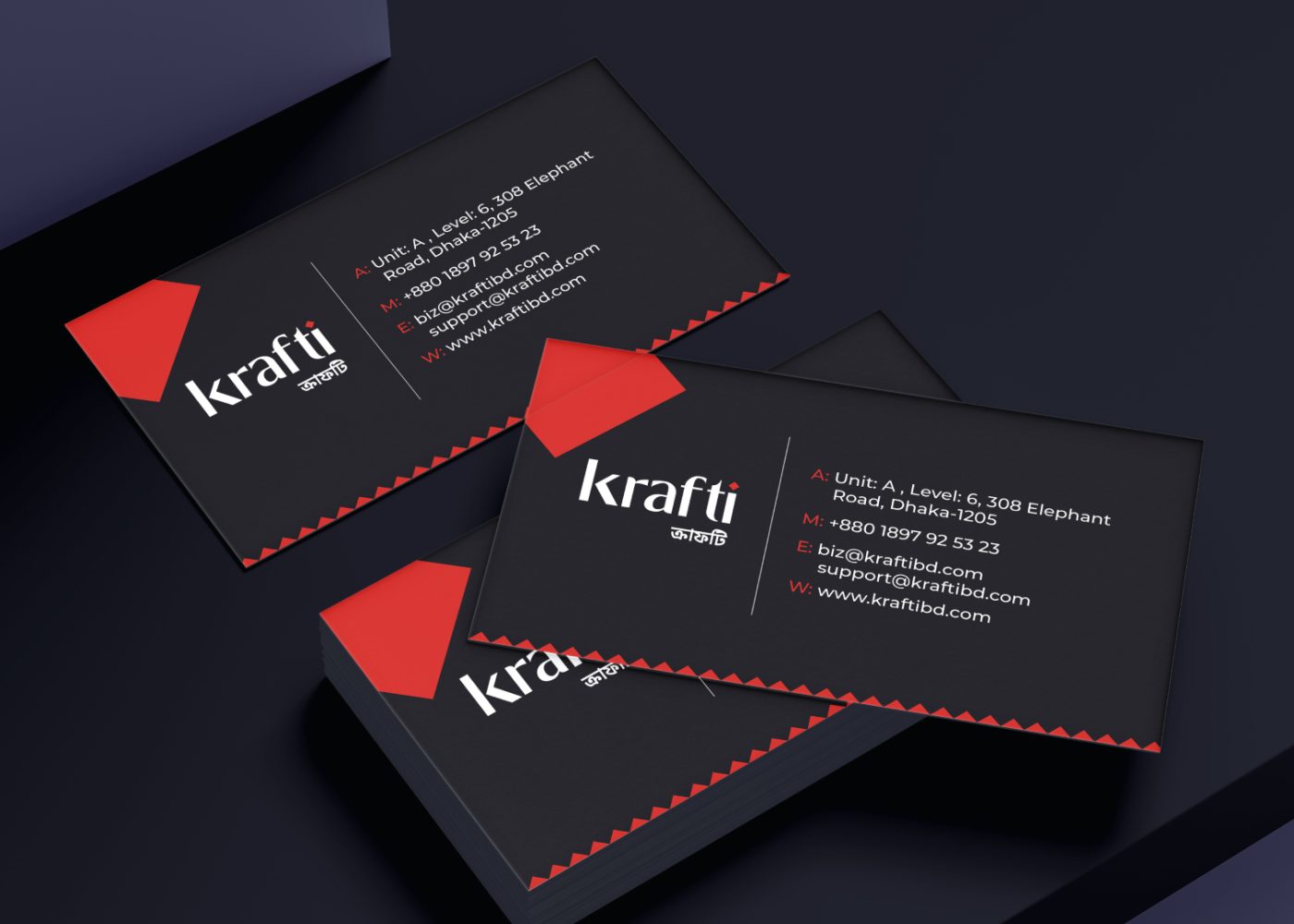
Review the selected design at realistic sizes: a mobile header, social profile image, business card, or small label.
A professional logo design scope should also identify how initial directions are presented, how one is selected, and how it is refined.





4. A Visual System Beyond the Logo
The visual system helps future materials belong to the same business.
It should explain how to use:
| Element | Useful guidance |
|---|---|
| Color | Primary and supporting colors, codes, proportions, and approved combinations |
| Typography | Font families, weights, hierarchy, spacing, and language support |
| Imagery | Photography or illustration direction with relevant examples |
| Supporting graphics | Patterns, shapes, icons, or other elements where needed |
| Layout | Alignment, spacing, image treatment, and information hierarchy |
For digital materials, specify readable text and background combinations. The W3C’s contrast guidance sets different requirements for ordinary text and large text, with an exception for text forming part of a logo. A logo palette therefore needs separate checks when used for page copy or interface text. W3C
For print, record the agreed color references and confirm production requirements with the printer. Screen appearance alone cannot settle the final result on paper or packaging.
If your business uses Bangla and English, include examples in both scripts and confirm that the chosen fonts support them.
What to receive: A documented visual system that can guide new materials.
5. Brand Guidelines People Can Follow
A useful brand guide answers everyday questions.
Which logo belongs on a dark background? How large should a heading be? What should a social post look like? Which color combinations work for body text?
Depending on scope, the guide should bring together:
- The brand direction and core messaging.
- Logo variations, spacing, sizing, and background rules.
- Color and typography specifications.
- Imagery and supporting graphic direction.
- Layout examples.
- Common incorrect applications.
- Instructions for the included templates.
- References to the approved assets.
The depth should match the team’s needs. A small business may need a concise practical guide; an organization with many contributors may need more detailed standards.
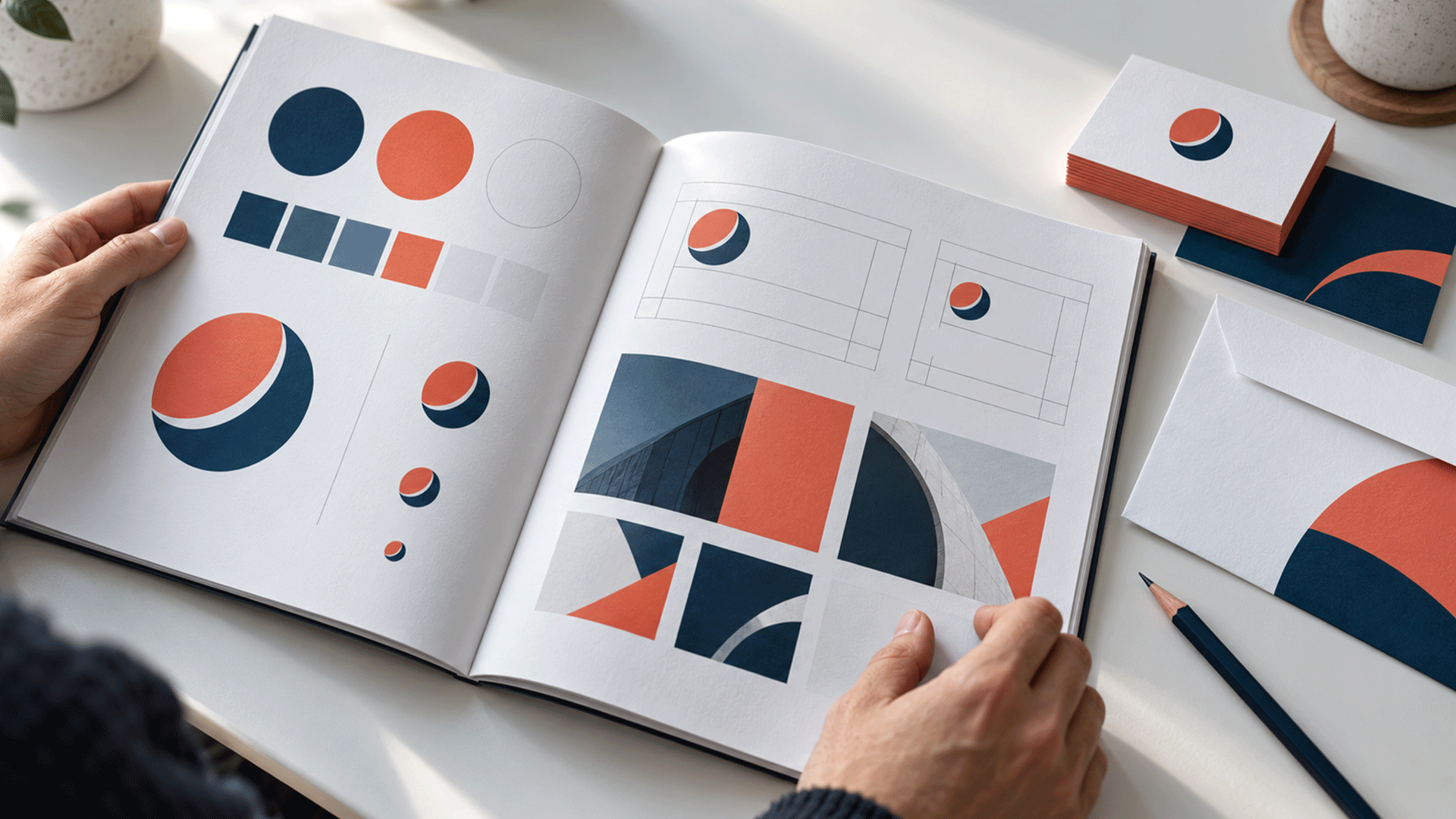
A corporate identity design system can help organize these standards across documents, presentations, and digital materials.
What to receive: A guide your staff and suppliers can understand, with examples relevant to their work.
6. Business Applications and Editable Templates
Choose applications according to the customer journey and the team’s workload.
A business card may matter for a consultancy that attends events. A product retailer may prioritize packaging and listing images. A sales team may need proposal and presentation templates.
Make each item specific:
| Application | Details to confirm |
|---|---|
| Business card | Size, sides, staff versions, editable file, and print export |
| Letterhead | Page size, editing software, and intended printing method |
| Email signature | Included staff versions and whether setup is provided |
| Social templates | Platforms, dimensions, number of layouts, and editing tool |
| Presentation template | Software, slide types, master layouts, and sample content |
| Proposal template | Page layouts, editable fields, and content responsibilities |
| Packaging | Product variants, dimensions, dielines, and production coordination |
“Ten social designs” could mean ten distinct editable layouts or ten finished graphics based on one layout. Ask which is included.
Templates should work in software the team can access. Try changing a heading, photograph, and contact detail without damaging the layout.
What to receive: The agreed finished materials and editable templates, with access and instructions.
7. Clear Concepts, Revisions, and Approval Stages
The working process deserves the same attention as the final presentation.
Confirm:
- How many initial creative directions will be explored.
- What each presentation will contain.
- How the preferred direction is selected.
- How many revision rounds are included.
- What counts as a revision or a new direction.
- Who consolidates feedback.
- Which approvals are needed before the next stage.
- How additional work is quoted.
A revision round should have a practical definition. For example, it could involve one consolidated set of feedback on the selected direction.
The schedule should also account for client feedback, content delivery, and third-party dependencies.
What to receive: A clear sequence of milestones, decision points, and responsibilities.
8. An Organized Final Handover
The handover determines how easily you can use the package after the project ends.
Files Matched to Their Purpose
Ask for an asset list that explains what each format is for.
| File or asset | Typical purpose |
|---|---|
| Vector logo, such as SVG or a vector PDF | Scalable reproduction in suitable workflows |
| Transparent PNG exports | Everyday placement on digital materials |
| Agreed native design files | Future editing in the specified software |
| Production PDF files | Printing to the agreed supplier specifications |
| Editable template files or links | Routine changes by your team |
| Brand guide PDF | Reference for staff and suppliers |
A PDF can contain raster images, so the extension alone does not establish that the artwork is vector. Similarly, an editable file is useful only if the required software, assets, and access are available.
Ask for clear filenames and separate approved assets from presentation previews.
Usage Rights and Third-Party Assets
Request a written explanation of:
- The rights or licence provided for the approved work.
- When those terms take effect.
- Which source files are included.
- How unused concepts are treated.
- Any third-party images, icons, templates, or fonts.
- Purchases, subscriptions, or restrictions affecting future use.
For fonts, distinguish using finished artwork from accessing the font to edit a design.
Adobe’s font licensing FAQs explain that a client receiving properly embedded or rasterized output may not need a separate font licence, while a client needing direct font access for editing requires their own licence. Adobe also restricts transferring its font files to another user. These are Adobe-specific terms; check the licence for each font selected. Adobe Fonts
A useful handover includes font names, sources, and licensing notes. If stock, template, or AI-generated elements are used, ask how they affect the intended applications.
Walkthrough and Support
Agree on a handover session, a named contact, and any support period.
The walkthrough should show your team how to choose the correct logo, edit templates, and supply assets to another designer or printer.
What to receive: An organized asset folder, the agreed access, usage documentation, and practical instructions.
FAQ
The design needs a clear direction. That direction can come from existing approved strategy or from research and strategy work included in the engagement. Confirm which applies.
Specify the source files you need in the proposal, along with software, access, and usage terms. A finished image and an editable working file serve different purposes.
It can, when the scope says so. Clarify whether the work covers website design, development, content, launch, or ongoing maintenance.
Check the selected licences. Some fonts cannot be transferred with the project files. The handover should explain how your team obtains permitted access.
Agree on a number suited to the process and budget. Ask how the directions connect to the brief and how the selected direction will be developed.
Research depth, stakeholder involvement, messaging, design exploration, application count, languages, revisions, production requirements, and handover scope all affect the work. Compare proposals using equivalent deliverables.
M4YOURS IT offers brand strategy and foundation, professional logo design, and corporate identity design. These services cover strategic direction, identity development, guidelines, and business applications.