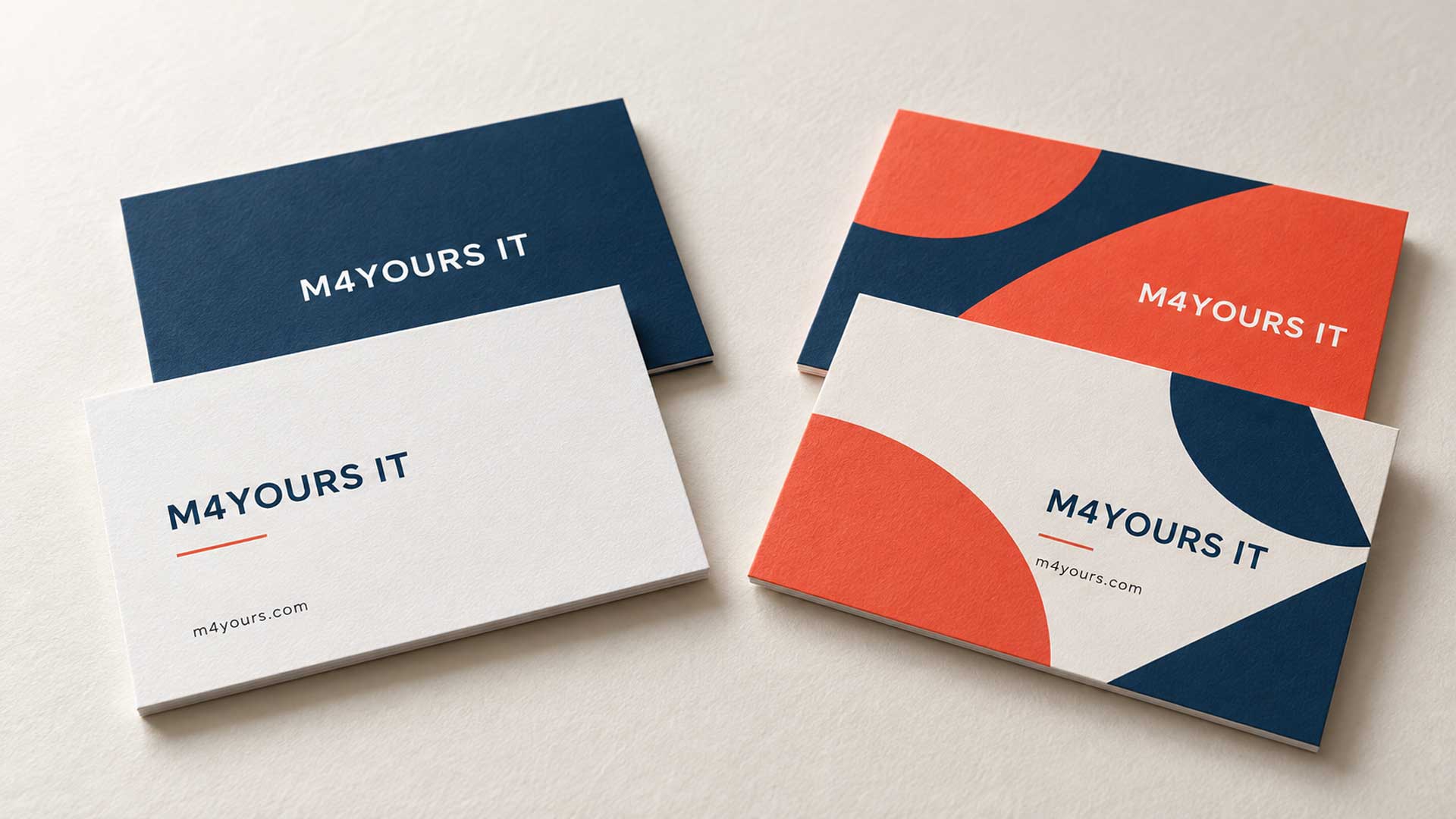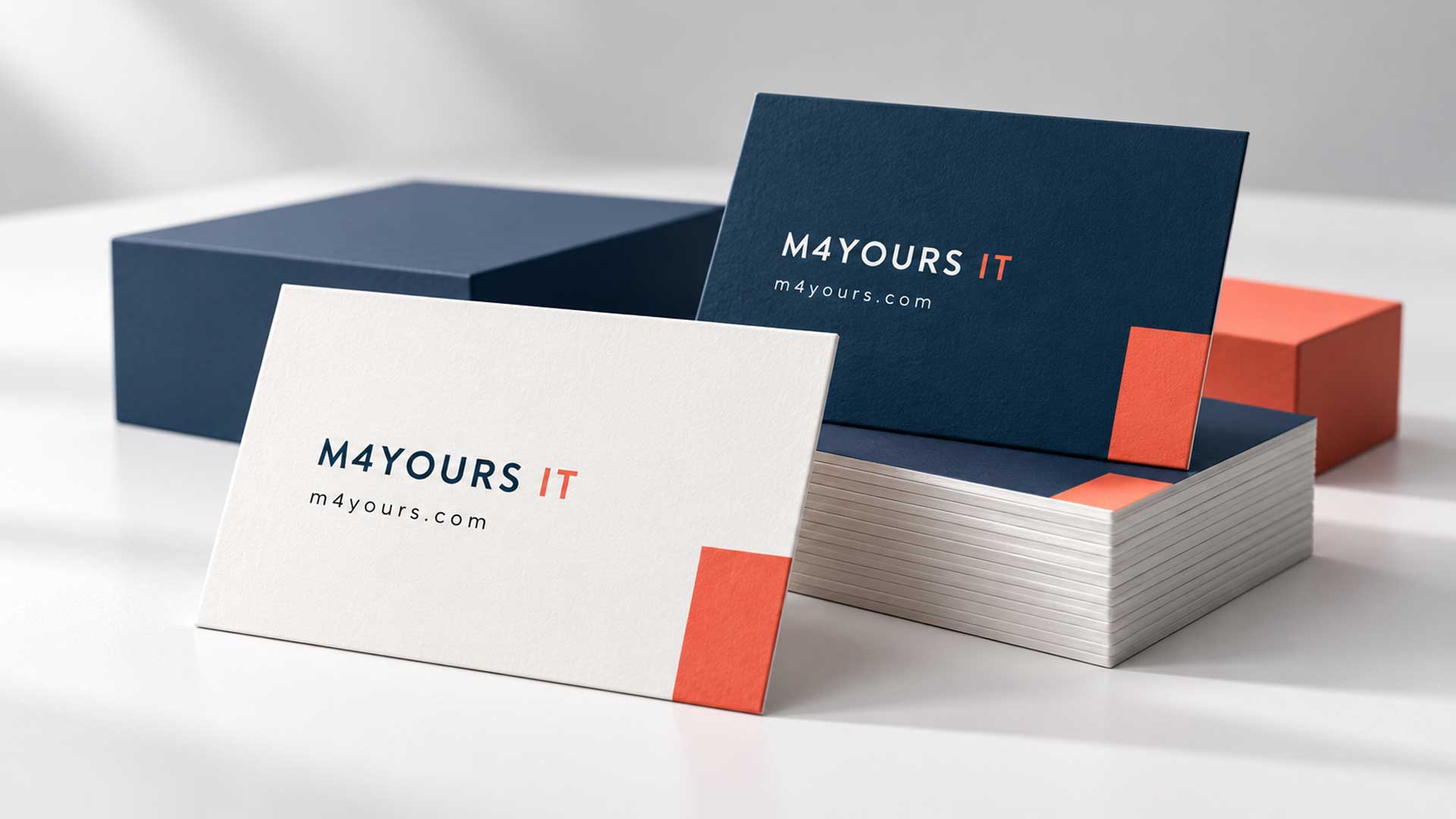


You need new business cards, and there are two familiar ways to get them: choose a ready-made template or commission a custom design.
A template gives you an existing layout to work with. Custom business card design starts with your brand, content, and requirements. Both can produce a professional result when the finished card is clear, consistent, and prepared correctly for printing.
Choose a template when it already fits your needs and a quick, economical setup is the priority. Consider custom design when your brand identity, content, or team requirements need more individual attention.
Here is how to compare the options before you commit your time and budget.
What Is Custom Business Card Design?
Custom business card design develops the layout around your business.
A designer considers your logo, brand colors, typography, audience, and the details the card must communicate. The process can include initial concepts, feedback, revisions, and preparation for your chosen printer.
Custom work might involve:
- Building a layout around your actual contact information.
- Matching your existing visual identity.
- Creating original graphic elements.
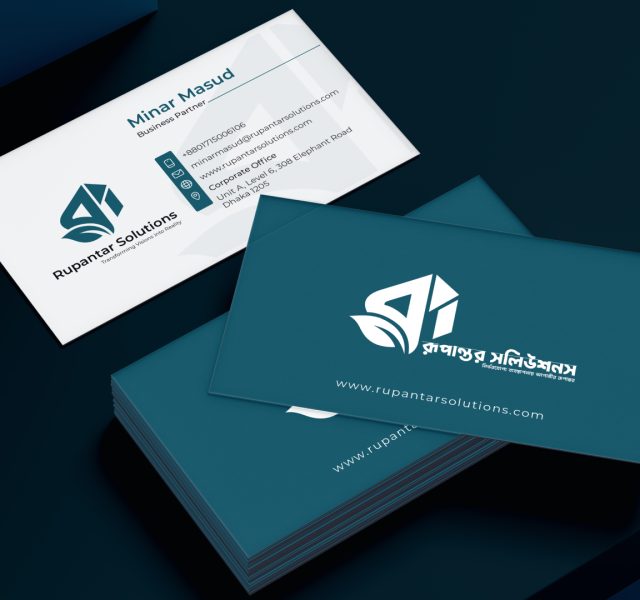
- Accommodating Bangla and English text.
- Preparing consistent versions for different employees.
- Planning artwork for selected print finishes.
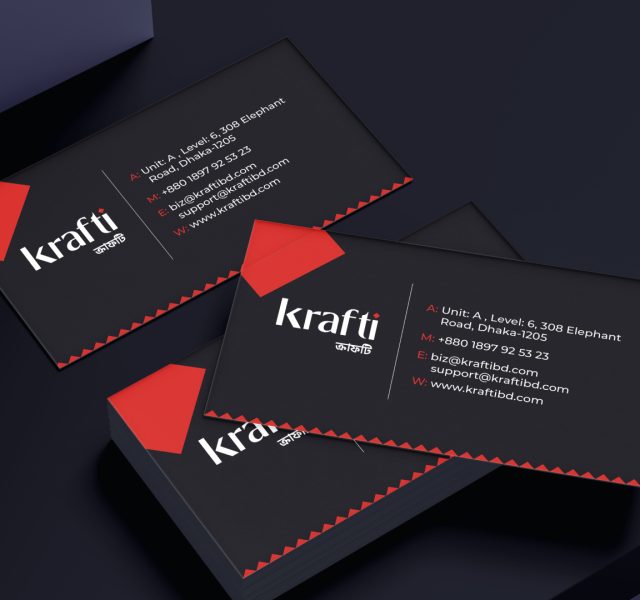
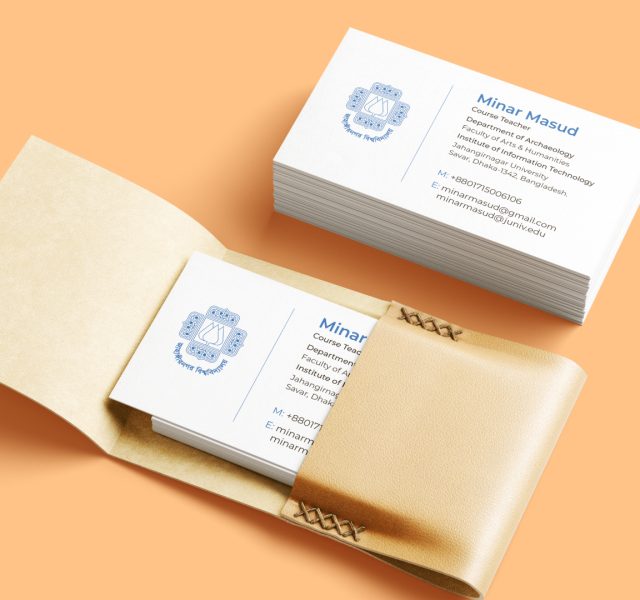
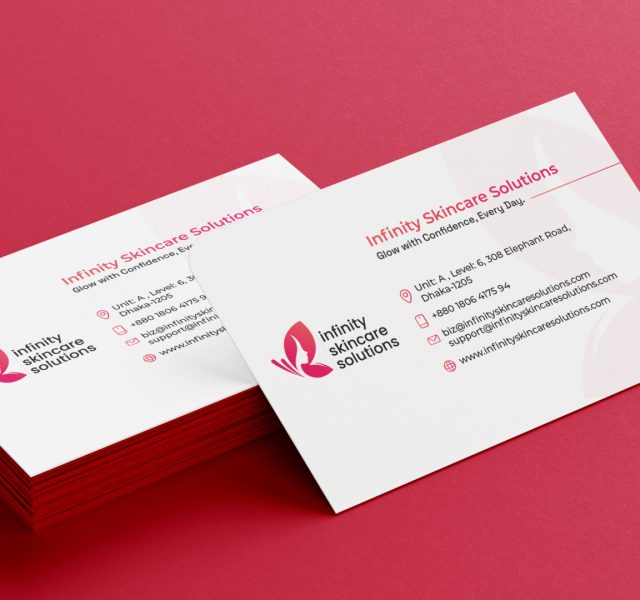
A custom card can be minimalist, expressive, or corporate in style. “Custom” describes how the design is developed.
If you are still defining your brand’s audience and positioning, brand strategy and foundation can help establish a direction for the design brief.
What Is a Business Card Template?
A business card template is an existing layout that you adapt with your own information.
Depending on the file or platform, you may be able to replace the name, logo, colors, fonts, and graphic elements. Some templates offer considerable flexibility; others allow only a few changes.
Templates are useful when their structure already suits your brand and content. They can reduce the amount of layout work needed to get started.
Before choosing one, try it with your actual details. A preview containing a short sample name may behave differently when you insert a longer name, job title, or website address.
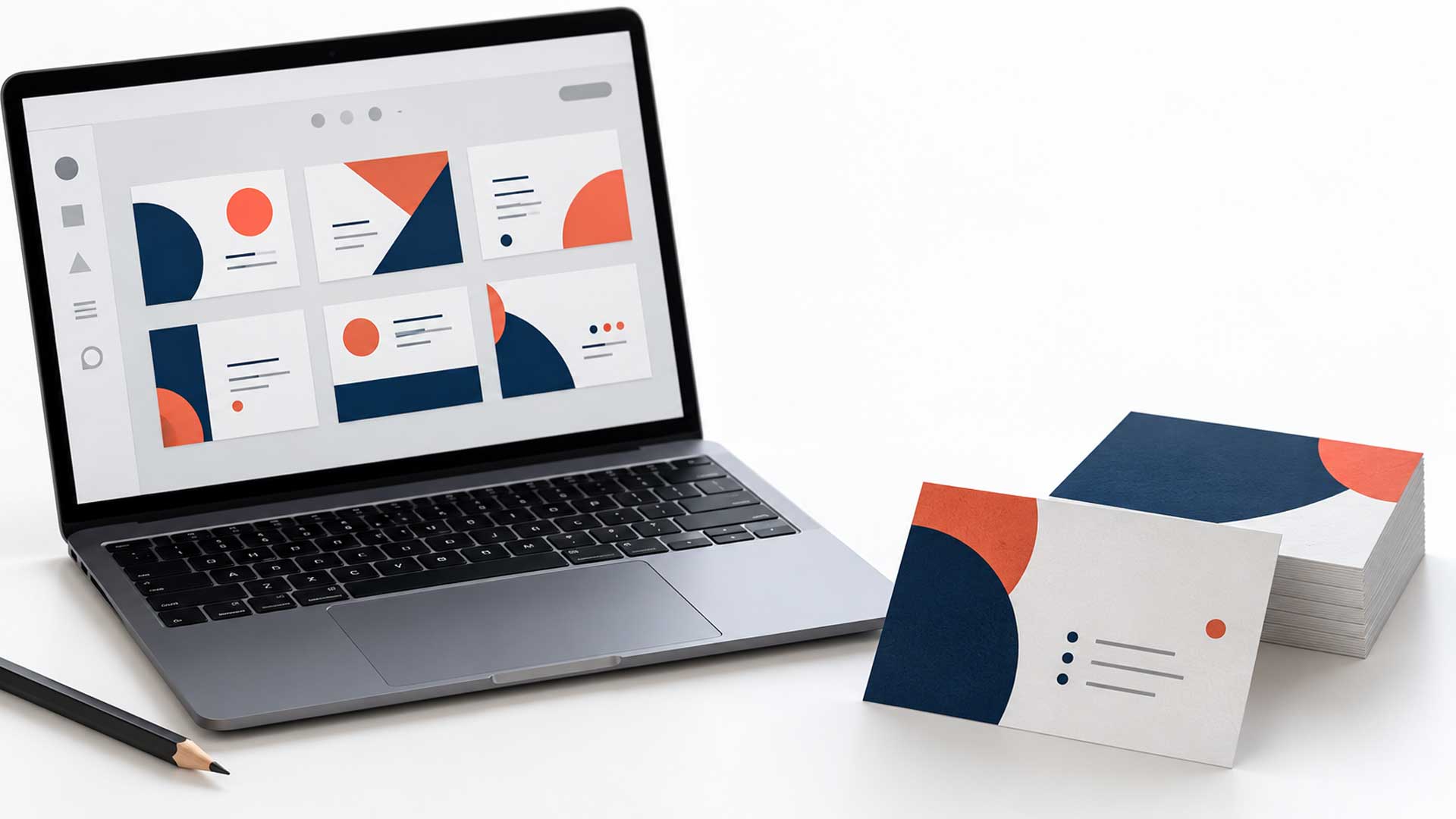
Custom Design vs. Templates: A Practical Comparison
| Factor | Custom business card design | Ready-made template |
|---|---|---|
| Starting point | Your brand, content, and brief | An existing layout |
| Initial cost | Usually includes a design fee for the agreed scope | May be free, purchased, or included with a subscription |
| Setup time | Includes design development and review | Can be quick when few changes are needed |
| Brand fit | Developed around your identity | Depends on how well the layout can be adapted |
| Flexibility | Can address specific content and production needs | Depends on the file or editor |
| Distinctiveness | Can use a layout and graphics developed for your brand | The starting layout may also be used by other businesses |
| Skills required | You provide information and feedback; the designer handles the agreed work | Someone needs to adapt and check the design |
| Employee versions | Can be planned as part of a shared system | Possible when the template handles different details well |
| Print preparation | Can be included in the project scope | Export and printer compatibility need checking |
| Future editing | Depends on the delivered files and agreed support | Depends on ongoing file or platform access |
The quality of the final card depends on how well the chosen approach is executed.
When a Template Makes Sense
A ready-made template can be a practical choice when your requirements are straightforward.
For example, a freelancer might need a small batch of cards with a name, role, phone number, email address, and website. If a suitable template accommodates those details clearly and matches the brand, it may be enough.
A template is worth considering when:
- You have a limited initial budget.
- You need a simple card quickly.
- Your contact information fits the layout comfortably.
- You already have usable logo files and brand colors.
- Someone can check the artwork and export it correctly.
Choose a layout that fits your content with modest adjustments. If you have to shrink every line, rearrange most elements, or rebuild the reverse side, compare the time involved with commissioning a design.
When Custom Design Is Worth Considering
Custom design becomes more useful when you need the card to solve specific problems.
Your Brand Has an Established Visual Identity
If your website, packaging, and stationery follow a defined style, the card should belong to that same system.
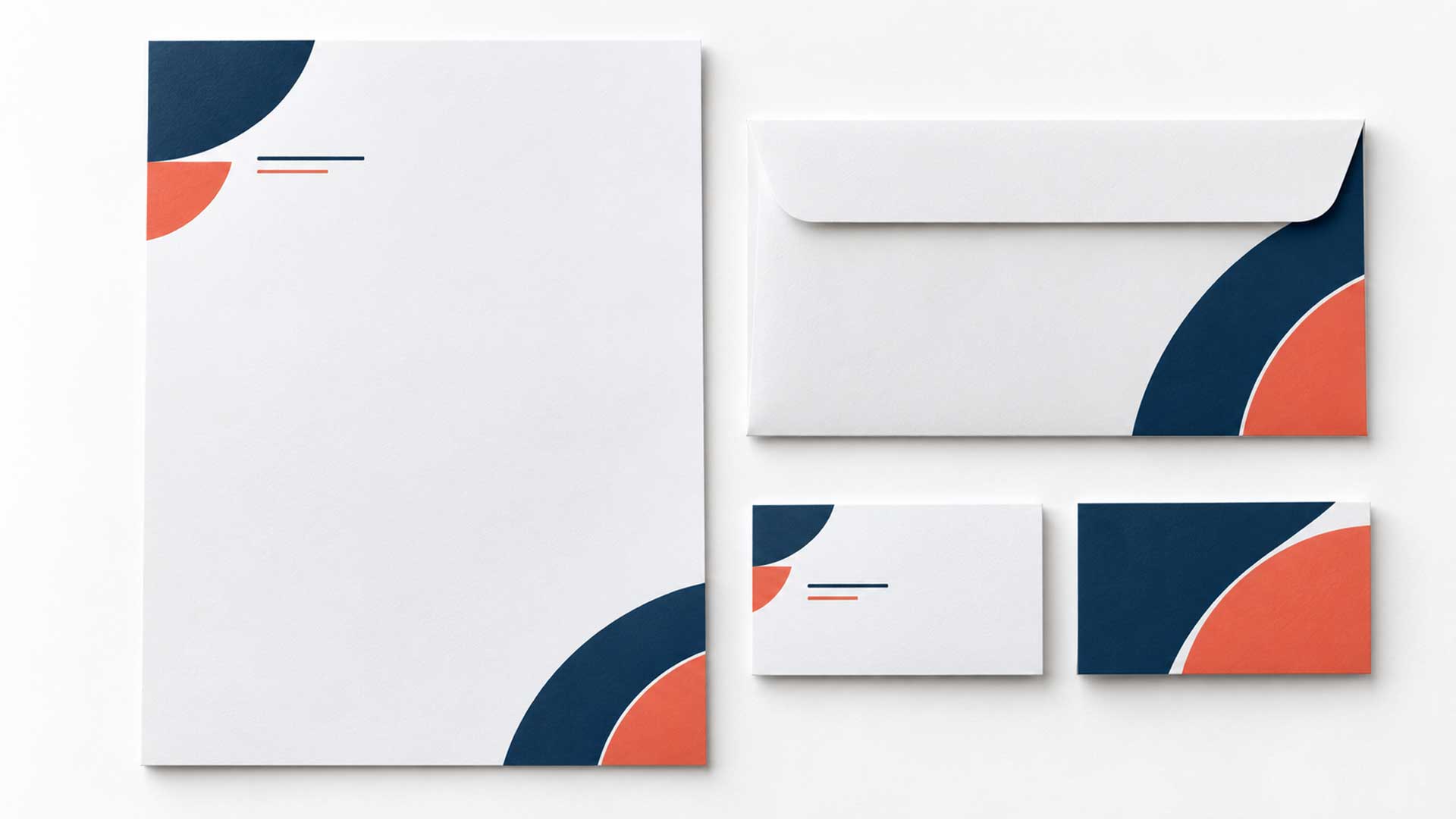
Custom work gives the designer room to apply your typography, graphic details, and layout conventions. It can be part of a broader corporate identity design project when several business materials need a consistent treatment.
Your Content Needs a More Flexible Layout
An education consultancy might need both Bangla and English information. A consultant might have a long professional title. A business with several offices might need different location versions.
A layout built around that content can address these needs without forcing important details into unsuitable spaces.
Your Team Needs Consistent Cards
Employee names, titles, and email addresses vary in length.
For a team, custom design can include rules for handling those variations. The designer can test several examples and prepare a layout that works across the organization.
You Need Specific Production Deliverables
Special finishes, unusual dimensions, or a particular printer’s requirements may call for additional artwork preparation.
Discuss these needs before the design starts, and confirm which production files and checks are included.
Compare the Total Cost, Including Your Time
A low initial price can be useful, but it does not describe the entire project.
When comparing custom design and templates, consider the following:
| Cost or effort | What to check |
|---|---|
| Design or template fee | What is included in the quoted price? |
| Editing time | Who will adapt the layout, and how long might it take? |
| Assets and fonts | Does the design require additional purchases or access? |
| Export access | Can you obtain the format your printer needs? |
| Employee versions | Are additional names and locations included? |
| Revisions | How are changes handled before approval? |
| Future updates | Who can change details after delivery? |
| Printing | What are the separate costs for paper, quantity, and finishes? |
Keep design and printing costs separate when reviewing quotes. Either a custom design or a template can use straightforward printing or more involved finishing.
Also check the provider’s terms for any included content. For example, Canva’s Content License Agreement applies to its content, including fonts, graphics, and templates used in exported Canva designs. Check the applicable terms for the assets you choose.
A Useful Middle Option: A Custom Design With a Reusable Template
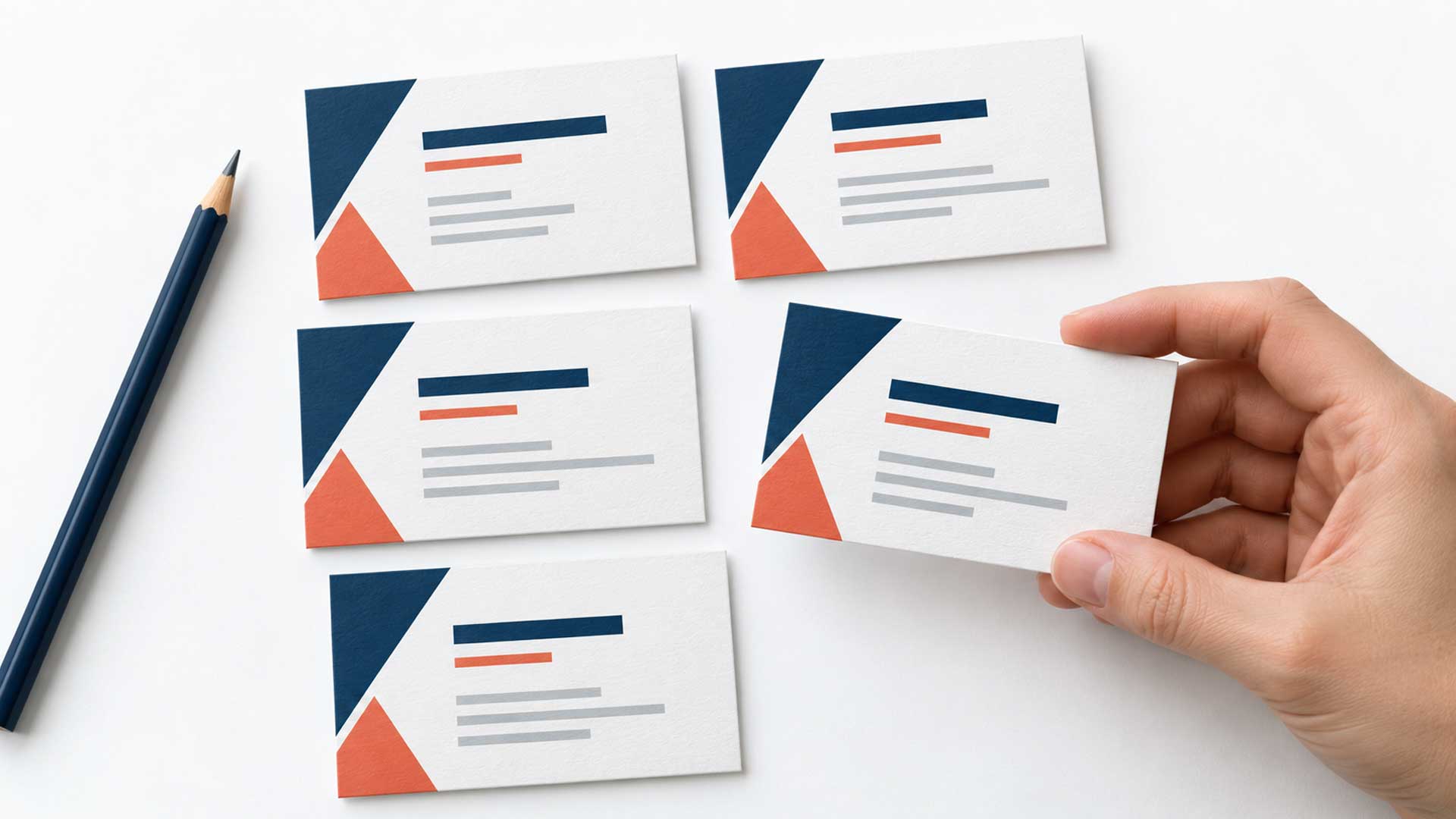
You can commission a custom business card system and use it as an internal template.
The designer develops the visual direction and establishes rules for typography, spacing, logo placement, and contact details. Your team then updates the approved fields when employees join or information changes.
This can work well for a consultancy, sales team, or growing company.
Ask the designer to test:
- Short and long employee names.
- Different job titles.
- Longer email addresses.
- Different office locations.
- Any bilingual versions you need.
Confirm which parts can be edited and which should stay fixed. Agree on an editable format your team can actually use, along with instructions for exporting the card.
A reusable custom layout can make future updates more consistent while preserving the original design direction.
Which Option Fits Your Situation?
These are suggested starting points for comparing your requirements.
| Your situation | Option to explore | Reason |
|---|---|---|
| One person needs a basic card quickly | Suitable ready-made template | A good existing layout may cover the immediate need |
| An established brand needs matching stationery | Custom design | The layout can follow its existing visual system |
| A team needs many employee versions | Custom master template | Shared rules can handle different names and titles |
| The card needs Bangla and English text | Custom design or a thoroughly tested flexible template | Both scripts need suitable space and typography |
| You need special finishes or dimensions | Custom design with production preparation | Artwork can be planned for those requirements |
| An existing template needs extensive rebuilding | Compare a custom design quote | The editing effort may justify a different starting point |
Before deciding, identify your essential content, preferred visual direction, deadline, and future editing needs. Then compare both options against that same brief.
What to Confirm Before Approving the Design
For a custom project, ask what the final delivery includes. This may cover a print-ready PDF, editable files, employee versions, previews, and guidance for future updates.
For a template, confirm that you can replace the necessary information, access the required fonts, and export a suitable file.
In either case, review the card using your actual content. Check the longest name or title you expect to use, and make sure the logo remains sharp.
A design that works with sample details still needs checking with real business information.
Check the Final Artwork Before Printing
Print a sample at the intended finished size. Read the contact details under ordinary indoor lighting, verify every number and address, and test any QR code.
Use your chosen printer’s specifications for dimensions, bleed, safe margins, color settings, and file format.
For example, MOO’s business card artwork guidelines recommend vector PDF artwork and photographs at 300 dpi or higher. Its templates show where backgrounds should extend and where important text and logos should remain. MOO
Whether you choose custom design or a template, review the final exported file before ordering.
FAQ
Yes. A suitable template can produce a professional card when it matches the brand, accommodates the content, and is carefully prepared for printing. Review the finished artwork rather than judging the result by its starting point.
Custom work usually involves a design fee. The total comparison also includes template purchases, editing time, asset access, extra versions, and future changes. Request a clear quote for the work you need.
Changing colors can help, but typography, spacing, logo placement, and graphic style also affect brand consistency. Review the whole layout beside your existing business materials.
A reusable layout with clear editing rules is valuable for a team. That could be a well-adapted template or a custom master design. Test it with different names, roles, and locations before rolling it out.
M4YOURS IT offers custom business card design built around your brand identity, content, and preferred style. Our process includes understanding your requirements, developing the layout, reviewing feedback, and preparing the final artwork for print. Professional Business Cards
Explore our business card design services and share your logo, contact information, quantity of employee versions, and production requirements to discuss your project.