



An education consultancy website’s cost and timeline depend mainly on its content, design, integrations and student-facing functions. A public marketing website, a website connected to an existing CRM and a student application portal represent different scopes.
For initial planning, the scenarios below allow 3–5 weeks for a content-ready marketing website, 5–8 weeks for a tailored content website, 7–12 weeks for a CRM-connected website and 12–20 weeks or more for a custom portal. These are illustrative schedules subject to the assumptions below.
M4YOURS IT recommends defining the first working release before requesting a price. Agree on pages, templates, content responsibilities, integrations and acceptance criteria so quotations can be compared meaningfully.
How Much Does an Education Consultancy Website Cost?
The following table is a hypothetical budgeting worksheet, calculated using an assumed blended project rate of ৳1,500 per hour and the estimated effort shown. Obtain a scoped quotation for your project’s actual price and delivery commitment.
| Website scope | Example deliverables | Assumed team effort | Illustrative build budget | Illustrative timeline |
|---|---|---|---|---|
| Standard marketing website | 6–10 supplied-content pages, adapted design, CMS, enquiry form | 40–80 hours | ৳60,000–৳1,20,000 | 3–5 weeks |
| Tailored content website | 10–20 supplied-content pages, tailored templates, destination and blog structure | 80–160 hours | ৳1,20,000–৳2,40,000 | 5–8 weeks |
| Website connected to an existing CRM | Public website, defined enquiry mapping, assignment handover and integration testing | 120–240 hours | ৳1,80,000–৳3,60,000 | 7–12 weeks |
| Custom student portal | Defined public site plus accounts, document requests, application updates and staff permissions | 300–600 hours | ৳4,50,000–৳9,00,000 | 12–20+ weeks |
Each row represents an alternative complete build scope. Effort means total team effort; elapsed weeks also allow for scheduling, reviews and testing.
Assumptions Behind These Examples
- One language and a defined set of reusable page templates.
- Supplied, approved core copy and usable brand assets.
- A bounded revision process and a named decision-maker.
- Appropriate access to existing systems when the relevant work begins.
- Responsive implementation, basic page metadata, agreed testing and handover within scope.
Professional copywriting, translation, bulk data entry, substantial migration, third-party subscriptions, hosting, domain fees, payment charges and applicable taxes require separate allowances unless expressly included.
Which Website Scope Does Your Consultancy Need?
| Your immediate requirement | Recommended starting scope |
|---|---|
| Explain services and receive counselling enquiries | Marketing website with an editable CMS and tested enquiry handling |
| Publish destination resources and regular articles | Tailored content website with reusable templates and clear publishing roles |
| Send enquiries to an existing counselling team | Website with a defined CRM connection and failure handling |
| Let students upload documents and view approved updates | Assess a supported portal or a focused custom portal phase |
| Manage extensive applications, branches or partner workflows | Discovery before estimating the full platform |
Start with the process your staff will use after launch. If the first requirement is to capture and respond to enquiries, specify that journey before adding further functions.
Our education consultancy website with CRM guide explains the connection between website submissions and staff follow-up.
What Changes the Cost Most?
Custom Templates and Interactive Functions
Page count is only one input. Ten pages using an agreed template can require less design work than several distinct interactive page types.
List unique layouts separately from content records. A university listing template, search filters and 200 university entries each create different types of work.
Content Writing and Translation
Agree on who writes, checks and uploads destination pages, counsellor profiles, services and FAQs. Supplied text may still need editing, formatting and review.
A Bengali-and-English website adds translation, language navigation, content entry and testing. Identify which pages need both languages and who will maintain future updates.
CRM and Booking Connections
A useful CRM integration includes field mapping, matching existing students, ownership, confirmation and a recovery process when a transfer fails.
Specify the actual forms and incoming routes to test. Booking adds availability, changes, cancellations, reminders and appointment outcomes to the scope.
Student Accounts and Document Collection
A portal introduces account access, permission checks, file handling, staff review and student-facing updates. The team also needs a clear operating process for those requests.
Document receipt, review and acceptance should be distinct events. Describe these behaviours before estimating the interface or development effort.
Existing Website Migration
Migration may include content, images, enquiries, account information and old URL handling. Agree on the dataset, preparation responsibility and verification method.
For an existing site, include the domain, email and launch arrangements. Assign responsibility for redirects and checking important pages after the move.

Should You Choose WordPress or Custom Development?
Choose around the publishing and operational requirements. Evaluate what can be maintained through an existing platform before estimating custom components.
WordPress’s documentation describes its self-hosted software as free and open source. A professional implementation still requires design, content, configuration, testing and ongoing operation. Documentation
| Requirement | Approach to evaluate |
|---|---|
| Service pages, destination content, profiles and articles | WordPress or another suitable CMS |
| Standard content plus a supported CRM connection | CMS with a scoped integration |
| A distinct public experience with complex content delivery | Tailored or headless implementation where justified |
| Student accounts and unusual application workflows | Supported portal software or custom development after discovery |
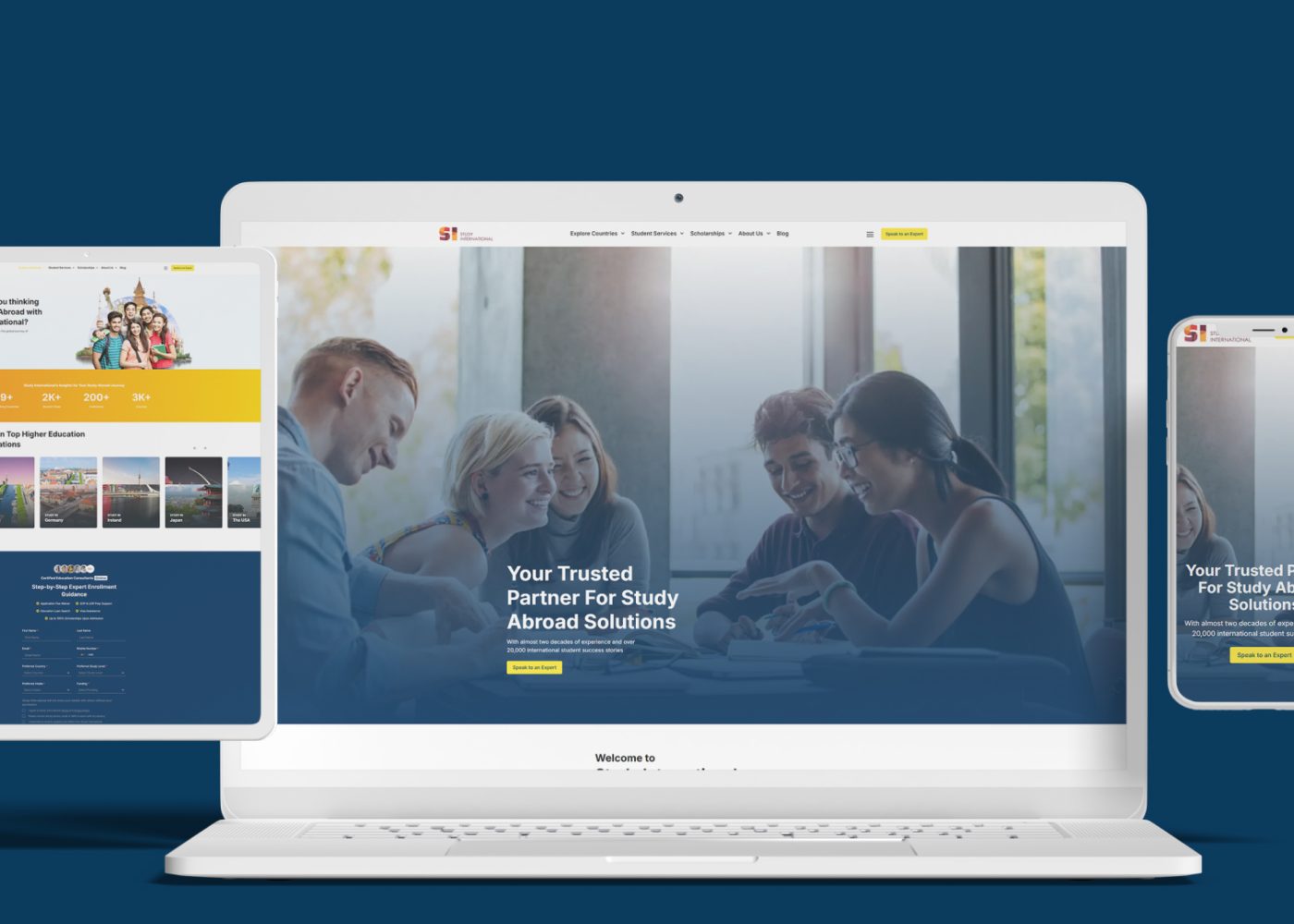
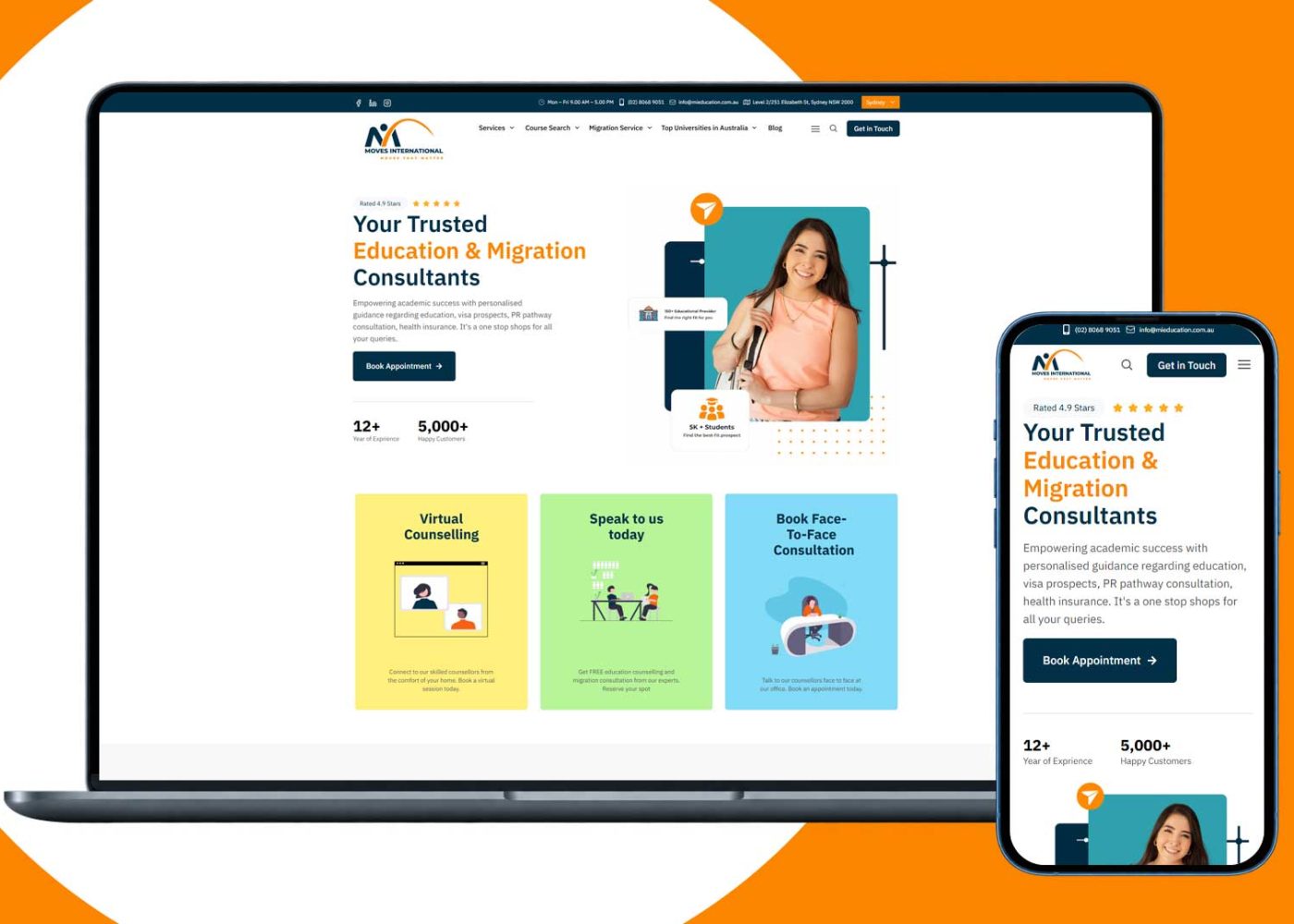
M4YOURS IT’s Intraco Education portfolio describes a WordPress consultancy website. Its Study International portfolio describes a custom application connecting public content and administration. These illustrate different scopes to consider when preparing a brief. M4YOURS IT Portfolio
Separate Build Costs from Running Costs
Ask for the first-year total and expected renewal commitments.
| Cost item | Charging pattern to clarify | What to confirm |
|---|---|---|
| Website design and development | Project fee or agreed milestones | Deliverables, revisions and acceptance |
| Content and migration | Fixed scope or measured work | Pages, languages, records and responsibility |
| Domain | Registration and renewal | Extension, renewal price and account ownership |
| Hosting | Monthly or annual | Capacity, backups, support and renewal terms |
| Themes, plugins or other licences | One-time or recurring, depending on product | Required editions, licence holder and renewal |
| CRM and integration services | Subscription, users or usage | Required features, seats and limits |
| Maintenance | Retainer or agreed support arrangement | Included tasks, response arrangements and new-work pricing |
| Payments | Provider setup and transaction fees where applicable | Merchant terms and website integration scope |
For example, Cloudflare’s domain pricing table lists registration and renewal separately. Use the selected registrar’s actual charges when completing your budget. Domain Extension Prices
Similarly, Zoho CRM’s edition comparison distinguishes plans and monthly versus annual billing. Confirm the required edition and users when estimating the complete software cost. Zoho CRM







Optional Online Payment Costs
If students will pay for consultations or other services through the website, allow for provider charges and the work required for the agreed payment journey.
As reviewed on 24 November 2026, SSLCOMMERZ’s published Basic pricing lists a ৳25,500 non-refundable setup fee, 2.5% per successful transaction and 3.5% for AMEX. The page states that setup includes basic API integration and merchant dashboard access. SSLCOMMERZ
Confirm which work that package covers and which website-specific functions your project requires. Obtain the applicable tax treatment and complete merchant charges in the written proposal.
A Worked First-Year Budget Example
The following amounts are assumed figures for one hypothetical CRM-connected website. They are independent planning inputs, rather than vendor quotations or exchange-rate conversions.
| Item | Assumed amount |
|---|---|
| Website build, including the defined CRM connection, testing and handover | ৳1,80,000 |
| Content preparation and entry | ৳20,000 |
| Domain allowance for year one | ৳2,000 |
| Hosting allowance for year one | ৳12,000 |
| Required licence allowance for year one | ৳8,000 |
| Routine maintenance allowance for year one | ৳24,000 |
| Illustrative first-year total | ৳2,46,000 |
CRM subscriptions, payment provider charges and applicable taxes are additional in this example.
Define the maintenance tasks and check whether hosting or licences are already bundled before totalling the quote.
Under the same assumptions, domain, hosting, licences and routine maintenance total ৳46,000 for a later year, before additional work and price changes.
What Does the Development Timeline Include?
A useful schedule shows dependencies and review points, alongside the launch date.

An Eight-Week Example Schedule
This is an illustrative schedule for a defined content website with one existing CRM connection. It assumes the core brief and starting materials are ready, access is supplied when needed and consolidated feedback is available within two working days.
| Week | Main work | Review or completion evidence |
|---|---|---|
| 1 | Discovery, sitemap, content inventory and integration requirements | Agreed scope, responsibilities and acceptance criteria |
| 2 | Key layouts and mobile design direction | Approved templates and enquiry journey |
| 3–5 | Website and CMS implementation; agreed content entry | Working pages and editable content on staging |
| 6 | CRM connection, notifications and integration handling | Test submissions reach the intended record and owner |
| 7 | Functional, mobile, content and integration checks | Recorded issues resolved or scheduled by agreement |
| 8 | Client acceptance, training, launch and handover | Approved release, account access and operating documentation |
Some activities can overlap. The schedule should still show which decisions or materials each stage needs before it can finish.
Total effort hours and elapsed calendar time describe different things. Adding people helps where work can proceed independently and reviews remain available.
What Commonly Extends the Timeline?
| Dependency | How to plan for it |
|---|---|
| Unfinished copy or images | Assign a content owner and delivery dates by page group |
| Several reviewers | Nominate one person to consolidate decisions |
| Unclear university or course data | Agree on fields, sample records and import responsibility |
| CRM access or configuration gaps | Test access and a sample transfer early |
| Payment provider onboarding | Confirm provider requirements and readiness separately |
| New functions requested during development | Assess their cost and schedule impact before adding them |
| Existing domain and email arrangements | Prepare launch changes with the responsible account owner |
Keep these dependencies in the project plan. When a dependency changes, update the affected milestones and release forecast.






How Can You Control Cost and Launch Sooner?
Define a first release that completes the essential journey: a student understands the service, submits an enquiry and reaches the responsible team.
A practical initial scope may include:
- Main service and destination pages.
- Counsellor profiles.
- An editable blog.
- Contact details.
- An enquiry form.
- The required CRM connection.
Add a large institution catalogue, advanced search or a student portal through later phases when their requirements and ownership are clear.
Prepare brand assets, core content and sample records early. Use reusable templates, consolidate feedback and evaluate additional requests through an agreed change process.
What Should a Website Quotation Include?
Request a proposal covering:
- Page types, templates and content quantities.
- Languages and content-writing responsibilities.
- Forms, integrations and exact workflow requirements.
- Migration, redirects and launch responsibilities where applicable.
- Project phases, dependencies and review windows.
- Testing and acceptance criteria.
- Domain, hosting, licences and recurring charges.
- Training, documentation and account handover.
- Bug-fix support, maintenance and additional-work arrangements.
- Payment milestones and applicable taxes.
Ask for demonstrations of the enquiry journey and any portal functions before acceptance. Confirm how the consultancy will retrieve content and records and which accounts it will control.

Plan Your Website with M4YOURS IT
M4YOURS IT’s education consultancy services bring together website development, CRM, automation and analytics. www.m4yours.com
Begin with the first student journey you need to support, then agree on content, integrations and operating responsibilities. A useful proposal should make the deliverables, total cost and launch dependencies clear.
Contact M4YOURS IT with your page list, integration needs and target date to request a scoped website quotation and development schedule.
Your next project
Let’s make your brand recognizable.
Have a business in mind? Tell us about your ideas, your audience, and the identity you want to create.
Prefer a direct conversation?
FAQ
The price depends on scope and delivery model. This guide’s hypothetical worksheet gives ৳60,000–৳1,20,000 for a standard marketing site using its stated assumptions. Request a quotation for the actual requirements.
The illustrative schedules range from 3–5 weeks for a content-ready marketing site to 12–20 weeks or more for a custom portal. Agree on scope, dependencies and review responsibilities before committing to a launch date.
Evaluate it for service pages, destination resources, profiles and articles. Check the required integrations and publishing process. More unusual portal functions may need supported extensions or a separately scoped solution.
A quotation may include the connection while the CRM subscription is billed separately. Confirm the required edition, users, setup work and ongoing integration costs in writing.
Separate unique templates from repeated content entries. Design complexity, interactive functions and content preparation can affect effort as much as the number of published pages.
Check the quotation for registration, renewal, capacity and account ownership. Confirm whether hosting, backups and support are bundled with maintenance before calculating the total.
It introduces translation, additional content entry, navigation and testing. Agree on which pages need both languages and provide approved translations according to the content schedule.
Include payments when the service requires them. Scope the booking or purchase journey, records and notifications, alongside provider onboarding, setup charges and transaction fees.
Define the routine updates, backup checks, monitoring and support responsibilities required by the site. State how new content, new features and incident recovery are handled under the agreement.
Work backwards from the campaign date and define a realistic first release. Reserve time for content, testing, acceptance and launch checks. Reassess the date when critical dependencies change.