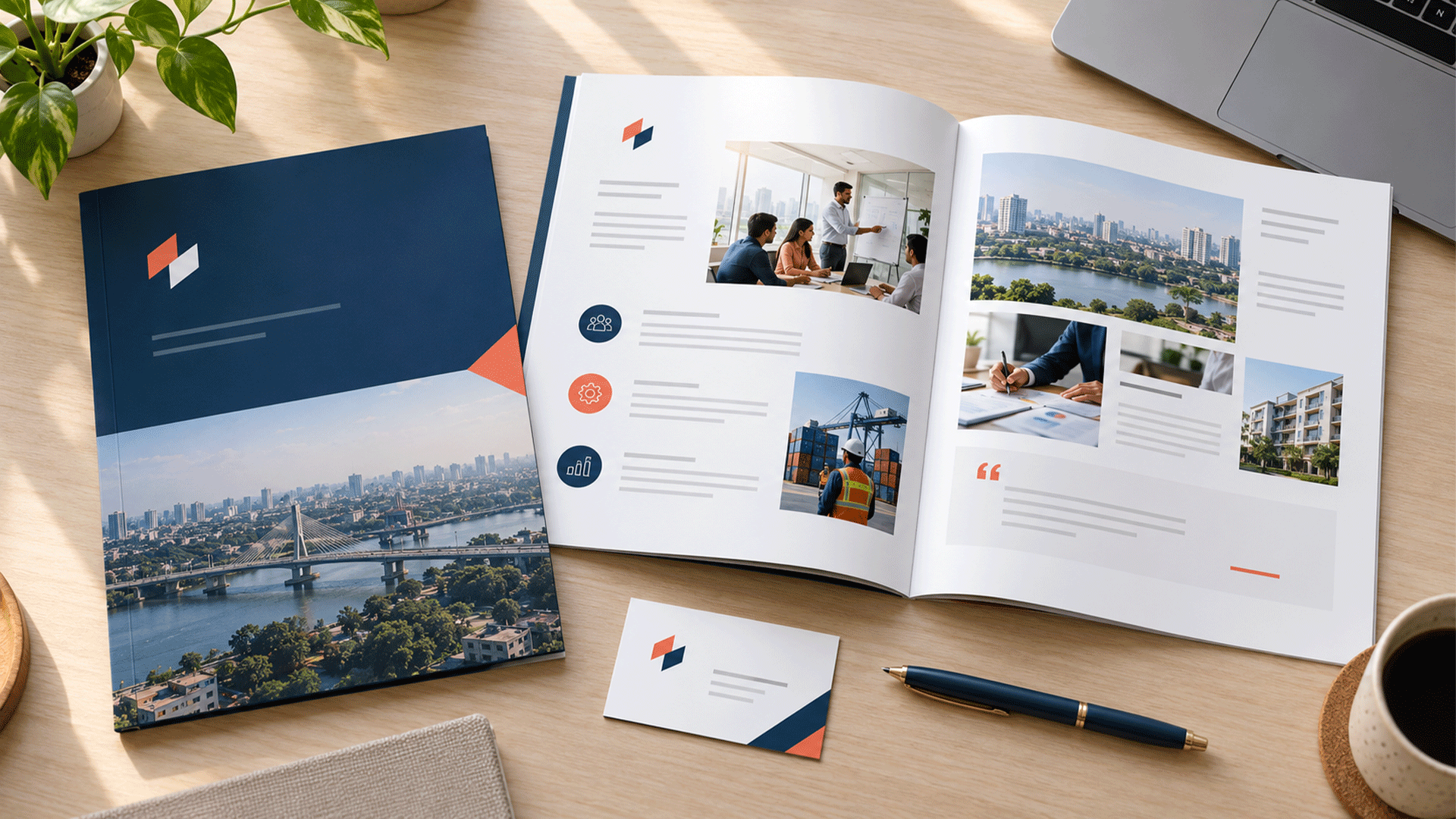

A startup can commission a long list of branded materials: business cards, letterheads, brochures, presentation folders, social templates, uniforms, and more.
The useful question is which of those materials the business needs to launch and serve its first customers.
Corporate identity for startups should begin with usable logo assets, simple visual rules, and the materials customers will encounter while discovering, evaluating, buying from, and contacting the business.
For a consultancy, that might mean a clear web presence and a proposal template. For a product business, packaging and labels may be essential before the first sale.
The right order depends on the business model, launch commitments, and everyday workflow.
This guide provides a practical starting framework, with room to move specific materials earlier when your business needs them.
The Startup Identity Priority List
Use this table to establish the initial scope.
| Priority area | What to create | When to move it forward |
|---|---|---|
| Core identity | Approved logo files, colour and typography rules | Before developing dependent materials |
| Customer discovery and contact | Relevant profile assets, a clear online destination, contact details | Before directing people to the business |
| Sales communication | Service sheet, proposal, catalogue, or presentation | Before the first relevant sales interaction |
| Transaction and delivery | Branded quotations, invoices, order information, or other recurring documents | Before those workflows begin |
| Essential physical applications | Packaging, labels, signs, menus, or other necessary materials | When launch or delivery depends on them |
| Repeated communication | Templates for the channels the team will actively use | Before recurring production becomes difficult to manage |
| Handover and maintenance | Organized files, a compact guide, and update responsibility | As part of the initial delivery |
These areas can be developed together. The table describes dependencies and customer needs, rather than a fixed sequence every startup must follow.
Begin With a Short Business Brief
Before designing the materials, confirm the information they need to communicate.
Record:
- The approved business name and required language versions.
- The priority audience.
- The main offer and relevant value.
- The intended presentation of the business.
- Where customers will discover and evaluate it.
- How enquiries, orders, and follow-up will work.
- The known launch dates and commitments.
- Who approves the work.
A simple startup may resolve much of this through focused discovery.
Where the audience, offer, or positioning remains unsettled, a brand strategy and foundation exercise can help establish the direction.
Record unanswered questions. Materials that depend on unresolved information may need a different schedule from those ready for production.
1. Create a Usable Logo Asset Set
The first deliverable should be artwork the business can apply to its priority formats.
A practical set may include:
- The primary logo arrangement.
- An alternative arrangement where needed.
- A compact version for small or cropped applications.
- Suitable light and dark background versions.
- Single-colour artwork for relevant uses.
- Required Bangla and English arrangements.
- Master artwork and appropriate exports.
Confirm the versions against real applications. A compact mark may help with a profile image, while a different arrangement may suit a website header.
The exact set depends on the design and the startup’s needs.
If a suitable logo already exists, assess what can be retained. A professional logo design project can include development or refinement according to the agreed brief.
Useful completion check: The founder or team can identify the correct file for each agreed launch application.
2. Prepare a Compact Identity Guide
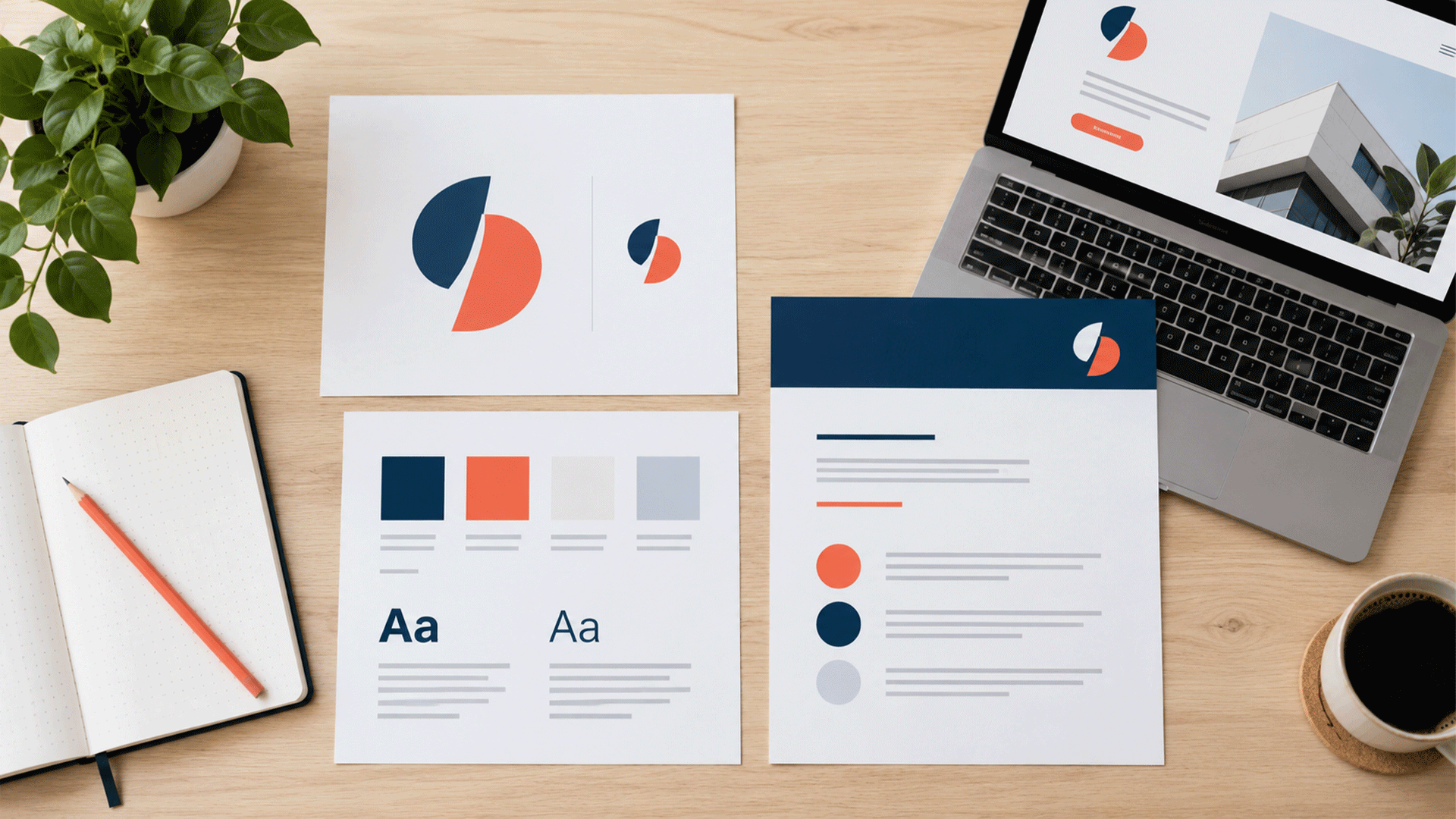
Create a short reference that explains how to use the identity.
Include:
| Area | Useful guidance |
|---|---|
| Logo | Approved versions, spacing, backgrounds, and minimum sizes |
| Colour | Values, roles, and appropriate combinations |
| Typography | Heading, body, and supporting text styles |
| Imagery | Relevant subject matter, treatment, and cropping |
| Layout | Basic spacing, alignment, and recurring arrangements |
| Examples | Applications the startup will use immediately |
| Asset access | Where current files are stored and who maintains them |
The guide should answer practical questions without requiring a long document.
Nielsen Norman Group’s guidance on consistency and standards describes how shared patterns and design systems support consistent applications. For a startup, a compact set of reusable rules provides a practical starting point. NN/G
Include suitable text and background combinations. W3C’s text contrast guidance explains contrast requirements and exceptions for web content; ordinary branded text does not receive a blanket exemption. W3C
Useful completion check: Someone other than the designer can apply the basic rules to a normal business document.
3. Establish the Main Customer Contact Presence
Decide where customers will go after discovering the business.
Depending on the model, that may be a website, landing page, storefront listing, marketplace presence, or another appropriate channel.
Prepare the identity assets and content needed for that destination.
At minimum, help visitors understand:
- Who the business is.
- What it provides.
- Who the offer is intended for.
- How to enquire, order, book, or take the next step.
- Where to find relevant contact information.
Keep names, descriptions, and contact details aligned across active channels.
A new startup does not need to populate every platform immediately. Choose destinations the business can maintain and respond through.
Corporate identity design can supply visual rules and assets. Building the website, configuring accounts, and maintaining content should be assigned explicitly.
Useful completion check: A prospective customer can reach the intended destination and complete the next step.







4. Design the Material That Supports Your First Sale
Identify what the customer needs to evaluate the offer.
For a service business, the priority might be a concise service sheet and an editable proposal.
For a retailer, it might be product information, a menu, a catalogue, or another relevant buying aid.
For a startup preparing scheduled meetings, a presentation may move earlier.
| Sales situation | Possible material |
|---|---|
| A prospect asks what you provide | Service or capability sheet |
| A client needs a tailored scope | Proposal or quotation template |
| A buyer compares several products | Product sheet or catalogue |
| A founder has scheduled presentations | Reusable presentation layouts |
| A customer chooses from an offer in person | Menu, price list, or relevant display |
Choose the material around the actual conversation.
A substantial company profile may be useful when prospects or partners need it. A shorter, accurate document may serve the immediate requirement.
Useful completion check: The team can explain the offer and prepare a relevant response using current information.
5. Prepare Recurring Transaction Documents
Think about what happens after the customer expresses interest or agrees to proceed.
The startup may need branded quotations, invoices, order information, onboarding documents, or delivery communication.
Design these around the existing business workflow.
Confirm:
- The fields and information the process needs.
- Which details employees must edit.
- How tables and longer entries behave.
- Whether the material is printed, emailed, or generated by software.
- Which application or system produces the final output.
An attractive invoice mockup does not update a billing system. An editable document needs to work in the software the team will actually use.
Coordinate the design with the person responsible for the process.
Useful completion check: The responsible employee can produce a realistic document without rebuilding the layout.
6. Move Essential Physical Materials Into the Launch Scope
Physical materials can be the highest priority when the business depends on them.
A shop may need identification at its premises. A café may need a menu. A product business may need packaging and labels before delivery.
Confirm dimensions, content, quantities, and supplier requirements early enough to prepare and check the artwork.
For packaging, establish what the customer and production process need before finalizing decorative treatments.
For signs, consider the intended location and viewing conditions.
For print, use the supplier’s confirmed specifications and review an appropriate proof.
These materials belong in the first phase when the launch requires them. Their timing should follow the actual delivery commitment.
Useful completion check: The material is suitable for its intended use and ready when the business needs it.
7. Build Templates for Active Communication Channels
Create templates for work the team expects to repeat.
Possible priorities include:
- Proposal and report layouts.
- Presentation slides.
- Social announcements.
- Product or service highlights.
- Frequently used document pages.
- Email signatures.
Choose layouts based on planned content.
A social template should accommodate different headline lengths and image crops. A presentation needs enough flexibility for the founder’s actual material.
For a Bangladesh-based startup communicating in Bangla and English, test both languages where required.
Clarify which elements employees can edit and which should remain fixed. Confirm access to the intended software, fonts, and assets.
Useful completion check: A team member can create a new item with realistic content and produce a consistent result.

Which Materials Can Wait for a Clear Use Case?
Some items become useful later, when a specific need appears.
| Material | A useful trigger for creating it |
|---|---|
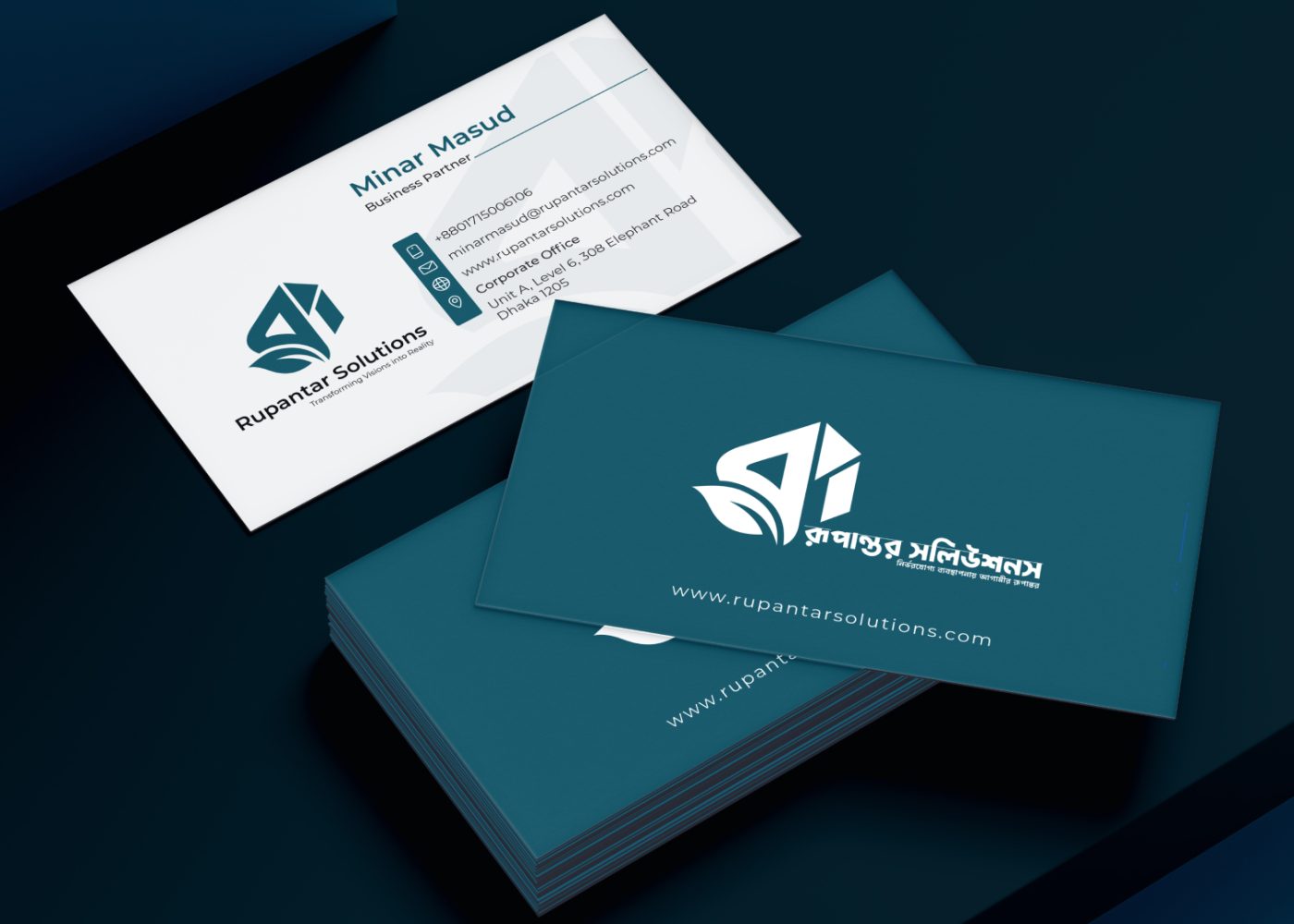
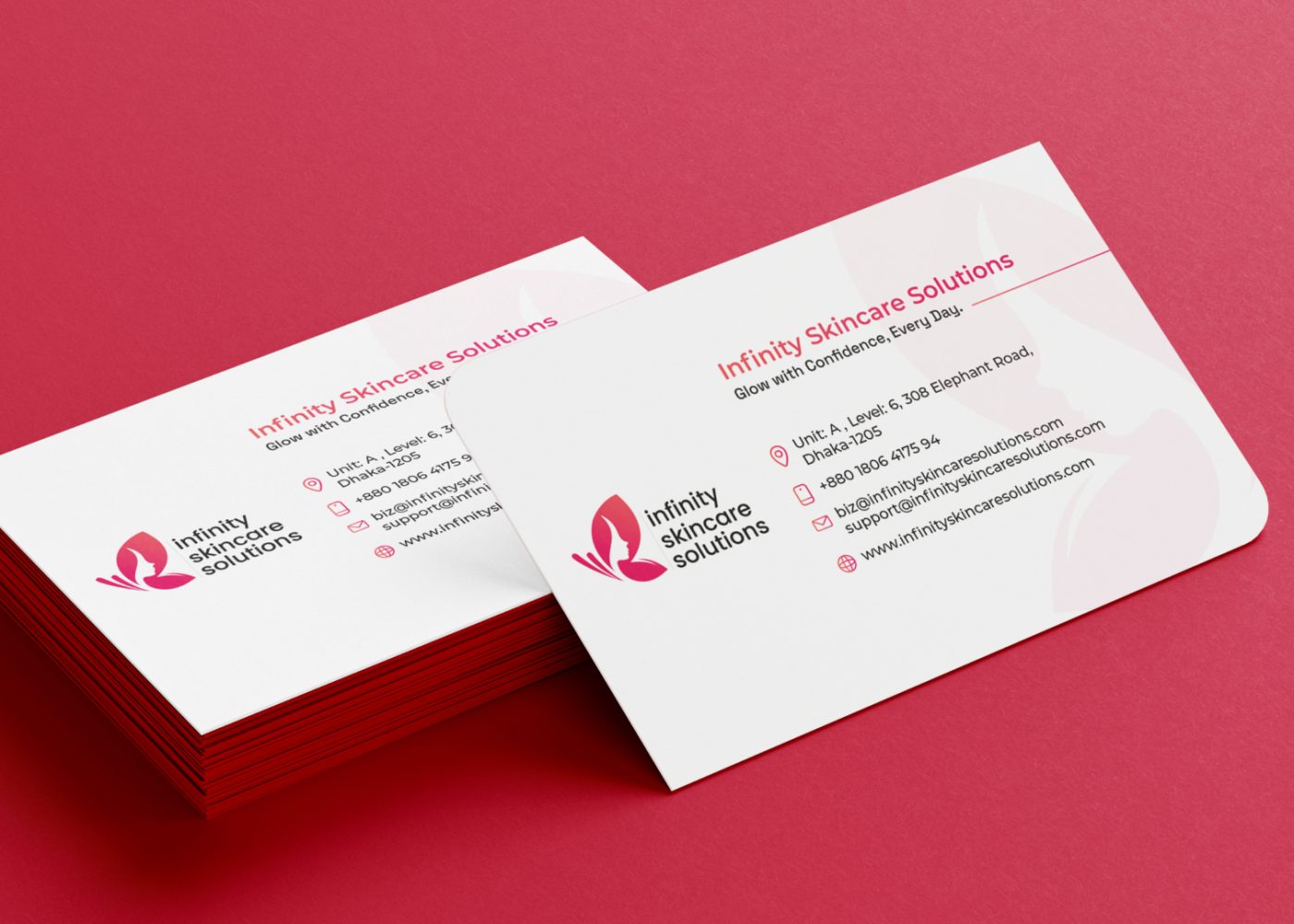
| Printed business cards | Planned networking or face-to-face sales |
| Envelopes and document folders | Regular physical correspondence or document delivery |
| Extensive company profile | A defined sales, partnership, or procurement requirement |
| Large brochure range | Offers and distribution needs justify several versions |
| Promotional merchandise | A planned activity with a clear audience and purpose |
| Additional social formats | The team has a content plan that needs them |
| Complex brand architecture guidance | Multiple offers or brands create a real relationship problem |
A scheduled event can move an item forward. A business card may be urgent for one startup and rarely used by another.
Ask who will use the material, for what task, and when.
Priorities by Startup Business Model
The following examples are planning suggestions, not universal package specifications.
| Startup type | Materials to examine early | Materials that depend on the plan |
|---|---|---|
| B2B service company | Core identity, contact presence, service sheet, proposal, transaction documents | Brochures, folders, exhibition materials |
| Online product business | Core identity, product presentation, store assets, packaging, order communication | Catalogues, retail displays, merchandise |
| Local shop or café | Core identity, premises identification, menu or product information, relevant contact presence | Large promotional print ranges |
| Software startup | Core identity, product and web application guidance, contact presence, demo or sales materials | Event materials, wider corporate stationery |
| Startup preparing formal presentations | Core identity, relevant web presence, presentation system, supporting information | Additional collateral beyond scheduled use |
Identity assets for software products may need to be applied within an existing interface. Full product design is a broader scope and should be discussed separately.
A Simple Way to Set the Order
For each proposed material, answer four questions.
Is It Needed for a Confirmed Launch or Customer Interaction?
Move it forward if the business cannot complete an important scheduled activity without it.
Use actual commitments rather than a hypothetical future campaign.
Will the Team Use It Repeatedly?
A reusable proposal or document template can support recurring work.
Confirm the task and who will use the file.
Is the Information Ready?
Check whether names, offers, addresses, prices, or other dependent details are sufficiently settled.
Decide how changes will be handled before commissioning quantities or complex variations.
Can the Team Maintain It?
Identify the software, skills, access, and responsibility required.
A material that needs frequent updates should have a workable editing process.
Together, these questions help distinguish immediate needs from useful later additions.
Example: A Focused Launch Kit for a Service Startup
Consider a fictional consultancy preparing to approach its first business clients.
Its customers will discover it online, request information, receive a proposal, and proceed through a documented onboarding process.
A focused initial scope could include:
- Confirming the brief and business description.
- Preparing a usable logo set.
- Creating a compact visual guide.
- Establishing a clear online destination.
- Designing a service sheet.
- Building editable proposal and transaction templates.
- Preparing the presentation layouts needed for scheduled meetings.
- Organizing files and demonstrating their use.
Business cards can be added for planned in-person meetings. A longer company profile can follow when a defined audience needs it.
This is an illustrative scope. The consultancy’s real sales process and launch commitments should determine the final list.
Agree on a Handover the Startup Can Use
The delivery should include more than presentation images.
Ask for:
| Deliverable | What to confirm |
|---|---|
| Approved logo assets | Versions and formats for agreed applications |
| Identity guide | Practical rules and relevant examples |
| Editable templates | Software, layouts, styles, and access |
| Digital exports | Intended uses and suitable output settings |
| Physical production artwork | Supplier specifications and proofing responsibility |
| Asset index | Which file to use for common tasks |
| Walkthrough | How employees update and export recurring materials |
| Maintenance responsibility | Who approves changes and keeps files current |
Identify third-party asset dependencies and any access the startup must arrange.
Keep the approved files easy to find. Explain which versions are current and how future changes will be communicated.
Before Launch, Test the Customer Journey
Walk through the first interactions using the actual materials.
Can someone:
- Identify the business across its active channels?
- Understand the main offer?
- Contact the right person or place an enquiry?
- Receive a clear sales response?
- Read the documents on the intended device?
- Complete the relevant transaction or onboarding step?
Then ask an employee to update a template.
Check a longer name, a larger table, a different image, and the required language versions.
Review the live destination, exported document, or physical proof rather than approving only a design mockup.
Record unresolved issues and assign responsibility for completing them.
How to Expand the Identity After Launch
Use actual work to identify the next materials.
Repeated requests for detailed product information may justify a catalogue. Frequent presentations may reveal missing slide layouts. A new sales channel may need a different format.
Review the materials already in use before expanding the set.
Keep useful assets and improve templates where employees repeatedly struggle.
Maintain the shared visual rules as the company adds channels or contributors.
The next phase should respond to a clearer operational need, customer question, or planned activity.
FAQ
Create them when planned in-person interactions make them useful. Confirm the information and how recipients should follow up.
The timing depends on how customers discover and buy from the business. Develop the materials needed for the actual journey; some can be created in parallel.
A logo provides an identifying mark. The business also needs the information, contact presence, and working materials required to serve its first customers.
A compact guide may suit a focused initial system. Include enough practical information for the team to use and maintain the materials.
Record the uncertainty, prioritize editable materials, and agree on how dependent designs will be updated. Resolve important questions before finalizing work that relies on them.
Bring your launch plan, customer journey, and recurring tasks into the design discussion.
M4YOURS IT’s corporate identity design service covers visual standards, stationery, presentation templates, digital assets, and related materials. Agree on the specific deliverables your startup needs first. M4YOURS IT
Discuss your startup with M4YOURS IT to define a practical launch scope and create coordinated materials your team can use.