
A customer can enjoy your video, save your post, or visit your website and still name another company when they need the service.
That gap is worth investigating. Your competitor may have a longer history, more exposure, or stronger connections in customers’ minds. Your own marketing may also make the content easier to recognise than the business behind it.
Brand recall becomes a practical concern when people struggle to bring your business to mind in relevant situations. The work involves clear identification, useful associations, and consistent exposure to recognisable brand cues.
Here are seven possible reasons and ways to check them.
Brand Recognition and Brand Recall Are Different
These terms describe different questions:
| Concept | What you are checking |
|---|---|
| Brand recognition | Can someone identify your brand when shown its name, logo, or other identifying material? |
| Brand recall | Can someone name your business from memory when given a category or situation, without a list of brands? |
| Buying-situation associations | Does your brand come to mind when someone faces a particular need? |
The Ehrenberg-Bass Institute describes mental availability as being easily thought of in buying situations. Its category entry point research examines the needs and cues associated with those situations. marketingscience.info
Someone might recognise a skincare brand on a shelf but never think of it when looking for a daily moisturiser. Another person might recognise an agency’s logo but struggle to remember its name when planning a website.
Recall also does not measure preference or purchase. A familiar brand still needs a suitable offer and an accessible way to buy.
1. Your Message Makes the Business Difficult to Place
Descriptions such as “innovative solutions” or “excellence in everything” give people little information about what you offer.
A customer should be able to understand your main services and the needs they address.
For example, a website agency could explain that it builds sites with course enquiry forms and consultation booking for education consultancies. That provides a clearer service context than a broad claim about digital excellence.
What to do: Review your homepage introduction, social bio, advertising, and sales materials. Make the offer understandable in everyday language.
Use a consistent explanation across those materials. If your audience and positioning are unclear, brand strategy and foundation can help define the brief.

2. Your Identity Changes Across Every Channel
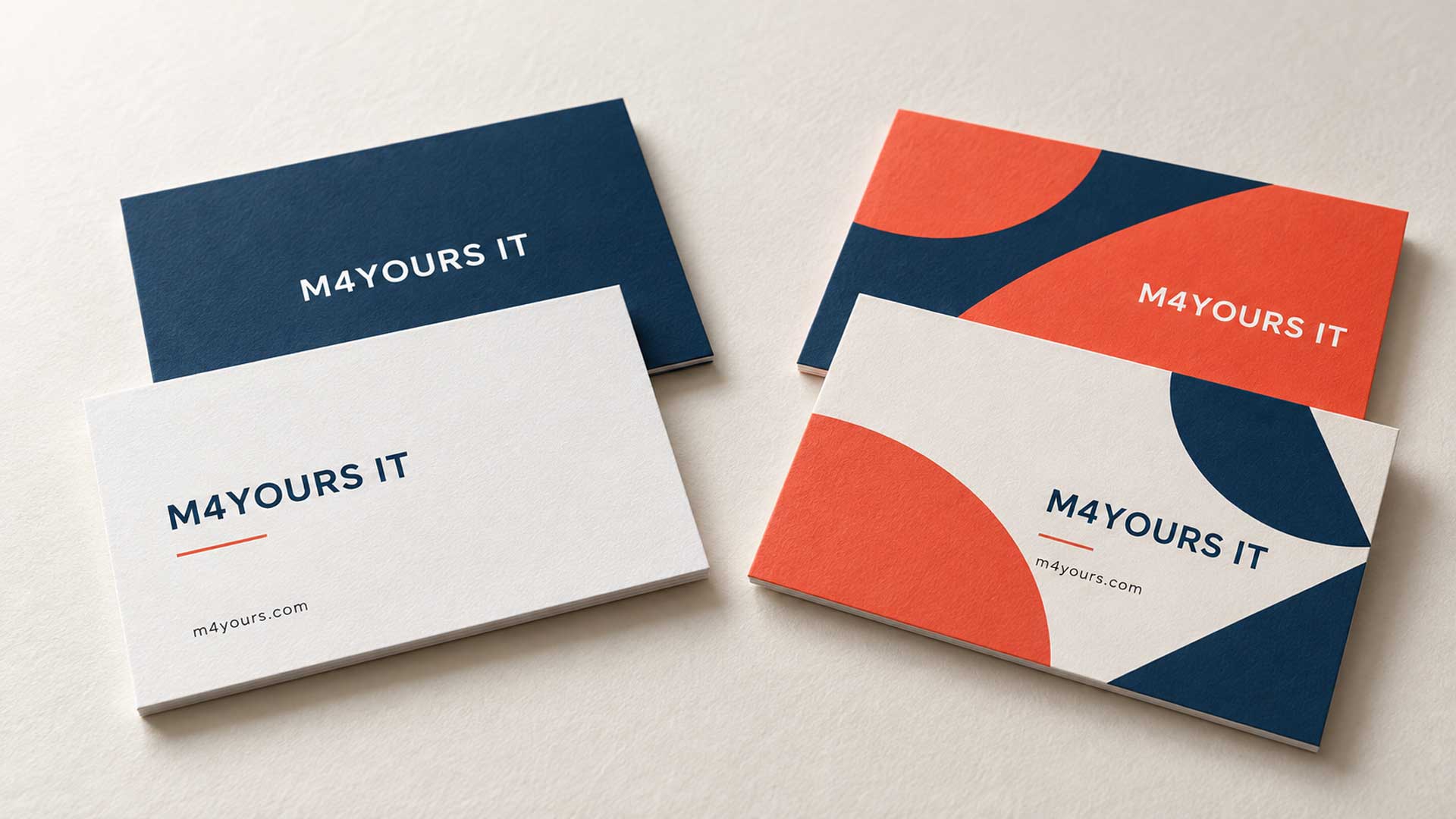
A customer may encounter your business through a post, a proposal, an email, and a business card.
If those materials use unrelated logo versions, typography, colors, and visual styles, the connection between them can be difficult to see.
This is especially easy to overlook when different staff members or suppliers produce different materials.
What to do: Establish approved logo versions, a shared palette, typography rules, and reusable templates.
Photography and content can vary while the main identifiers remain recognisable. A corporate identity design system can give the team a common reference.
Review the whole customer journey, including everyday documents and email signatures.
3. Your Visual Cues Could Belong to Almost Any Competitor
A color, icon, or pattern can look attractive without identifying a particular business.
The Ehrenberg-Bass Institute’s distinctive asset research assesses cues through two ideas: how widely people link them to a brand, and how specifically they identify that brand rather than alternatives. marketingscience.info
For a smaller business, the practical question is whether people associate the selected cue with you.
What to do: Test your logo, graphic treatment, or other recurring elements with relevant buyers. Ask which company, if any, the cue brings to mind.
If it evokes several competitors, investigate the overlap. If people associate it with your business, consider preserving and using it consistently.
A professional logo design review can address legibility and application problems. Test existing recognition before making a major change.






4. People Remember the Content but Miss the Advertiser
A useful tip, funny scene, or striking image can attract attention while the business name remains easy to overlook.
For example, a video may clearly explain a customer problem but introduce the company only in a brief closing frame. Viewers could remember the explanation without remembering who supplied it.
Ehrenberg-Bass guidance on building distinctive assets highlights presenting new assets alongside the brand name to establish the connection. marketingscience.info
What to do: Give the business a clear place within the content. Make the name, offer, and selected visual cues easy to connect.
Review videos as well as static posts. After a brief viewing and an unrelated task, ask a relevant viewer which company was being promoted.
5. Your Brand Has Few Links to Actual Buying Situations
Customers do not always begin with a brand name. They may begin with a problem, occasion, or task.
For example:
| Business | A situation worth exploring |
|---|---|
| Education consultancy | A student needs help comparing course options before an intake deadline |
| Skincare retailer | Someone wants a suitable moisturiser for their daily routine |
| Website agency | A company’s existing site makes enquiries or booking difficult |
| Branding agency | Different departments are producing inconsistent business materials |
These are illustrative starting points for customer research.
What to do: Ask buyers what was happening when they started looking for the product or service. Use their responses to plan relevant content and service explanations.
Connect the situation, your offer, and your brand identity within the same communication. Explore several relevant situations over time, while keeping the business recognisable.
6. Your Visibility Is Intermittent or Misses Relevant Buyers
Publishing regularly does not automatically mean the people who buy your category encounter your brand.
An account can also receive engagement from people who enjoy the content but have little connection to the offer.
What to do: Review who your channels reach and where relevant buyers look for information.
Set a cadence your team can maintain. Use recognisable cues across the selected channels, and make room to reach prospective buyers as well as existing followers.
Ehrenberg-Bass’s distinctive asset guidance discusses reach and sustained use as part of establishing brand associations. marketingscience.info
There is no universal posting frequency that guarantees recall. Consider your audience, channel, budget, and the quality of the brand connection in each communication.
7. Your Metrics Do Not Tell You What People Remember
Views, clicks, and reactions tell you about particular interactions. They do not directly tell you which business someone remembers later.
Likewise, asking “Do you know our company?” supplies the name before you test whether the person can recall it.
What to do: Match the measurement to the question.
Ask about brands in a category or buying situation before showing your identity. Then assess recognition and associations separately.
Keep customer responses separate from relevant prospects who have not used your business. Their familiarity may differ.
Track enquiries and purchases as additional outcomes. A person may remember your brand but choose another option because of availability, price, suitability, or experience.

A Practical Brand Recall Audit
Start with a small round of conversations with relevant customers and prospects. Treat the findings as clues for investigation rather than a market-wide ranking.
| Check | Example question or task |
|---|---|
| Unaided category recall | “Which companies come to mind when you think about this service?” |
| Situation-based recall | “Which companies would you consider if you needed help with this specific task?” |
| Brand recognition | After the recall questions, show your identity and ask whether it is familiar |
| Cue association | Show a selected visual element without the brand name and ask which company, if any, it suggests |
| Advertising attribution | Show a communication, introduce a short unrelated task, then ask which business was promoted |
| Offer understanding | Ask the person to explain what your business provides in their own words |
Avoid suggesting your preferred answer. Record the names and explanations people actually give.
Compare the responses with the materials those people may have encountered. Check whether the same offer and identifiers are present across your website, profiles, advertising, proposals, and follow-up communication.
For a larger tracking study, define the buyer sample, questions, and measurement method carefully so results remain comparable over time.
What to Improve First
Use the findings to choose the next action.
| What you observe | An action to investigate |
|---|---|
| People recognise the identity but cannot explain the offer | Make service descriptions and buying situations clearer |
| People remember the content but name the wrong advertiser | Strengthen the link between the content, business name, and brand cues |
| Visual elements evoke several competitors | Review their distinctiveness and application |
| Different materials look unrelated | Establish guidelines and shared templates |
| Relevant buyers have had little exposure | Review channel reach and distribution |
| People remember the brand but do not enquire | Examine the offer, contact journey, and purchasing barriers |
A redesign is one possible response. The evidence may instead point to messaging, distribution, or the way existing assets are used.
Preserve recognised elements where they remain useful. Make changes with a clear purpose and a plan for introducing them.
A Practical First-Month Plan
Use the first month to establish a baseline and improve execution.
- Week 1: Review recent customer-facing materials and collect initial recall, recognition, and offer-understanding responses.
- Week 2: Agree on core identifiers, a clear service explanation, and the buying situations to explore.
- Week 3: Apply the shared direction to priority materials and publish content for those situations.
- Week 4: Check consistency, advertiser attribution, and whether the intended buyers are being reached.
Continue assessing recall over a suitable longer period. A month of cleaner execution can establish a better working system, but it does not prove that durable brand memories have changed.
FAQ
It may help when the current logo has identification or application problems. First check whether people already recognise it and whether the larger issue is messaging, exposure, or weak brand attribution.
No. Recognition involves identifying a brand when shown relevant material. Recall involves bringing the brand name to mind from a category or situation prompt without a list of options.
Frequency alone does not establish that. Check whether relevant buyers see the content and connect it to your business. Consistent identifiers and a clear offer are useful parts of the review.
A new business can begin building its own associations through clear identification, relevant communication, and sustained exposure. Compare progress with an initial baseline while accounting for differences in history and reach.
It varies with existing familiarity, exposure, buyer behavior, and the changes being made. Establish a measurement approach and review progress over time rather than promising a fixed deadline.
M4YOURS IT’s branding services address brand positioning, messaging, visual identity, and consistent business materials. M4YOURS IT
Explore our brand strategy and foundation services to discuss your audience, current materials, and marketing challenges. We can help define a direction that makes your business easier to identify and understand.