Share



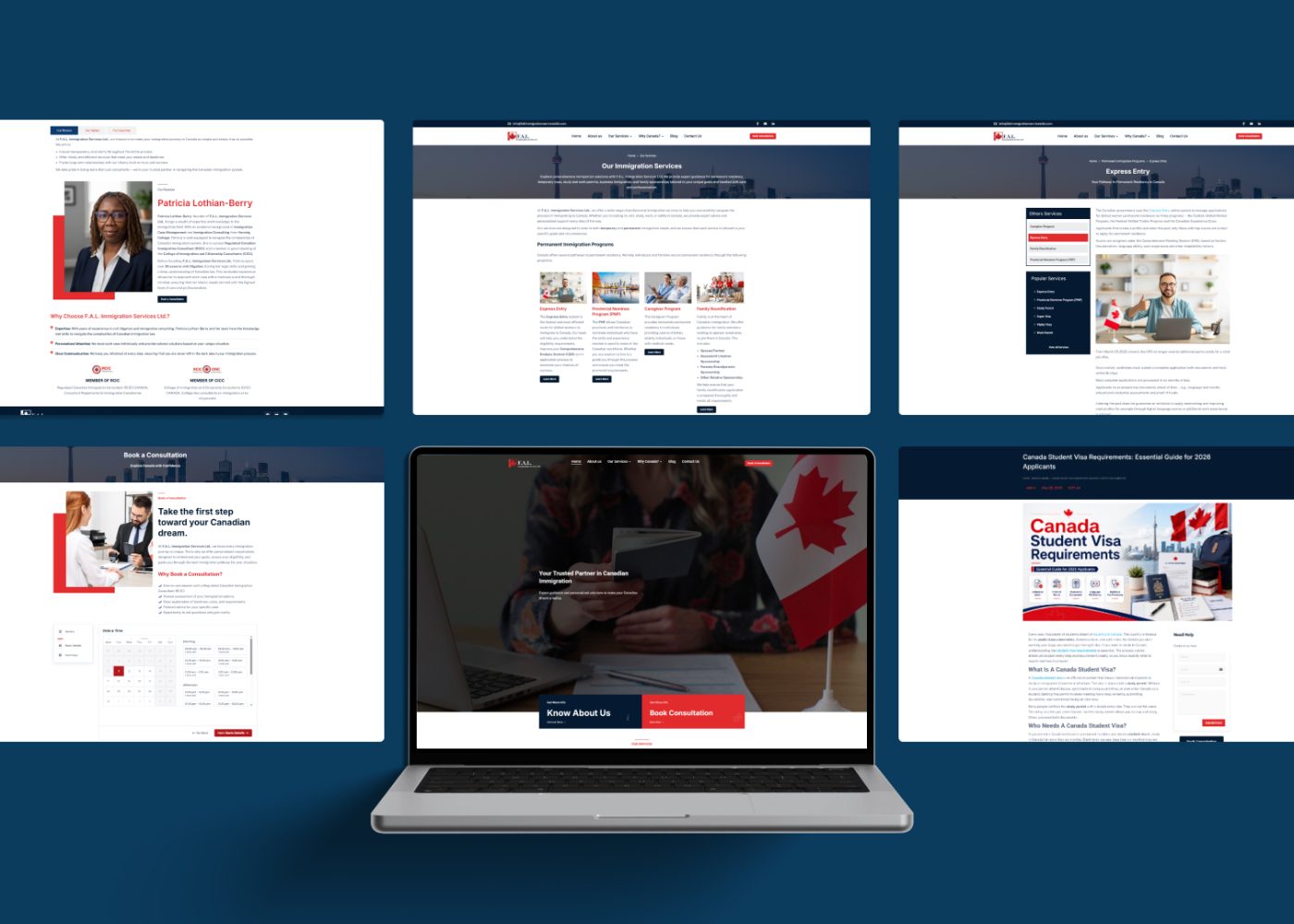
















Build a 90-day RCIC content calendar by choosing a priority audience, selecting questions that support your services, and assigning each topic a format, reviewer, publication slot, and next step. Plan reusable educational content in advance and keep room for verified immigration updates.
Start with a publishing pace your team can sustain. One useful article and two supporting social posts per week can provide a workable example when writing, design, and RCIC review time are available.
The calendar should make content easier to produce and keep accurate. It should also help prospective clients understand your services and decide whether to request an appropriate consultation.
Choose a primary outcome before collecting post ideas.
For example, your goal might be to increase suitable consultation enquiries for one service your firm actively provides. Specify the audience, relevant location or language needs, and the service scope your team can support.
Then consider capacity. More enquiries are useful when your team can respond, conduct consultations, and take on appropriate engagements.
Record your starting position: existing service-page visits, enquiries, consultation bookings, and common intake questions. This gives you something to compare with the next 90 days.
A focused marketing strategy consultation can help connect content priorities with your practice’s goals and available resources.
Content pillars are recurring themes that give individual posts a clear purpose.
Build them from the questions your team hears during enquiries and consultations. Remove identifying details before using internal notes to develop public content.
| Pillar | Questions it can address |
|---|---|
| Professional trust | Who is the consultant, and how can someone verify their registration? |
| Service understanding | What services does the firm provide, and what does each cover? |
| Consultation preparation | What happens before, during, and after a consultation? |
| Process clarity | How do fees, document sharing, communication, and agreements work? |
| Verified updates | Has a relevant official change affected information the audience needs? |
Choose topics within the firm’s actual service scope. A calendar does not need to cover every Canadian immigration category.
For an immigration practice developing its online presence, a focused group of useful topics can create a clearer introduction to the firm.
For this sample, use one main article and two adapted social posts during each of the first 12 weeks.
The article provides the fuller explanation. The supporting posts might be a carousel and a short video, each answering one part of the same question.
That creates 12 new articles and 24 supporting posts across Days 1–84. During Days 85–90, refresh one existing article and publish one additional FAQ post.
The result is 38 planned publishing actions, including the article refresh. This is a workload example, not an ideal frequency for every RCIC firm.
If review capacity is limited, reduce the pace. Keep one planned slot flexible so a verified, relevant update can replace a scheduled piece without expanding the workload.
Prepare the first batch before Day 1. Within each full week, you might publish the article first, a carousel later, and a short video after that. Choose actual publication days around your team and audience.
Day 1 means your chosen campaign start date. The schedule covers 12 full weeks and a final six-day block, which totals exactly 90 days.
Replace [Priority Service] with a service your firm provides. Adapt process topics to the way your practice actually operates.
| Days | Main article or update | Supporting posts | Reader’s next step |
|---|---|---|---|
| 1–7 | How to Check an RCIC’s Registration | Register-check carousel; consultant introduction video | Read the About page |
| 8–14 | What Happens During an Immigration Consultation | Consultation FAQ carousel; process explainer video | View consultation details |
| 15–21 | Which Immigration Services Our Firm Provides | Service overview carousel; scope explainer post | Visit the relevant service page |
| 22–28 | Questions to Ask Before Hiring an Immigration Consultant | Questions checklist; short hiring-process Q&A | Read the hiring guide |
| 29–35 | What to Prepare for a [Priority Service] Consultation | General preparation checklist; information-sharing explainer | Review the approved preparation guide |
| 36–42 | What an Eligibility Assessment Can and Cannot Establish | Common misunderstanding carousel; assessment-limits Q&A | Learn about the assessment process |
| 43–49 | How We Explain Professional Fees and Service Scope | Fee questions carousel; scope explainer clip | View fee and scope information |
| 50–56 | How to Share Documents With Our Firm | Intake process carousel; approved upload walkthrough | Read sharing instructions |
| 57–63 | From First Enquiry to a Service Agreement | Client journey carousel; intake FAQ clip | View consultation options |
| 64–70 | [Priority Service]: Questions We Hear Most Often | Service FAQ carousel; question-and-answer video | Read the service resource |
| 71–77 | How to Book, Prepare for, or Reschedule a Consultation | Booking steps carousel; time-zone reminder post | Manage or request an appointment |
| 78–84 | Understanding Your Service Agreement Before You Sign | Scope questions carousel; next-steps explainer video | Ask the firm about the agreement |
| 85–90 | Refresh the most useful existing article | One FAQ post based on new client questions | Use the relevant next-step link |
The sequence begins with trust and service clarity, moves into preparation and decision questions, and then explains how to take the next step.
Use the final six days to review results, update the selected article, publish the FAQ post, and prepare the next calendar. The review and planning work are internal tasks.
A title and a date are not enough to guide production.
Each entry should include:
Add an expiry or immediate-review flag for material involving changing deadlines, fees, program conditions, or intake availability.
A useful brief might say: “Explain what our consultation includes, use our approved process, answer three recurring questions, and link to consultation details.” This gives the writer a concrete task.
Keep the calendar in one shared location with a named owner. Use statuses such as planned, drafting, professional review, revisions, approved, scheduled, and published.
Assign responsibilities before scheduling the first post.
A practical workflow is:
Review the finished design as well as the draft. A shortened caption, headline, or translation can change the meaning of an approved explanation.
For service advertising, section 44 of the Code of Professional Conduct requires prominent display or announcement of the licensee’s registered name at or near the beginning of the advertisement, in its language, and the College public-register URL in written advertisements. It also requires professional marketing and prohibits misleading representations, success guarantees, and implied government relationships. Build these requirements into the relevant asset checks. laws-lois.justice.gc.ca
If using client endorsements, section 45 requires an actual client or former-client endorsement that is accurate and has been reviewed and approved for public use by that person in writing. Keep the approval record with the asset. laws-lois.justice.gc.ca
The sample calendar does not depend on client stories. Add them only when the firm has suitable material and the required approvals.
Plan general educational topics ahead, while giving changeable information a publication-time check.
Use IRCC’s official notices to identify announcements that may require review. Then check the relevant current program information and any other applicable official sources before writing the explanation. Canada.ca
For each update, record what was announced, when it takes effect, who it affects, and what remains uncertain. Distinguish an announced proposal from an implemented change.
Have the RCIC approve the interpretation and the audience-facing wording. Scheduling a draft several weeks ahead should not bypass a fresh check before publication.
When a change affects existing content, identify related articles, captions, videos, and service pages. Update or withdraw affected material and give staff a consistent explanation.
Repurposing turns one approved explanation into several useful formats.
For example, an article about consultation preparation can become:
The sample schedule counts two supporting social posts. Additional adaptations are optional and need their own production capacity.
Choose channels where your intended audience already interacts with the firm or where you have a clear reason to test. Adapt length, layout, captions, and next-step instructions to each channel.
Check subtitles and translations for accuracy. Keep essential qualifications close to the relevant claim so a clipped video or single carousel slide remains understandable.
Digital marketing support can help coordinate these adaptations and compare their contribution to useful enquiries.
Every post should help the reader do something appropriate.
An introductory article might lead to the consultant’s profile. A service explainer might lead to the relevant service page. A consultation-preparation post might lead to approved preparation instructions.
Use a booking invitation when the content and reader’s needs make it relevant. Keep the description of the consultation consistent with what the practice provides.
Your website design and consultation journey should make these destinations easy to use on mobile. Check the page, form, booking information, and confirmation experience before promoting the link.
Assign someone to monitor responses. General questions may suggest future topics; personal case details should move into the firm’s appropriate private intake process.
Connect enquiries with your CRM and follow-up process so the calendar supports a managed client journey.
Use Days 30, 60, and 90 as internal review points. These are planning choices, not immigration deadlines.
Compare what was planned with what was published. Review which topics generated useful questions, relevant website visits, enquiries, consultation bookings, and attended consultations.
Keep reach and engagement visible, while distinguishing them from business outcomes. A widely viewed post may generate little relevant interest; a smaller educational article may answer an important booking question.
Allow time for people to move from reading to contacting the firm. Record known enquiry sources, ask how people found you, and avoid claiming that every booking after a post was caused by it.
At the end, identify topics to expand, refresh, retire, or repeat. Review production problems too: late briefs, unclear ownership, and delayed approvals can explain missed publication slots.
Your next project
Have a business in mind? Tell us about your ideas, your audience, and the identity you want to create.
Prefer a direct conversation?
No. Choose a pace your team can produce, review, and maintain. A smaller approved calendar is a practical starting point when daily publishing would exceed your capacity.
AI can help organize questions, suggest outlines, and adapt approved material. The responsible people still need to verify sources, review claims, and approve the finished content.
Select updates relevant to your audience and services. Review whether the announcement changes something your clients need to understand, and verify it before adding an explanation.
Choose a focused audience, useful questions, and a realistic publishing pace. Give each entry an owner, reviewer, source check, and relevant next step.
M4YOURS IT can help plan your content calendar, create branded assets, and connect content with your website and enquiry process. Discuss your RCIC content plan to build a practical publishing workflow for your firm.
Adding {{itemName}} to cart
Added {{itemName}} to cart