


















This website uses cookies to improve your web experience.


To grow an RCIC practice beyond referrals, build a clear path from online discovery to a paid consultation and an appropriate service agreement. Start with focused positioning, useful service pages, local search visibility, and reliable follow-up. Add advertising once your team can track enquiries and respond consistently.
Referrals remain valuable. A recommendation gives a prospective client a reason to contact you. The challenge is building additional ways for people to discover your expertise, understand your services, and decide whether to book.
For a Regulated Canadian Immigration Consultant, sustainable growth also depends on capacity. Marketing should bring enquiries your practice can assess and serve well. The following approach connects visibility, trust, client intake, and measurement around that goal.
A useful marketing plan starts with a specific service and audience.
Review your recent work. Which enquiries matched your competence? Which engagements were commercially sustainable? Which services could your team support consistently?
Use those answers to choose an initial focus, such as family sponsorship consultations or employer immigration services. Check that the focus fits your professional authorization, experience, and available capacity.
Write a positioning statement covering:
For example, a hypothetical firm might describe its service as “family sponsorship consultations for couples seeking a structured review of their circumstances and application questions.”
That provides useful direction for a service page, webinar, or campaign. Every public statement must still accurately describe the practice.
Your consultant profile should reinforce the same message. Our guide to building a recognizable personal brand as an independent RCIC explores how professional identity and a defined focus work together.

A visitor arriving through search needs enough information to evaluate your practice independently.
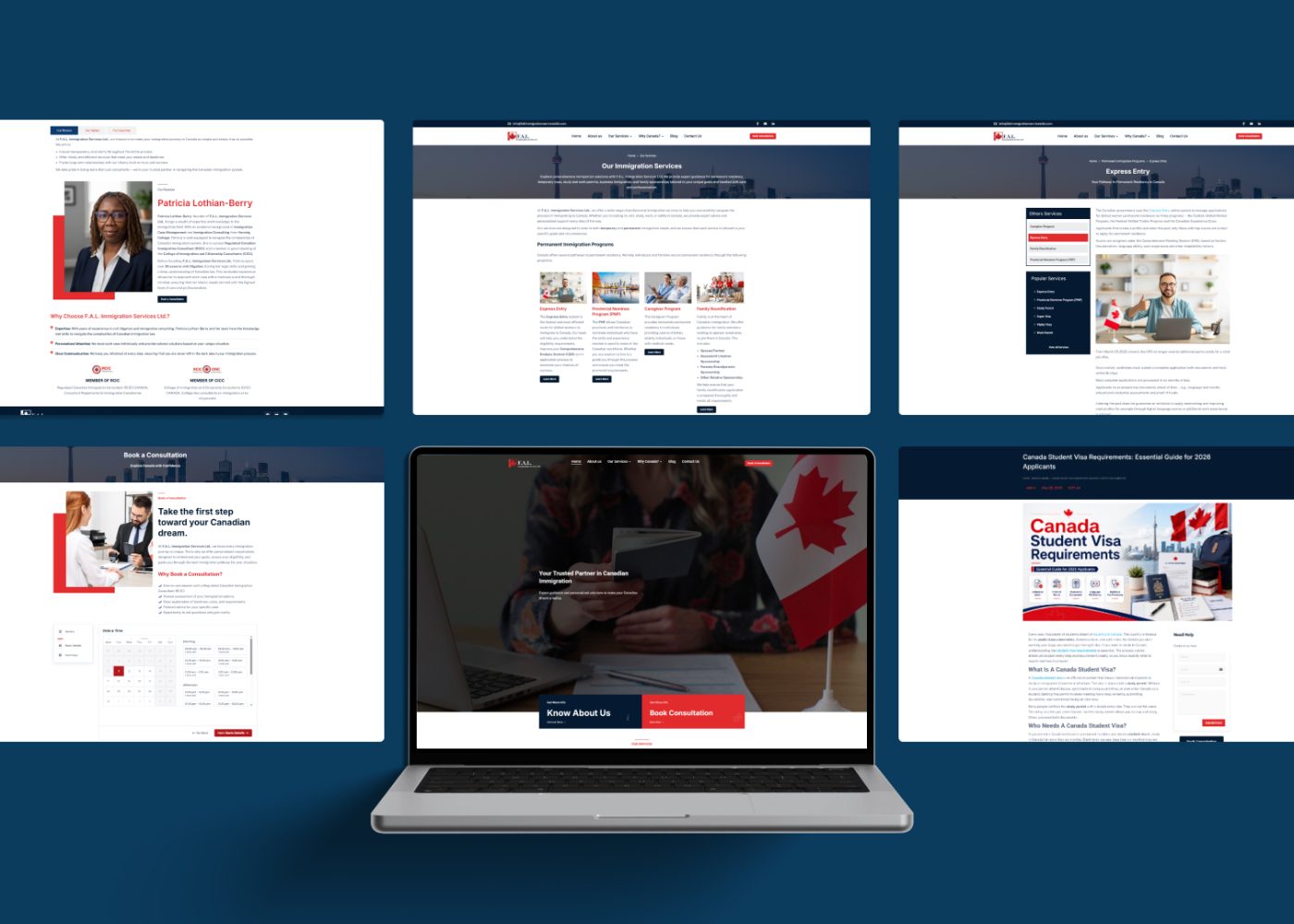
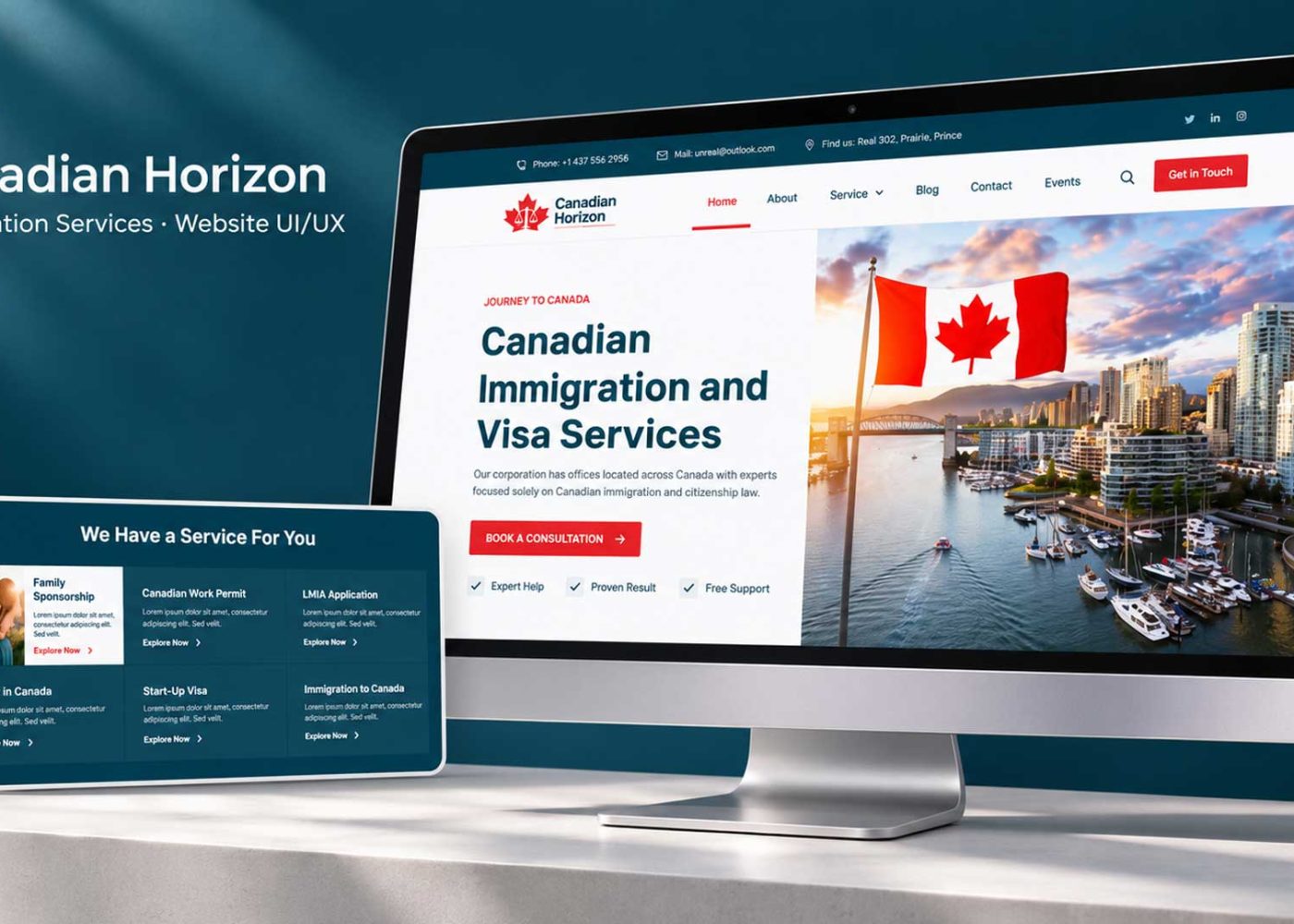
Start with a dedicated page for each priority service. Explain who the service is intended for, what the consultation covers, how booking works, and what the client can expect afterwards.
A useful service page should include:
Test the entire journey on a mobile phone. Submit the form, check the confirmation, complete a test booking, and confirm that the enquiry reaches the responsible person.
Request only the information needed at that stage. Detailed case records and sensitive documents can move through an appropriately protected intake process later.
Our recommendation: improve one important service page and its booking journey first. Our website design services can support the page structure, mobile experience, and implementation.
Search gives prospective clients a way to find your practice while researching professional assistance.
Begin with the service, location, and language combinations that accurately describe your business. Examples might include “family sponsorship consultant in Calgary” or “immigration consultation in Bengali.” These are research starting points; validate demand and relevance before choosing targets.
For an eligible practice, maintain an accurate Google Business Profile. Review your business details, categories, hours, website link, and contact options.
Google explains that local visibility depends mainly on relevance, distance, and prominence or popularity. Complete information helps Google understand a business, while distance remains partly outside the firm’s control. There is no payment that buys a better organic local ranking. See Google’s local ranking guidance. Google Business Profile Help
On your website, connect each priority service page with relevant articles and FAQs. Avoid publishing near-identical pages for every city.
Our recommendation: begin with a small group of useful pages that your team can maintain. M4YOURS IT’s core SEO services provide a foundation for reviewing site structure, content, and search visibility.
Useful content answers the questions that arise before someone feels ready to contact your practice.
Ask your team what prospects repeatedly misunderstand. Those questions can become articles, short videos, or webinar topics:
Program-specific articles require additional care. Include official sources, a meaningful review date, and a named professional responsible for checking the information.
Choose a publishing schedule your team can sustain. For a small practice, one carefully reviewed article and a few related social posts each month can be a practical starting commitment.
Give each article an appropriate next step. A consultation preparation guide can lead to booking information; a broader educational article can point to the relevant service page.
Our recommendation: build a short list of recurring client questions before planning a large content calendar. Publish articles that your team will also find useful when answering enquiries.

Marketing creates additional work as soon as a person contacts your practice.
When enquiries arrive through forms, phone calls, email, and messaging apps, the team needs a shared record. Otherwise, it becomes difficult to see who has responded or what should happen next.
A customer relationship management system, or CRM, can organize stages such as new enquiry, staff review, consultation booked, consultation completed, and engagement decision.
Capture the source, service interest, assigned owner, and next action. Let an authorized professional assess case suitability; an automated form score should not become an immigration eligibility decision.
Set a response target your team can meet. An acknowledgement can explain when a person should expect a human reply. Appointment reminders and preparation instructions can then support the booking.
For promotional email or messaging, review the applicable consent requirements before enabling a sequence. The CRTC describes consent, sender identification, and an unsubscribe mechanism as the three general requirements for commercial electronic messages under CASL. Exceptions depend on the circumstances. Refer to the CRTC’s CASL guidance. CRTC
Use existing CRM capabilities where they fit. Consider custom software development when a documented workflow or integration requirement cannot be handled adequately by your current tools.
Advertising is easier to evaluate when one campaign leads to one relevant service page.
Choose a service your team can handle, a defined audience, and a budget the business can afford to test. Establish what counts as a useful enquiry before launch.
A campaign review should consider:
Review poor results across the whole journey. The cause may be targeting, unclear page content, booking friction, response delays, or a mismatch between the offer and demand.
Our recommendation: agree on a review date and spending limit before launch. Increase investment when the evidence and team capacity support it.
Prospective clients should be able to identify the professional, understand the service, and assess what is being offered.
The Code of Professional Conduct requires the licensee’s registered name near the beginning of advertisements and the public register’s Internet address in written advertisements. It also prohibits misleading representations, application-success guarantees, and implications of a government relationship. laws-lois.justice.gc.ca
When using a client endorsement in marketing, the Code requires that it be genuine, accurate, and approved for public use by the client in writing. These requirements appear in sections 44 and 45 of the Code of Professional Conduct. laws-lois.justice.gc.ca
Build review and approval into your publishing workflow. Make credentials and consultation terms easy to find, and answer public reviews without revealing confidential case information.
AI can help with approved FAQs, appointment instructions, and routine enquiry routing. Define the handoff to a person clearly. Our chatbots and conversational AI services can support these bounded interactions.
Record both the initial discovery source and the channel through which someone contacted you. A prospect might find an article, return through a branded search, and then send a message.
A brief “How did you hear about us?” question can supplement website tracking. Review the records together rather than giving every client to the final click.
Track unique enquiries, suitable enquiries, completed consultations, new retained clients, and the associated costs.
Consider this hypothetical example, using one campaign cohort followed through to its engagement decisions:
| Measure | Illustrative result |
|---|---|
| Attributed campaign spend | C$2,000 |
| Unique enquiries | 80 |
| Completed consultations | 20 |
| New retained clients | 5 |
| Spend per enquiry | C$25 |
| Spend per completed consultation | C$100 |
| Campaign spend per retained client | C$400 |
These figures are arithmetic examples, not performance benchmarks. The C$400 figure covers the stated campaign spend. A fuller acquisition-cost calculation should include relevant agency fees, software, and staff time.
Compare acquisition cost with expected contribution after service delivery costs. Collected fees, refunds, workload, and the time between enquiry and engagement also matter.
Different practices need different starting points.
| What you observe | Recommended first investment |
|---|---|
| Prospects struggle to understand your focus | Positioning and consultant profiles |
| Relevant visitors arrive but rarely enquire | Service pages and booking improvements |
| The website is useful but receives little relevant traffic | Search visibility and educational content |
| Enquiries arrive but follow-up is inconsistent | CRM ownership, tasks, and reminders |
| Enquiries convert well and capacity is available | A measured acquisition campaign |
| Routine questions consume staff time | Approved FAQs and a defined chatbot pilot |
This sequence keeps spending connected to an identifiable business need. Revisit the decision after the improvement has had enough time to produce meaningful evidence.

Treat the first quarter as a foundation and learning period. It does not guarantee a particular number of clients.
| Period | Main work | What to review |
|---|---|---|
| Days 1–30 | Choose a priority service, audit the booking journey, establish source tracking, and assign enquiry ownership | Whether suitable prospects can understand the service and reach the team |
| Days 31–60 | Improve the service page, review local listings, publish useful content, and implement follow-up tasks | Enquiry quality, response consistency, and completed consultations |
| Days 61–90 | Test one additional channel and review engagement outcomes | Acquisition costs, service capacity, and the next bottleneck |
Hold a short weekly review. Examine missed enquiries and client questions as well as campaign numbers. Those conversations often reveal improvements that a dashboard cannot explain.
Your next project
Have a business in mind? Tell us about your ideas, your audience, and the identity you want to create.
Prefer a direct conversation?
Choose one service and audience, then test the path from discovery to booking. Fix unclear information, broken forms, and inconsistent responses before paying for additional traffic.
Yes. Search visibility, educational content, professional relationships, and referrals can all contribute. The appropriate mix depends on your market, available time, and starting position. Track the staff effort involved when comparing channels.
Build the budget around service economics, capacity, and an affordable test. Without reliable conversion data, begin with a limited experiment. Use completed consultations and retained clients to guide later spending.
Booking and response improvements can be evaluated as enquiries arrive. Search and content performance need ongoing observation. Establish a baseline and review progress regularly; the 90-day plan is an implementation framework.
An existing platform may cover the essentials. Start with enquiry ownership, service categories, tasks, and booking records. Consider customization after documenting a specific operational gap and its cost.
Begin by choosing one service your firm wants to grow. Check how someone discovers it, evaluates the practice, books a consultation, and receives a response. Improve the weakest step and measure what changes.
M4YOURS IT connects digital growth services for RCICs and immigration firms, including websites, marketing, consultation intake, CRM, and automation.
Discuss your RCIC practice’s growth plan with M4YOURS IT. Share your priority services, current enquiry sources, and biggest operational challenge so the next investment addresses a clear business need.
Adding {{itemName}} to cart
Added {{itemName}} to cart