



























This website uses cookies to improve your web experience.


If you are a solo RCIC and personally deliver the consultations and professional services you advertise, lead with your personal brand while establishing a basic firm identity. If several consultants deliver the service, or you are launching a practice with partners, give the firm brand greater prominence from the beginning.
For a Regulated Canadian Immigration Consultant (RCIC), branding priorities should follow how the practice operates today and the business it is preparing to build.
Your personal brand helps people understand your expertise and approach. Your firm brand gives the practice a recognizable identity around its services, people, and processes.
Both can work together. The practical decision is where to place your attention first, how to introduce the relationship, and what clients should expect when they contact you.
A personal brand centers on a named professional: their knowledge, communication style, service focus, and professional identity.
A firm brand centers on the practice: who it serves, which services it provides, how the team works, and what experience clients can expect.
The business name alone does not establish the firm’s reputation. That develops through the people and service behind it.
| Consideration | Personal brand leads | Firm brand leads |
|---|---|---|
| Main introduction | A named consultant and their practice | A practice with clearly identified professionals |
| Content emphasis | The consultant’s explanations and perspective | Services, processes, and contributions from the team |
| Booking expectation | Often an appointment with the named consultant | An appointment with a clearly identified suitable professional |
| Main dependency to manage | Too much of the experience depends on one person | The advertised experience must be consistent across the team |
These are choices about emphasis. A consultant can be highly visible within a strong firm identity, and a solo practice can use a business name from its first day.

Prioritize your personal visibility when your expertise and involvement are central to the service being offered.
This is a practical starting point when:
Build a clear professional profile, accurate biography, genuine photograph, and focused explanation of your services.
Publish useful answers to questions relevant to those services. Let prospective clients hear how you explain a process, what a consultation covers, and how you approach communication.
You can create this content at a sustainable pace. A thoughtful written explanation, short video, or presentation can introduce your approach without requiring constant posting.
Our guide to building a personal brand as an independent RCIC explores this foundation in more detail.
If your content consistently invites people to work directly with you, the booking process should explain your actual involvement.
Be clear when another consultant will conduct an appointment. Explain staff roles and distinguish administrative support from professional services.
A personal brand works best when the experience people receive matches the relationship your marketing describes.

Give the firm greater prominence when the practice is organized around several professionals or shared service delivery.
This approach is especially useful when:
Present the firm’s audience, services, and working approach clearly. Then show the professionals who deliver that service.
Create individual consultant profiles and explain relevant roles. Make it clear who will conduct each consultation and how the team communicates.
Avoid presenting future capacity as though it already exists. A solo founder preparing to hire can introduce a firm identity while accurately describing the current practice.
A firm brand needs working standards: clear consultation scope, consistent preparation instructions, defined communication responsibilities, and organized handovers.
If every consultant describes the service differently, the identity will be difficult to sustain.
Document what the practice promises and how each team member supports it. M4YOURS IT’s branding and identity services can turn those decisions into a coherent visual and messaging system.
Use the following recommendations to decide where your next branding effort belongs.
| Your situation | Recommended emphasis | Build next |
|---|---|---|
| Solo RCIC planning to remain directly involved | Personal brand leads within a consistent firm identity | Professional profile, focused service pages, and clear booking information |
| Solo RCIC hiring administrative support | Keep the consultant prominent; strengthen firm processes | Role descriptions, shared templates, and reliable enquiry handling |
| Founder adding another practising consultant | Gradually increase firm visibility | Consultant profiles, transparent appointment allocation, and shared service standards |
| Practice launching with several professional partners | Firm brand leads with visible individual professionals | Common positioning, team introductions, and consistent client communication |
| Established team where all enquiries still depend on the founder | Strengthen the firm’s visibility and delivery process together | Team content, clear service ownership, and explained handovers |
Hiring administrative help alone does not necessarily require a change in which brand leads. The more significant question is whether clients will receive professional services from someone other than the person featured in your marketing.
A brand strategy and positioning framework helps connect that decision with your service model and growth plans.

For a small practice, start with one main website that explains the relationship between the consultant and the firm.
Give each part a clear role.
Use the firm’s identity consistently across the website, email, and client materials. Introduce the consultant prominently through their name, role, biography, and genuine photograph.
An introductory line could follow this structure:
[Consultant Name], RCIC and founder of [Firm Name].
Follow it with an accurate description of the services available and the consultation process. Complete advertising materials still need the required professional information.
Organize the website around the practice’s services and introduce the individual professionals responsible for delivery.
Give each consultant a useful profile. Explain who is available for consultations and how appointment allocation works.
The founder can remain visible through their biography and content while other professionals contribute accurately attributed explanations.
Link personal professional profiles and firm channels to relevant pages on the same website.
A service explanation should lead to matching service information. An invitation to book should explain the appointment being offered.
Keep the service scope, professional identity, fees, and next steps consistent through booking and confirmation.
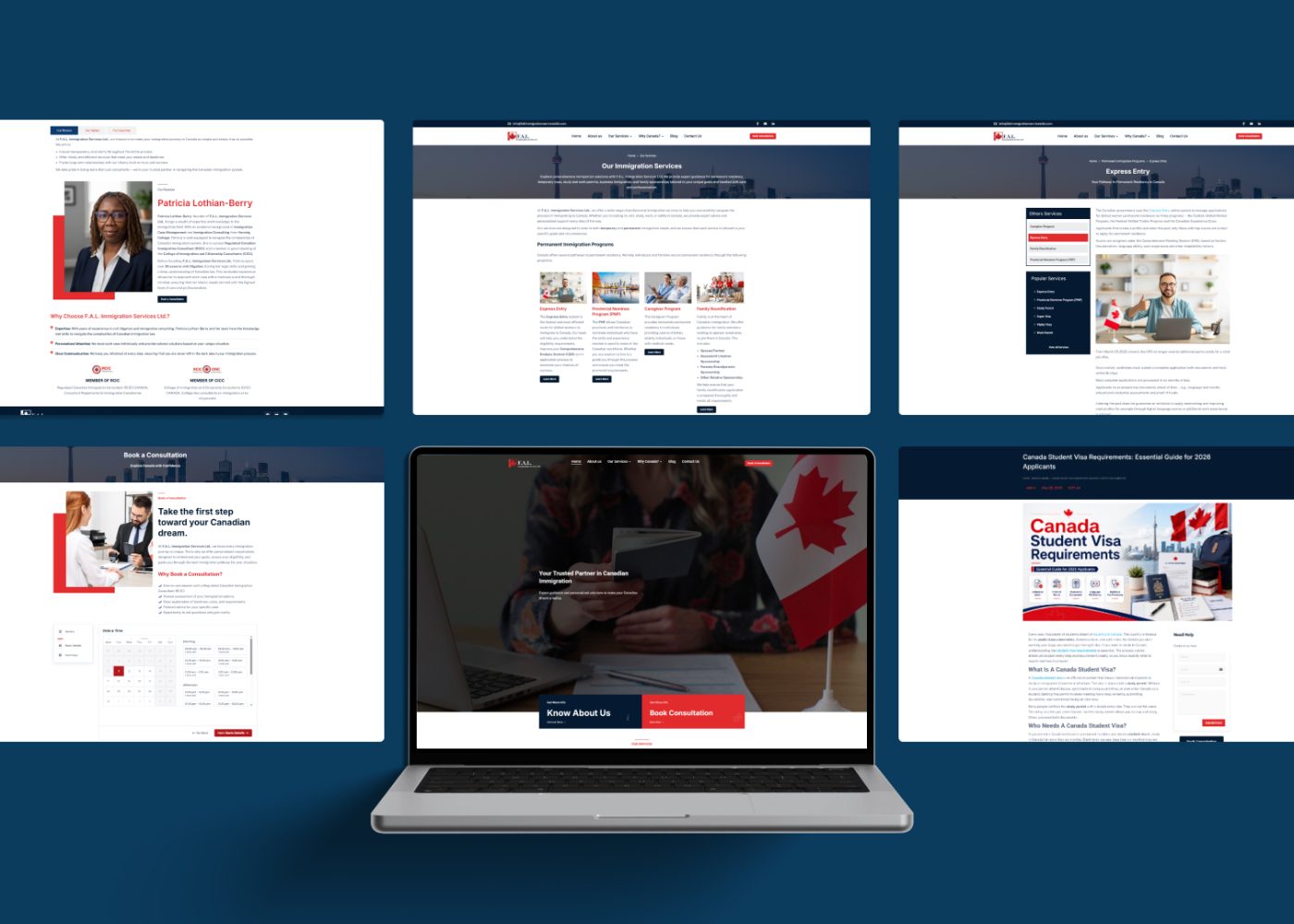
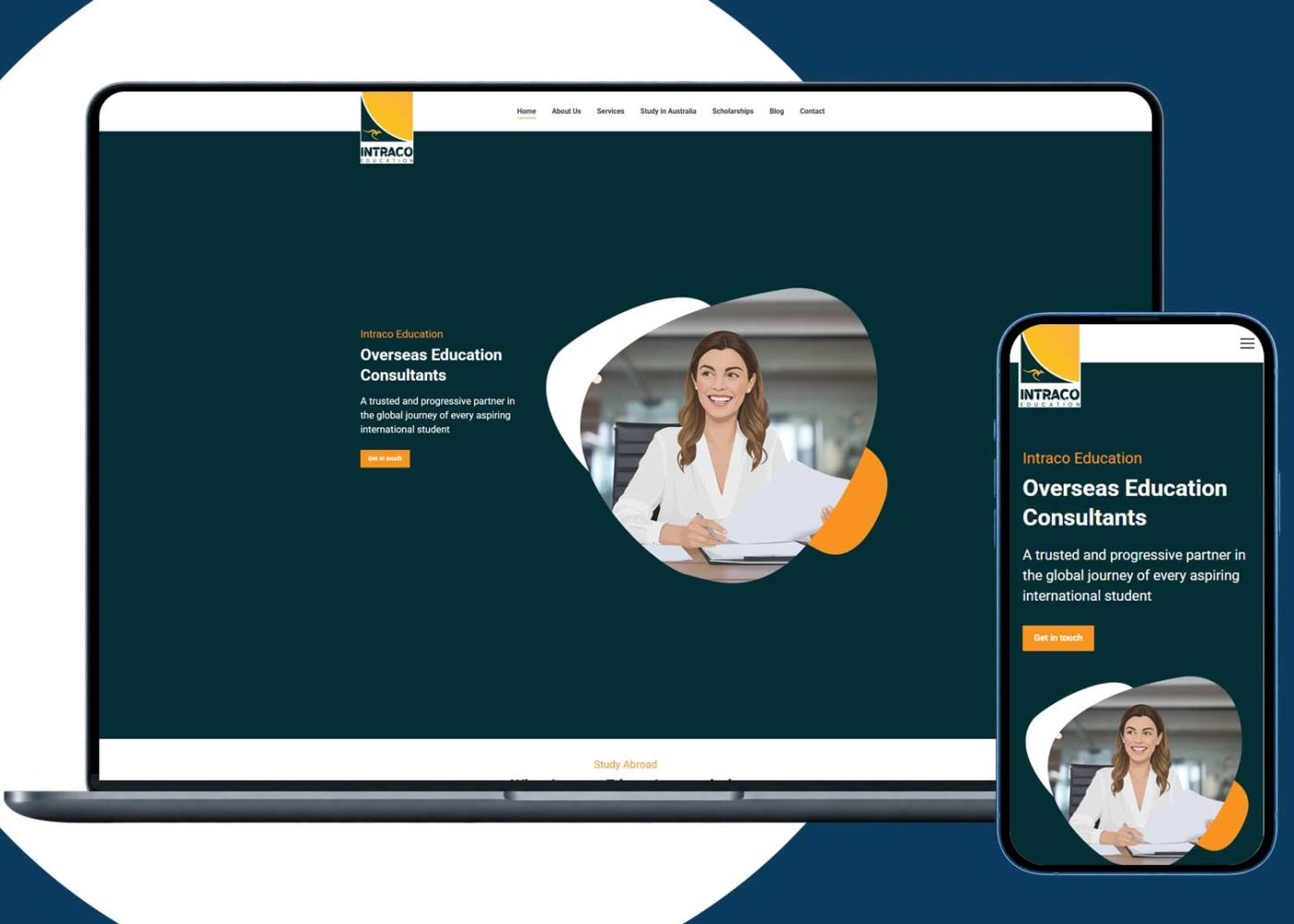
A coordinated website design project should make this relationship easy to understand on both desktop and mobile.
Separate websites can be justified by genuinely different business needs. For one small practice, establish a clear purpose before taking on the extra content and maintenance.
Whichever brand leads, make the named professional’s identity clear.
Under section 44 of the Code of Professional Conduct, the licensee’s registered name must appear prominently at or near the beginning of advertisements, in the advertisement’s language. Written advertisements must include the College public register’s internet address. The section also prohibits misleading claims, success guarantees, and implications of a government relationship. laws-lois.justice.gc.ca
Build advertising templates with these requirements in mind.
Link to the College’s Public Register, where people can check a consultant’s licence status, listed company and contact information, and other professional details. register.college-ic.ca
Within a firm website, identify the consultants and their actual roles. Make it straightforward to connect the firm’s service descriptions with the professionals delivering them.
Keep professional biographies and contact information current as the practice changes.
Choose assets that help people understand the practice and complete the next step.
A useful starting order is:
Apply the same visual system across the consultant’s professional materials and the firm’s channels. This gives you room to grow while keeping the relationship understandable.
A set of creative assets and communication templates can support that consistency.
Before investing heavily in a firm name, check the relevant naming requirements and possible conflicts. CIPO’s explanation of trade names, trademarks, and domain names explains their different purposes; registering a domain does not itself create an intellectual property right. ised-isde.canada.ca
Choose the scope of the project according to a clear need. A practice with a useful identity may need stronger profiles and booking information before a complete redesign.
Increase the firm’s prominence as its capacity and responsibilities become real.
Start by explaining the team’s roles. Introduce new consultants with accurate profiles, relevant service information, and clear appointment details.
Then update the website, booking process, confirmation messages, and enquiry responses together.
For example, if another consultant now conducts certain appointments, tell prospective clients before they book. Explain who they will meet and what that appointment includes.
Review the content mix as well. The founder can continue publishing while other professionals contribute explanations within their expertise. Firm channels can show how the practice works and who does the work.
Keep useful existing recognition. People who know the founder should be able to find them easily and understand their current role.
Review recurring questions and appointment problems:
Use those observations to improve the process and communication. Changing the emphasis of a logo or homepage will only address part of the transition.
Track practical signals rather than assuming that more followers mean a stronger practice.
Ask new enquiries how they found you and whether they were looking for a particular consultant or the firm.
Review whether people understand the services, know who they will meet, and arrive prepared for consultations.
For a personal-led practice, assess whether visibility attracts enquiries that fit your actual service focus and capacity.
For a firm-led practice, assess whether people understand the team’s roles and can book an appropriate consultation without repeated clarification.
Treat this feedback as evidence for your next improvement. It can help you decide when to strengthen an individual profile, explain the practice more clearly, or introduce the wider team.
Your next project
Have a business in mind? Tell us about your ideas, your audience, and the identity you want to create.
Prefer a direct conversation?
Yes, you can present the relationship clearly through professional profiles, website copy, and consistent materials. Check applicable naming requirements and make sure advertising includes the required professional information.
Continue making your expertise visible while introducing the other consultant accurately. Adjust invitations, service descriptions, and booking information so clients understand the whole team and know who will provide their appointment.
Start by defining the communication need. A small practice can use one visual system and one website with strong individual profiles. Separate identities or websites add maintenance and should serve a clear purpose.
Build your professional profile around your actual role and expertise. Coordinate public content and service invitations with the firm, follow its applicable policies, and keep business contact and appointment information accurate.
A firm identity can support a practice that serves clients through several professionals. Personal visibility can continue to support it. Growth also requires suitable capacity, clear responsibilities, and a consistent service experience.
For a solo RCIC, lead with personal expertise and establish a consistent firm foundation. As professional service delivery expands, give the practice greater prominence while keeping each consultant visible and verifiable.
M4YOURS IT helps immigration practices connect brand strategy, identity design, websites, and client communication. Explore our services for immigration firms or contact M4YOURS IT to plan the right starting point for your practice
Adding {{itemName}} to cart
Added {{itemName}} to cart