Share







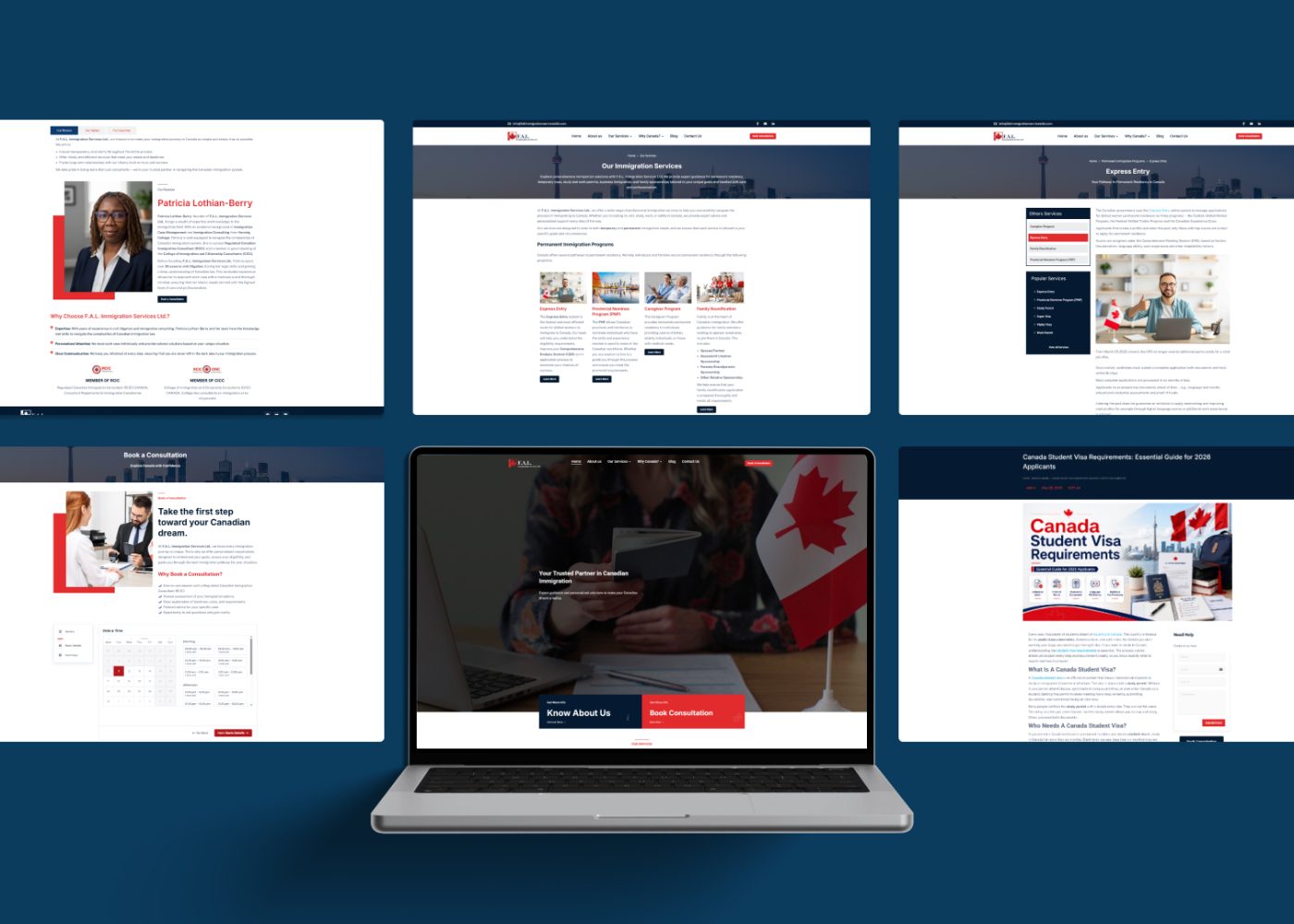











Before booking an RCIC consultation, prospective clients should be able to verify who will advise them, whether the service fits their situation, what the consultation includes, what it costs, and what happens next.
They may also compare reviews, contact details, public content, and the information requested during booking.
For an immigration firm, these are practical questions to answer across the website and booking process. A polished design helps people read and navigate, while clear, verifiable information gives them a basis for deciding whether to proceed.
Use the following checks to review your client journey, then confirm your audience’s priorities through real enquiries and feedback. The aim is to help suitable prospects make an informed decision about a consultation.
A firm name and logo do not identify the individual who will provide advice.
Display the RCIC’s registered name, College ID, role, and contact details. Link to the College’s Public Register so visitors can check the current record, entitlement to practise, licence type, and any restrictions. Encourage them to compare contact information as well. register.college-ic.ca
Keep each adviser’s identity clear when a firm has multiple consultants.
Section 44 requires a prominently displayed registered name near the beginning of advertisements and the register’s web address in written advertisements. laws-lois.justice.gc.ca
Build verification into your immigration firm website and marketing. Review advertising materials with the responsible RCIC, and make the consultant profile easy to reach from the consultation page.
Avoid graphics that suggest government endorsement.
A visitor may recognize a program name without knowing which service to choose.
Explain the situations your firm handles in plain language. A service page should help someone understand:
Describe relevant experience accurately. Give context for professional backgrounds and qualifications rather than relying on broad claims such as “Canada’s leading immigration experts.”
Where appropriate, explain how your team handles matters outside its scope or competence.
For a firm serving a defined audience, consistent marketing strategy and positioning can help service pages answer that audience’s actual questions.
A visitor should be able to recognize a relevant service without assuming that reading the page establishes their eligibility.
“Book now” gives little information about what someone is purchasing.
Place the essential details beside the booking action:
| Detail | What the visitor should understand |
|---|---|
| Adviser | The named RCIC or how the adviser will be assigned |
| Purpose | What the discussion covers and its limits |
| Duration | The scheduled appointment length |
| Format | Video, telephone, or in-person arrangements |
| Language | Available languages and any interpretation arrangements |
| Price | Currency, fee, applicable taxes, and total before payment |
| Deliverables | Whether document review or a written summary is included |
| Booking terms | Cancellation, rescheduling, refunds, and missed appointments |
Section 23 of the Code of Professional Conduct for CICC licensees requires a written agreement before an initial consultation, covering party details, fee or pro bono status, purpose, scope, and regulator information. laws-lois.justice.gc.ca
Make the agreement process clear. Distinguish the consultation from any later representation and explain how additional services would be agreed.
Keep the website, agreement, and checkout consistent. If a summary or document review is excluded, say so before payment.
Reviews can help a visitor understand how a firm communicates and organizes its work.
Feedback about clear explanations, appointment preparation, responsiveness, and transparent fees gives context beyond a star rating.
Link to the original review source where appropriate. Keep dates and attribution accurate, and avoid presenting selected praise as the complete record of client experience.
Section 45 permits genuine, accurate client endorsements in marketing when the client has reviewed and approved their public use in writing. laws-lois.justice.gc.ca
Have an approval process for testimonials your firm republishes. Avoid exposing case details, rewriting a review’s meaning, or fabricating feedback.
When handling criticism, protect confidentiality and follow the firm’s approved complaints process. Public replies should not disclose a person’s immigration circumstances.
A small firm can build credible evidence through genuine feedback and a clear process. It does not need an invented review history.
A prospective client needs to understand what professional assistance can provide.
Describe the work your firm performs: reviewing the information provided, explaining relevant options, identifying questions requiring further assessment, and clarifying possible next steps.
Remove unsupported approval rates, guaranteed outcomes, and suggestions of special government access.
IRCC explains that hiring a representative does not give an application special attention and that representatives cannot guarantee approval. ircc.canada.ca
Keep that distinction visible in service copy and sales conversations. A consultation may identify information gaps or the need for further work before advice can be completed.
Your promise should reflect the service your team can deliver. Clear scope and careful explanations are more useful than a confident prediction about a government decision.
Booking an immigration consultation can involve sensitive personal circumstances.
Explain why each field is needed, who handles the enquiry, and how the person can ask a privacy question. Use collection steps appropriate to the stage, including any information required for the consultation agreement.
Avoid turning an initial public enquiry form into an unrestricted document collection area.
If documents are needed before the appointment, explain which items are requested and provide the firm’s approved intake route. Tell clients when the review will occur and whether it is included in the fee.
Keep marketing preferences separate from the practical booking process.
Your website design should make privacy information and help contacts easy to find. Ask only for necessary information and route sensitive records through systems approved for that purpose.
Explain the process in language a client can understand.
A person comparing your website with a business listing or social profile should find compatible information.
Check:
If you operate virtually, describe that arrangement accurately. A mailing address should not create the expectation of a staffed walk-in office.
Maintain immigration articles when relevant rules change. Have the responsible professional review substantive information and record genuine review dates.
An outdated advertisement can contradict a current consultation page. Your digital marketing process should include periodic checks of active campaigns, profiles, and destinations.
Give visitors an obvious way to clarify an inconsistency.
The booking journey continues after someone submits a form.
Tell the person whether they have sent a request, reserved a time, or confirmed an appointment. Use button labels that reflect the actual action.
A useful confirmation includes:
Set realistic response expectations if staff must approve the request.
Your CRM and booking automation should support those promises. Test reminders, cancellations, rescheduling, and failed payments.
Do not send a successful payment or booking confirmation before the relevant action has completed.
If the consultation may lead to further services, explain that the next engagement has its own scope and terms.
Ask someone unfamiliar with your firm to complete a short review using fictional details and a test payment environment where needed.
Start from a service page or advertisement, then ask them to find the adviser, verify the credentials, understand the consultation, and reach the confirmation stage.
| Question | What to observe |
|---|---|
| Who will advise me? | Whether the person can identify and verify the RCIC |
| Is this service relevant? | Whether the description helps them choose an appropriate appointment |
| What am I paying for? | Whether scope, fee, and deliverables are understood |
| Can I complete the booking? | Whether forms, payment, and mobile interactions work |
| What happens next? | Whether confirmation and preparation steps are clear |
Record where the person hesitates and what they misunderstand. Fix missing information and confusing steps before adding more promotional claims.
Measure completed bookings, relevant enquiries, booking errors, and repeated questions about fees or scope. Compare those signals with staff capacity and consultation suitability.
More bookings are useful when the service matches what people understood they were booking.
Your next project
Have a business in mind? Tell us about your ideas, your audience, and the identity you want to create.
Prefer a direct conversation?
Show the consultation’s purpose, duration, adviser or assignment process, format, fee, currency, applicable taxes, and key booking terms. Explain whether document review or a written summary is included.
A displayed number gives visitors something to check. Make it easy to compare the individual and contact details with the current public register record. Keep the identity of the person providing advice clear.
Displaying a clear price can help prospects understand the purchase. If consultation types have different fees, explain the differences and show the applicable total before payment. Keep public prices consistent with the agreement and checkout.
Yes. Section 23 covers pro bono consultations. Have the responsible RCIC arrange the required written agreement and distinguish administrative scheduling conversations from professional consultations.
Use genuine feedback and strengthen the information you control: adviser profiles, service descriptions, consultation terms, and reliable communication. Invite feedback through an appropriate process without inventing testimonials or manufacturing a reputation.
Obtain the client’s written approval for public use, keep the endorsement accurate, and document the approval process under section 45.
No. Explain the services and assessment process accurately. A representative cannot guarantee approval, and hiring one does not give an application special attention. Ensure staff conversations follow the same approach as website copy.
Collect what is necessary for the particular stage and explain its purpose. Use a suitable process for consultation agreement information and sensitive records. Review form fields with the responsible RCIC and privacy lead.
Staff can explain administrative matters such as available appointments, payment procedures, and preparation instructions within their roles. Route questions requiring immigration advice to the appropriate authorized professional and make that handoff clear.
Include the appointment status, time zone, meeting arrangements, adviser details or assignment process, agreement steps, payment status, and preparation instructions. Give a clear contact for rescheduling, questions, or technical difficulties.
Start with the questions a prospective client needs answered: who will advise them, whether the service fits, what they are purchasing, and how to prepare.
Make those answers easy to verify, keep the process consistent, and test the journey from a visitor’s perspective.
M4YOURS IT can help your firm improve consultant profiles, consultation pages, booking forms, and CRM follow-up around these needs.
Discuss your immigration consultation booking journey with M4YOURS IT and identify the information and process improvements your website needs.
Adding {{itemName}} to cart
Added {{itemName}} to cart