Share





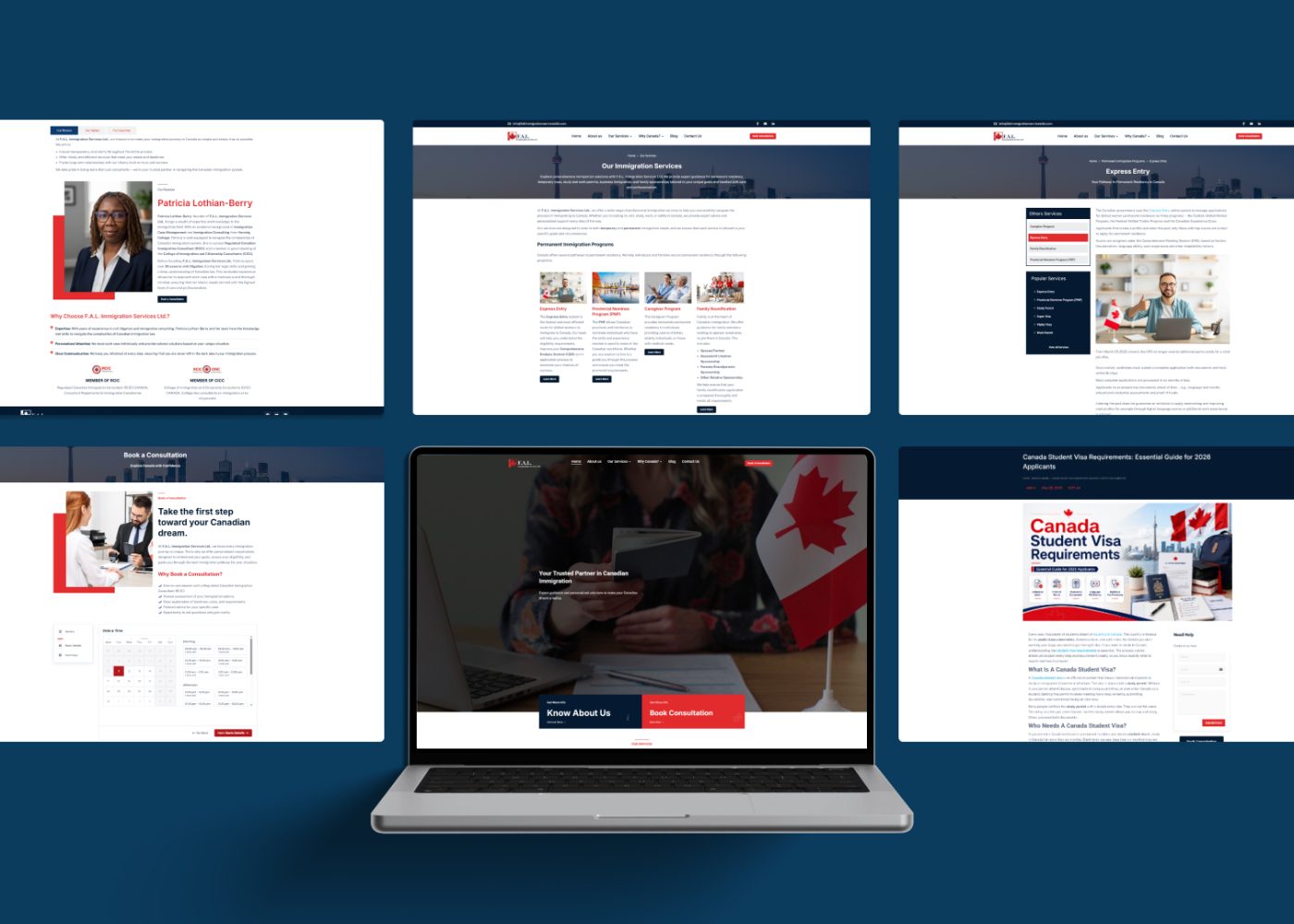
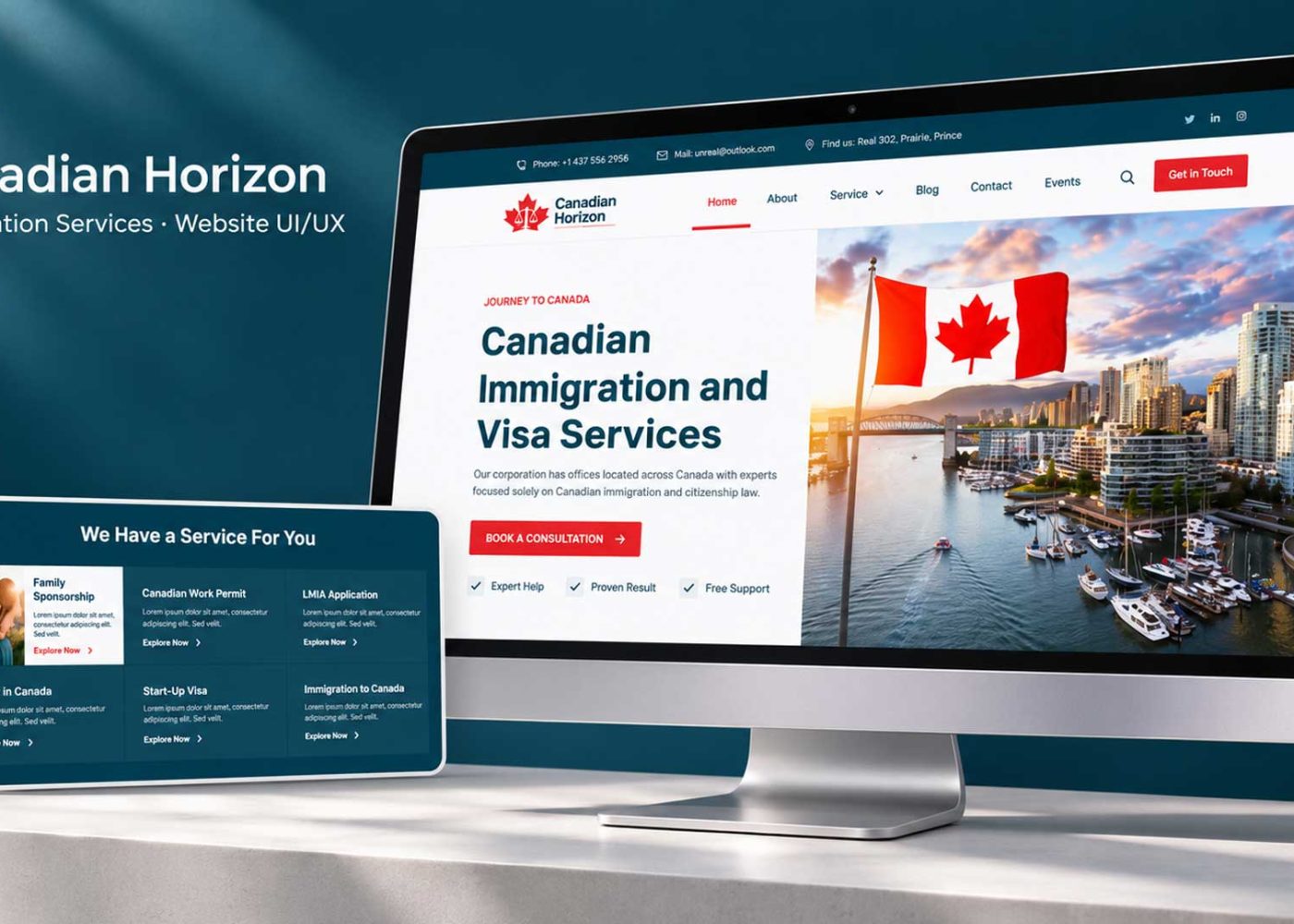


























Before you run paid ads, your RCIC website needs a clear service offer, verifiable professional information, a working enquiry or booking journey, appropriate data handling, and tracking your team can check against real outcomes.
You also need to confirm that the advertised service and campaign meet the chosen platform’s requirements.
Start with one service and one intended next step. Prepare the page, test the complete journey, assign responsibility for enquiries, and define what success means before spending begins.
Website readiness and advertising eligibility are separate checks. A well-built page supports the campaign; platform approval still depends on the actual advertisement, service, destination, and applicable rules.
Review the exact service you intend to promote, the wording of the advertisement, its destination, and the regions you plan to target.
For Google Ads, the government documents and services policy restricts advertising for direct acquisition of certain documents and services. Depending on scope, certification or an exclusion application may be necessary, alongside advertiser verification. Review the relevant category and application route before launch. Advertising Policies Help
Treat professional licensing and platform eligibility as separate review tasks. Avoid assuming that describing a service as “consulting” settles how the platform will assess it.
For campaigns on other platforms, review their current requirements for advertisements, destinations, forms, and data use. A Google-specific review does not establish readiness elsewhere.
Keep a record of the policy checks, responsible reviewer, and any verification or application still outstanding.
Define what you want the visitor to understand and do.
A campaign promoting a particular consultation should reach a page that explains that consultation. Visitors should not have to search a general homepage to find the offer mentioned in the advertisement.
Prepare a short campaign brief. For example:
| Planning item | Example to adapt to your firm |
|---|---|
| Service | Family sponsorship consultation |
| Audience need | Professional guidance about a family sponsorship matter |
| Destination | A page explaining that consultation |
| Main action | Choose a consultation time |
| Intake task | Confirm whether the request fits the service |
| Business outcome | A suitable enquiry or attended consultation |
This example defines a service journey; it does not establish advertising eligibility.
The page should explain who the consultation is for, what it covers, who delivers it, and what happens afterward. Keep its claims, language, and offer consistent with the advertisement.
Our marketing strategy and consulting services can help connect the campaign objective with the service page and intake process.
Show accurate information about the firm and the professional providing the service.
Include relevant names, roles, registration information, contact details, and a clear description of the work offered. Use genuine team information and experience you can substantiate.
Section 44 of the RCIC Code of Professional Conduct requires the registered licensee name prominently at or near the beginning of advertisements and the public register address in written advertisements. It also prohibits misleading representations, guarantees of application success, and implied government relationships. Review each advertisement and its landing page accordingly. laws-lois.justice.gc.ca
Use testimonials and project examples accurately, with appropriate permission. Check that credentials, team profiles, and service descriptions remain current.
Our immigration marketing services can help align professional presentation with the services your firm wants to promote.
The visitor should understand the commitment before choosing an appointment.
Explain:
Use the firm’s actual terms. Avoid making people discover an unexpected fee at the payment screen.
If the first step is an enquiry rather than direct booking, say so. Explain what the team will review and when the person can expect a response.
Keep the main action consistent with that process. “Request a Consultation” and “Book a Consultation” should not promise different outcomes while leading to the same unexplained form.
The campaign page should provide a clear route to the information needed to assess the firm and the offer.
Use this as a practical content checklist:
| Page or section | Purpose |
|---|---|
| Advertised service | Explain the specific help being offered |
| Consultation details | Describe the meeting, fee, preparation, and next step |
| Professional profile | Identify the person providing the service |
| Contact information | Give visitors a reliable way to reach the firm |
| Privacy information | Explain the actual handling of submitted information |
| Relevant booking terms | Clarify payment, cancellation, rescheduling, and refunds |
| Confirmation or next-step message | Explain what happened and what happens next |
These can be separate pages or clearly organized sections. The important point is that the information is accurate, accessible, and consistent throughout the journey.
A dedicated landing page can remain focused while providing useful access to professional, contact, and privacy information.
Our website design services can help build this structure around the visitor’s decisions.
Open the exact destination URL intended for the campaign. Check its redirects, content, forms, and links on common browsers and devices.
Google’s destination requirements address working, crawlable destinations that are accessible in the targeted location, accurately match the advertisement’s destination, and provide a useful, navigable experience. Review the requirements against the actual final URL and website setup. Advertising Policies Help
Test the page on a phone and a slower connection. Check whether visitors can read the offer, use the controls, and reach the next step comfortably.
Remove broken links, placeholder content, intrusive overlays, and elements that cover essential information. Check that large images, video, or third-party tools do not prevent the main task from working.
Also review keyboard use, visible focus, form labels, and error messages. Include external booking tools in the test.
Use realistic test details and an appropriate test process. Avoid filling the live calendar with appointments your team might mistake for real clients.
Verify the full sequence:
Test errors and alternatives too: an unavailable appointment, a mistyped field, a cancellation, or a request that does not fit the service.
Section 23 of the Code addresses written agreements before initial consultations, including purpose, scope, and the fee or pro bono status. Build the applicable agreement process into the workflow before the meeting. laws-lois.justice.gc.ca
Record what passed, what failed, and who owns each fix. A button that opens a calendar is only one part of the journey.
Decide what information the first step needs. A campaign enquiry form should have a defined purpose, rather than collecting every detail that might eventually be relevant to a case.
Explain how submitted information will be used and provide accessible privacy information that reflects the actual process.
Map where the information goes: website storage, email, booking provider, CRM, notifications, analytics, and advertising tools.
Review access permissions and any consent configuration appropriate to the audience and tools. Keep case documents and detailed personal narratives within the client systems intended to handle them.
Use approved, non-sensitive business events for campaign measurement. Check actual outgoing tracking data instead of assuming that an integration sends only the fields you expect.
Confirm HTTPS is working, website software is maintained, and administrative access is controlled. Assign responsibility for checking changes introduced by new forms, plugins, or booking tools.
Define each outcome before configuring measurement.
A useful starting model is:
| Outcome | Evidence |
|---|---|
| Booking action clicked | The visitor activates the intended control |
| Enquiry submitted | The system successfully receives a genuine request |
| Consultation booked | The booking system confirms the appointment |
| Enquiry qualified | Intake confirms the request fits the service and next step |
| Consultation attended | The team records that the meeting took place |
Qualification here means intake service fit, not immigration-program eligibility.
Check that events trigger at the correct moment and that repeat visits or duplicate integrations do not create extra outcomes.
For each test enquiry, confirm the record, available source information, owner, and next action. For each booking, reconcile the measurement with the booking system.
Manual recording can support an initial campaign if the process is clear and consistently maintained. Automation should make those records easier to manage.
A suitable CRM and marketing automation setup can connect these stages and support follow-up.
Choose who will respond to new enquiries and who provides cover when that person is unavailable.
Set realistic response expectations. Check that consultation availability and staff capacity match the campaign’s invitation.
Give the team a simple process for recording suitable enquiries, unrelated requests, duplicates, bookings, and outcomes. Test notifications so enquiries do not sit unnoticed in a tool nobody checks.
Confirm the firm has appropriate administrative control and recovery arrangements for its domain, website, advertising accounts, analytics, booking system, and CRM.
Document vendor access and responsibilities. The team should know whom to contact when a form breaks, a calendar changes, or campaign measurement stops working.
Use a shared review record with evidence and named owners:
| Area | Evidence to review | If it is unresolved |
|---|---|---|
| Platform eligibility | Relevant policy review and required verification or applications | Resolve before launching the affected campaign |
| Professional information | Reviewed names, registration details, and claims | Correct before launch |
| Service offer | Clear scope, fee, audience, and next step | Clarify before sending traffic |
| Website function | Successful destination, form, and booking tests | Fix broken steps first |
| Privacy and data handling | Reviewed forms, notices, permissions, and data flows | Resolve material issues before collecting campaign enquiries |
| Measurement | Test outcomes matched to real system records | Establish reliable core tracking |
| Team capacity | Enquiry owner, cover, and suitable appointment availability | Adjust staffing, scheduling, or campaign scope |
This is a readiness framework for the firm’s review. It does not guarantee platform approval or campaign performance.
Distinguish essential fixes from later improvements. A broken form requires action before traffic arrives. A larger content library or additional creative variation can be planned after the core journey is working.
Keep the first campaign focused enough that the team can evaluate it.
Set the campaign’s spending limits, intended audience, service, and review responsibilities before launch.
Review genuine enquiries, service fit, bookings, attendance, and acquisition costs. Follow enquiry groups long enough to observe their outcomes.
Check technical and operational problems promptly. Record changes to the page, offer, targeting, or intake process so later results can be interpreted.
Increase spending when the evidence and team capacity support it. An approved advertisement and an operational website provide a starting point for learning.
Our digital marketing services can help coordinate the website, campaign, and reporting plan.
Your next project
Have a business in mind? Tell us about your ideas, your audience, and the identity you want to create.
Prefer a direct conversation?
Use a page that closely matches the advertised service and intended action. An existing service page may work if it provides the necessary information and a reliable next step.
Treat licensing and platform review separately. The platform assesses its own requirements against the actual campaign, service, destination, and relevant verification process.
No. Establish reliable core measurement and clear responsibility for later outcomes. Manual CRM updates can work during a focused initial test.
Complete the information and functionality needed for the promoted journey, including relevant professional, contact, privacy, and booking details. Schedule broader improvements according to their value and priority.
M4YOURS IT helps immigration firms connect service pages, consultation booking, CRM workflows, campaign setup, and measurement.
Contact M4YOURS IT to plan the website and operational work needed before your next paid campaign.
To grow an RCIC practice beyond referrals, build a clear path from online discovery to a paid consultation and an appropriate service agreement. Start with focused positioning, useful service pages, local search visibility, and reliable follow-up. Add advertising once your team can track enquiries and respond consistently.
Referrals remain valuable. A recommendation gives a prospective client a reason to contact you. The challenge is building additional ways for people to discover your expertise, understand your services, and decide whether to book.
For a Regulated Canadian Immigration Consultant, sustainable growth also depends on capacity. Marketing should bring enquiries your practice can assess and serve well. The following approach connects visibility, trust, client intake, and measurement around that goal.
A useful marketing plan starts with a specific service and audience.
Review your recent work. Which enquiries matched your competence? Which engagements were commercially sustainable? Which services could your team support consistently?
Use those answers to choose an initial focus, such as family sponsorship consultations or employer immigration services. Check that the focus fits your professional authorization, experience, and available capacity.
Write a positioning statement covering:
For example, a hypothetical firm might describe its service as “family sponsorship consultations for couples seeking a structured review of their circumstances and application questions.”
That provides useful direction for a service page, webinar, or campaign. Every public statement must still accurately describe the practice.
Your consultant profile should reinforce the same message. Our guide to building a recognizable personal brand as an independent RCIC explores how professional identity and a defined focus work together.
A visitor arriving through search needs enough information to evaluate your practice independently.
Start with a dedicated page for each priority service. Explain who the service is intended for, what the consultation covers, how booking works, and what the client can expect afterwards.
A useful service page should include:
Test the entire journey on a mobile phone. Submit the form, check the confirmation, complete a test booking, and confirm that the enquiry reaches the responsible person.
Request only the information needed at that stage. Detailed case records and sensitive documents can move through an appropriately protected intake process later.
Our recommendation: improve one important service page and its booking journey first. Our website design services can support the page structure, mobile experience, and implementation.
Search gives prospective clients a way to find your practice while researching professional assistance.
Begin with the service, location, and language combinations that accurately describe your business. Examples might include “family sponsorship consultant in Calgary” or “immigration consultation in Bengali.” These are research starting points; validate demand and relevance before choosing targets.
For an eligible practice, maintain an accurate Google Business Profile. Review your business details, categories, hours, website link, and contact options.
Google explains that local visibility depends mainly on relevance, distance, and prominence or popularity. Complete information helps Google understand a business, while distance remains partly outside the firm’s control. There is no payment that buys a better organic local ranking. See Google’s local ranking guidance. Google Business Profile Help
On your website, connect each priority service page with relevant articles and FAQs. Avoid publishing near-identical pages for every city.
Our recommendation: begin with a small group of useful pages that your team can maintain. M4YOURS IT’s core SEO services provide a foundation for reviewing site structure, content, and search visibility.
Useful content answers the questions that arise before someone feels ready to contact your practice.
Ask your team what prospects repeatedly misunderstand. Those questions can become articles, short videos, or webinar topics:
Program-specific articles require additional care. Include official sources, a meaningful review date, and a named professional responsible for checking the information.
Choose a publishing schedule your team can sustain. For a small practice, one carefully reviewed article and a few related social posts each month can be a practical starting commitment.
Give each article an appropriate next step. A consultation preparation guide can lead to booking information; a broader educational article can point to the relevant service page.
Our recommendation: build a short list of recurring client questions before planning a large content calendar. Publish articles that your team will also find useful when answering enquiries.
Marketing creates additional work as soon as a person contacts your practice.
When enquiries arrive through forms, phone calls, email, and messaging apps, the team needs a shared record. Otherwise, it becomes difficult to see who has responded or what should happen next.
A customer relationship management system, or CRM, can organize stages such as new enquiry, staff review, consultation booked, consultation completed, and engagement decision.
Capture the source, service interest, assigned owner, and next action. Let an authorized professional assess case suitability; an automated form score should not become an immigration eligibility decision.
Set a response target your team can meet. An acknowledgement can explain when a person should expect a human reply. Appointment reminders and preparation instructions can then support the booking.
For promotional email or messaging, review the applicable consent requirements before enabling a sequence. The CRTC describes consent, sender identification, and an unsubscribe mechanism as the three general requirements for commercial electronic messages under CASL. Exceptions depend on the circumstances. Refer to the CRTC’s CASL guidance. CRTC
Use existing CRM capabilities where they fit. Consider custom software development when a documented workflow or integration requirement cannot be handled adequately by your current tools.
Advertising is easier to evaluate when one campaign leads to one relevant service page.
Choose a service your team can handle, a defined audience, and a budget the business can afford to test. Establish what counts as a useful enquiry before launch.
A campaign review should consider:
Review poor results across the whole journey. The cause may be targeting, unclear page content, booking friction, response delays, or a mismatch between the offer and demand.
Our recommendation: agree on a review date and spending limit before launch. Increase investment when the evidence and team capacity support it.
Prospective clients should be able to identify the professional, understand the service, and assess what is being offered.
The Code of Professional Conduct requires the licensee’s registered name near the beginning of advertisements and the public register’s Internet address in written advertisements. It also prohibits misleading representations, application-success guarantees, and implications of a government relationship. laws-lois.justice.gc.ca
When using a client endorsement in marketing, the Code requires that it be genuine, accurate, and approved for public use by the client in writing. These requirements appear in sections 44 and 45 of the Code of Professional Conduct. laws-lois.justice.gc.ca
Build review and approval into your publishing workflow. Make credentials and consultation terms easy to find, and answer public reviews without revealing confidential case information.
AI can help with approved FAQs, appointment instructions, and routine enquiry routing. Define the handoff to a person clearly. Our chatbots and conversational AI services can support these bounded interactions.
Record both the initial discovery source and the channel through which someone contacted you. A prospect might find an article, return through a branded search, and then send a message.
A brief “How did you hear about us?” question can supplement website tracking. Review the records together rather than giving every client to the final click.
Track unique enquiries, suitable enquiries, completed consultations, new retained clients, and the associated costs.
Consider this hypothetical example, using one campaign cohort followed through to its engagement decisions:
| Measure | Illustrative result |
|---|---|
| Attributed campaign spend | C$2,000 |
| Unique enquiries | 80 |
| Completed consultations | 20 |
| New retained clients | 5 |
| Spend per enquiry | C$25 |
| Spend per completed consultation | C$100 |
| Campaign spend per retained client | C$400 |
These figures are arithmetic examples, not performance benchmarks. The C$400 figure covers the stated campaign spend. A fuller acquisition-cost calculation should include relevant agency fees, software, and staff time.
Compare acquisition cost with expected contribution after service delivery costs. Collected fees, refunds, workload, and the time between enquiry and engagement also matter.
Different practices need different starting points.
| What you observe | Recommended first investment |
|---|---|
| Prospects struggle to understand your focus | Positioning and consultant profiles |
| Relevant visitors arrive but rarely enquire | Service pages and booking improvements |
| The website is useful but receives little relevant traffic | Search visibility and educational content |
| Enquiries arrive but follow-up is inconsistent | CRM ownership, tasks, and reminders |
| Enquiries convert well and capacity is available | A measured acquisition campaign |
| Routine questions consume staff time | Approved FAQs and a defined chatbot pilot |
This sequence keeps spending connected to an identifiable business need. Revisit the decision after the improvement has had enough time to produce meaningful evidence.
Treat the first quarter as a foundation and learning period. It does not guarantee a particular number of clients.
| Period | Main work | What to review |
|---|---|---|
| Days 1–30 | Choose a priority service, audit the booking journey, establish source tracking, and assign enquiry ownership | Whether suitable prospects can understand the service and reach the team |
| Days 31–60 | Improve the service page, review local listings, publish useful content, and implement follow-up tasks | Enquiry quality, response consistency, and completed consultations |
| Days 61–90 | Test one additional channel and review engagement outcomes | Acquisition costs, service capacity, and the next bottleneck |
Hold a short weekly review. Examine missed enquiries and client questions as well as campaign numbers. Those conversations often reveal improvements that a dashboard cannot explain.
Your next project
Have a business in mind? Tell us about your ideas, your audience, and the identity you want to create.
Prefer a direct conversation?
Choose one service and audience, then test the path from discovery to booking. Fix unclear information, broken forms, and inconsistent responses before paying for additional traffic.
Yes. Search visibility, educational content, professional relationships, and referrals can all contribute. The appropriate mix depends on your market, available time, and starting position. Track the staff effort involved when comparing channels.
Build the budget around service economics, capacity, and an affordable test. Without reliable conversion data, begin with a limited experiment. Use completed consultations and retained clients to guide later spending.
Booking and response improvements can be evaluated as enquiries arrive. Search and content performance need ongoing observation. Establish a baseline and review progress regularly; the 90-day plan is an implementation framework.
An existing platform may cover the essentials. Start with enquiry ownership, service categories, tasks, and booking records. Consider customization after documenting a specific operational gap and its cost.
Begin by choosing one service your firm wants to grow. Check how someone discovers it, evaluates the practice, books a consultation, and receives a response. Improve the weakest step and measure what changes.
M4YOURS IT connects digital growth services for RCICs and immigration firms, including websites, marketing, consultation intake, CRM, and automation.
Discuss your RCIC practice’s growth plan with M4YOURS IT. Share your priority services, current enquiry sources, and biggest operational challenge so the next investment addresses a clear business need.
Adding {{itemName}} to cart
Added {{itemName}} to cart